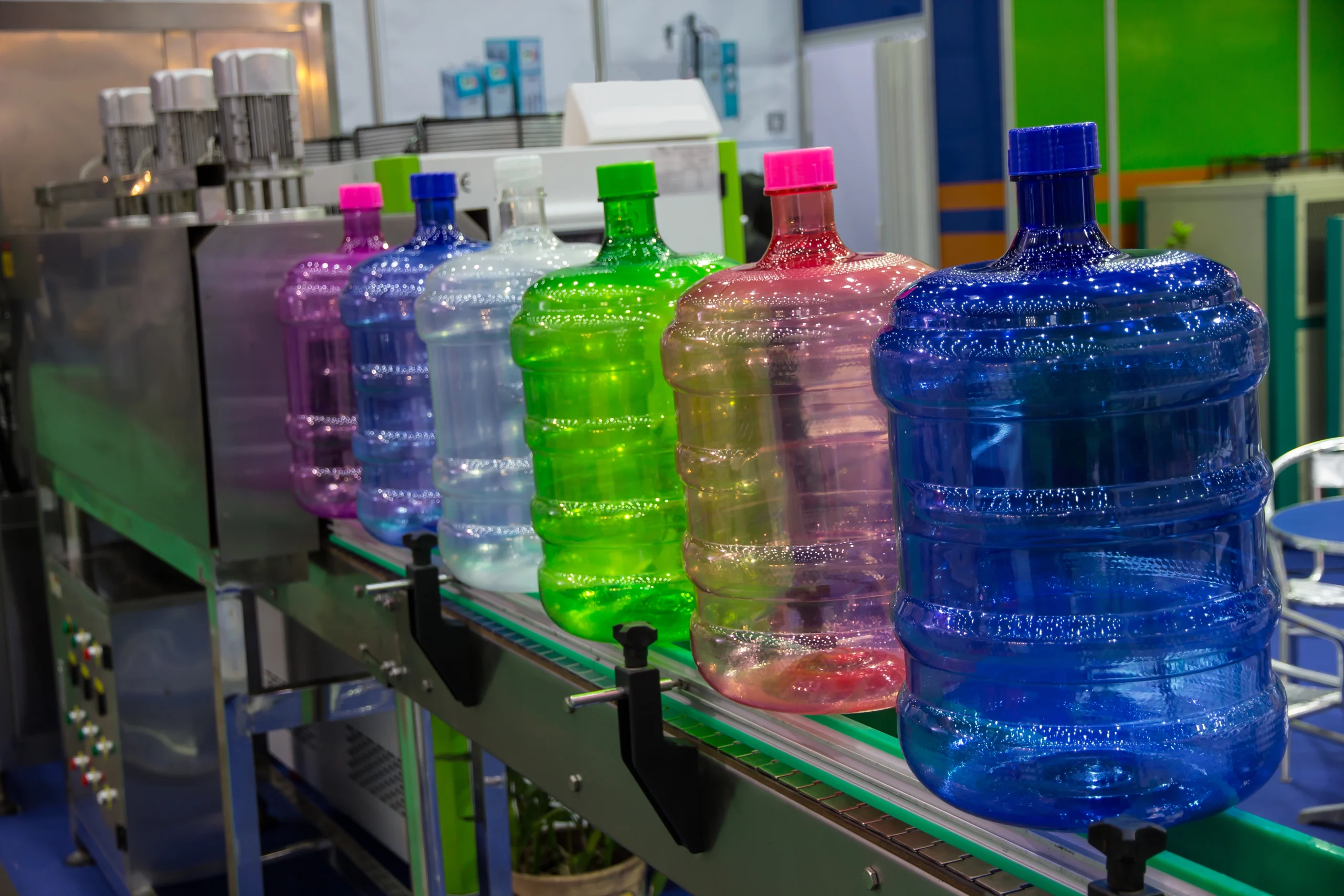
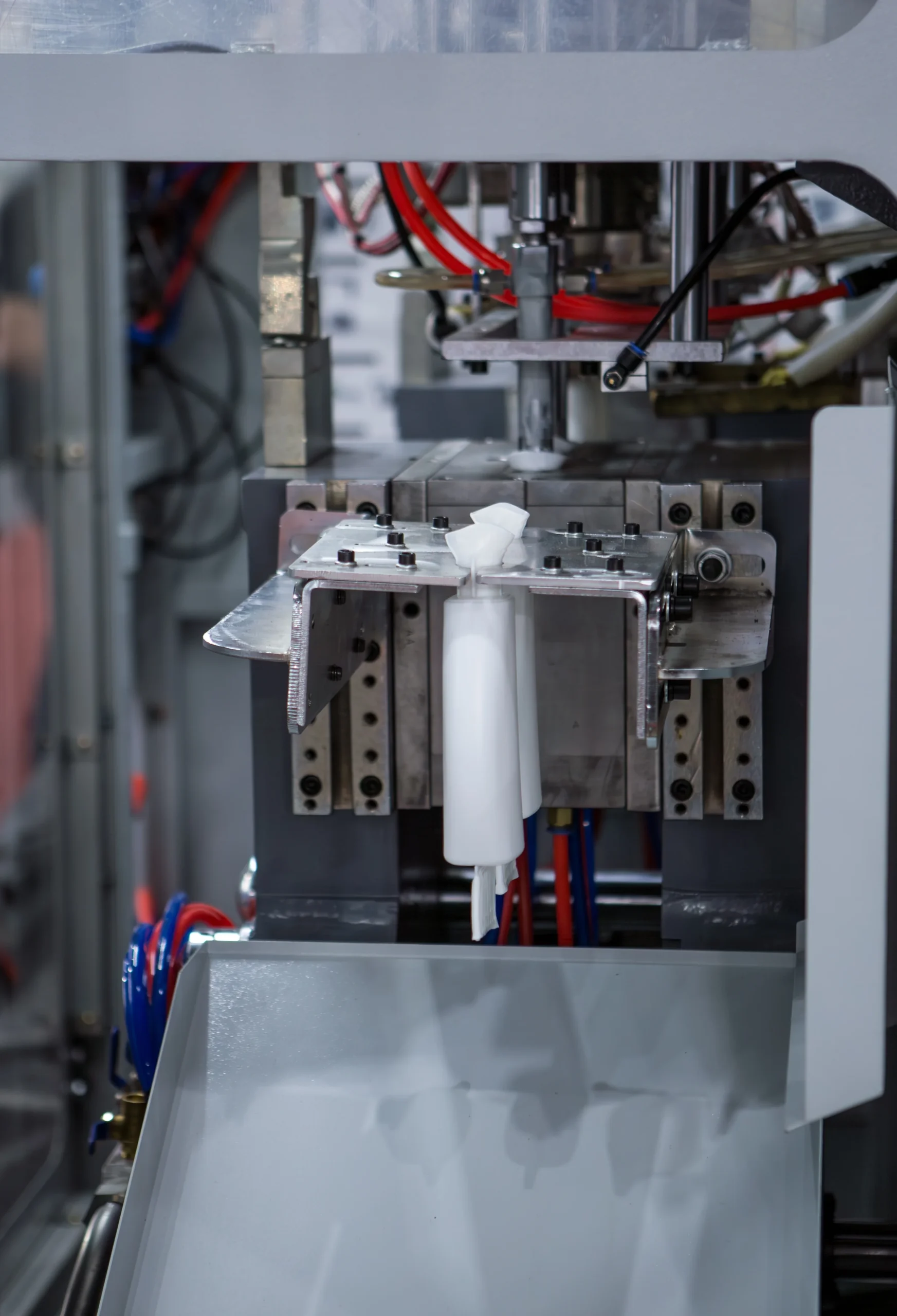
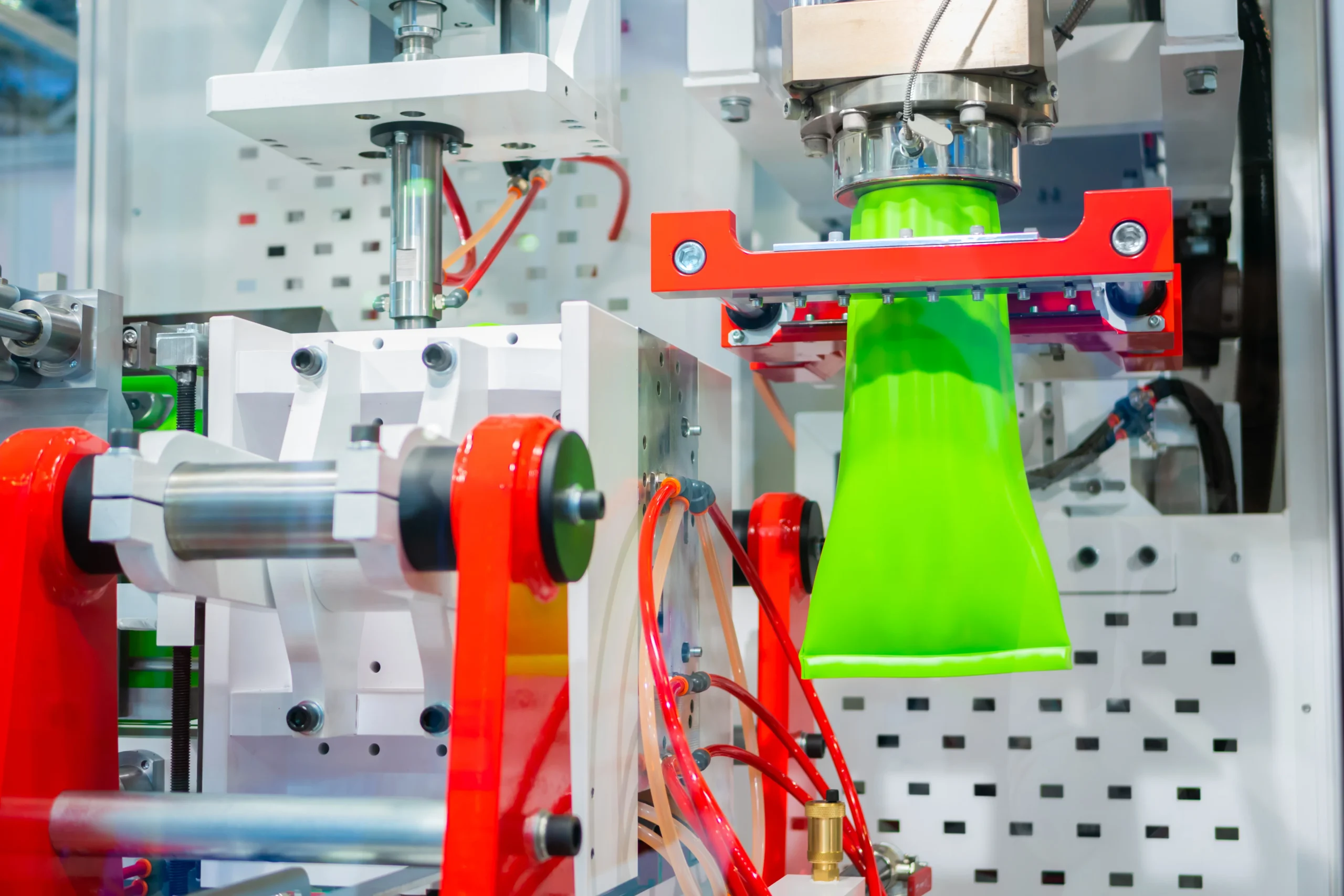
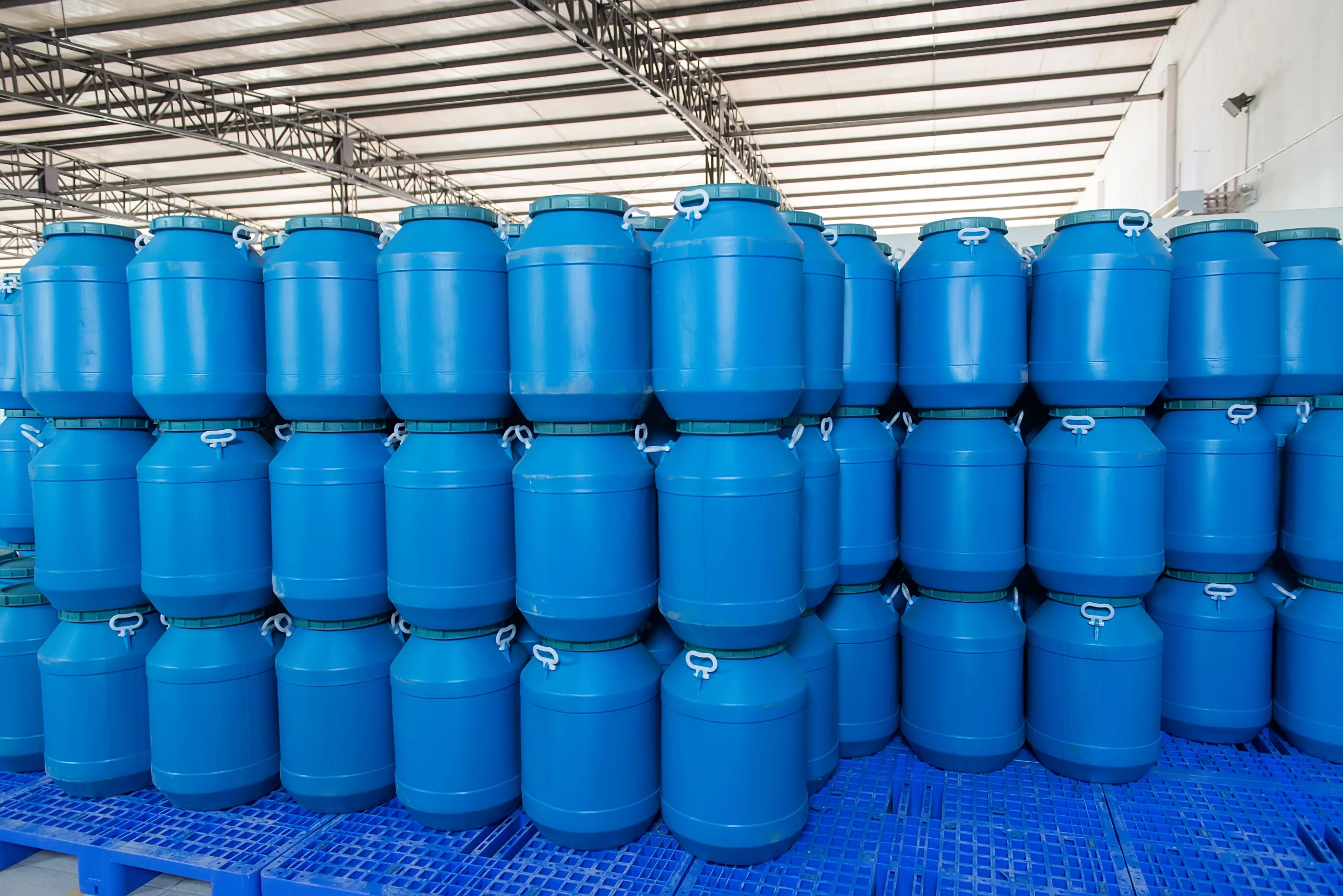
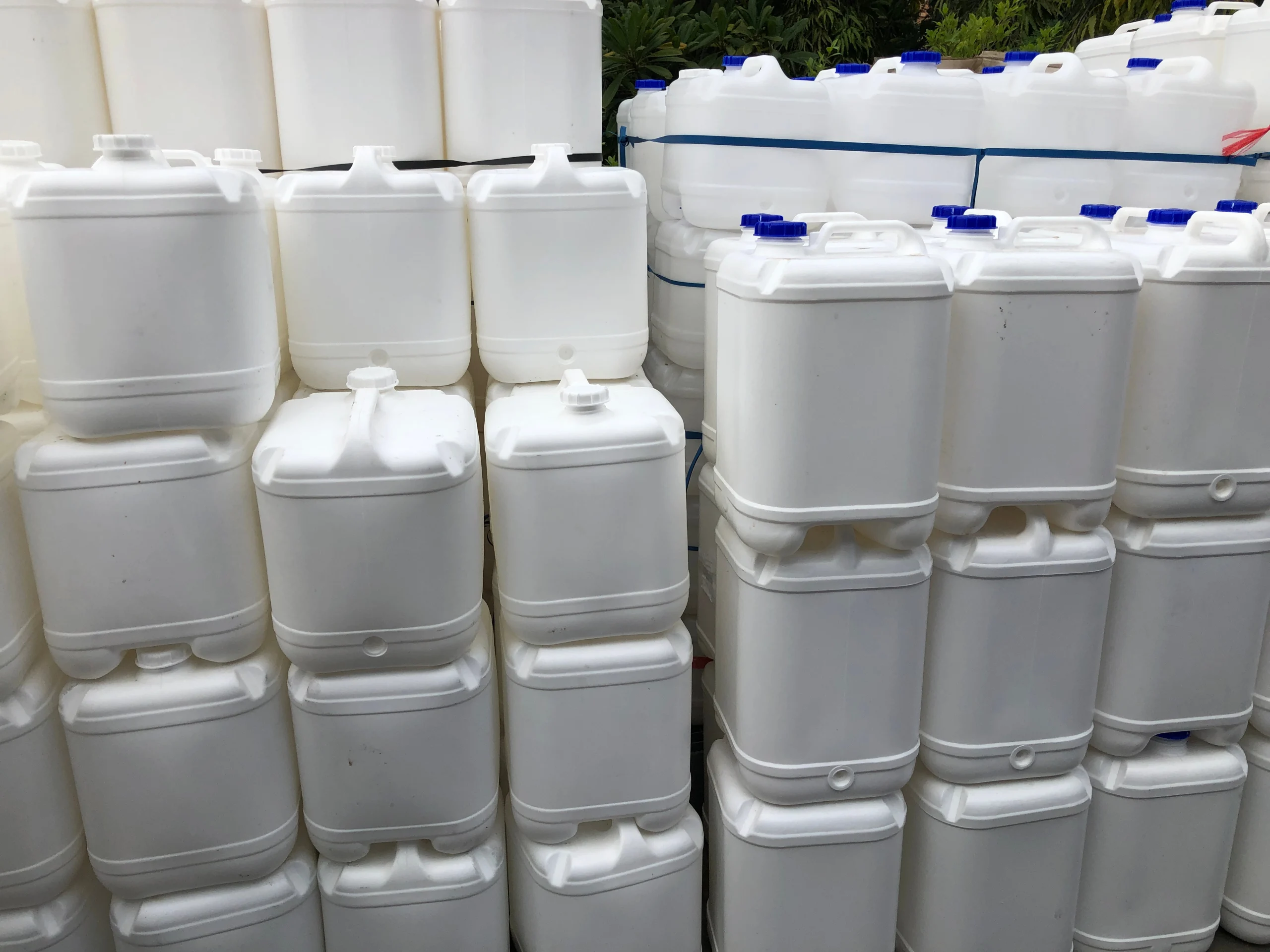
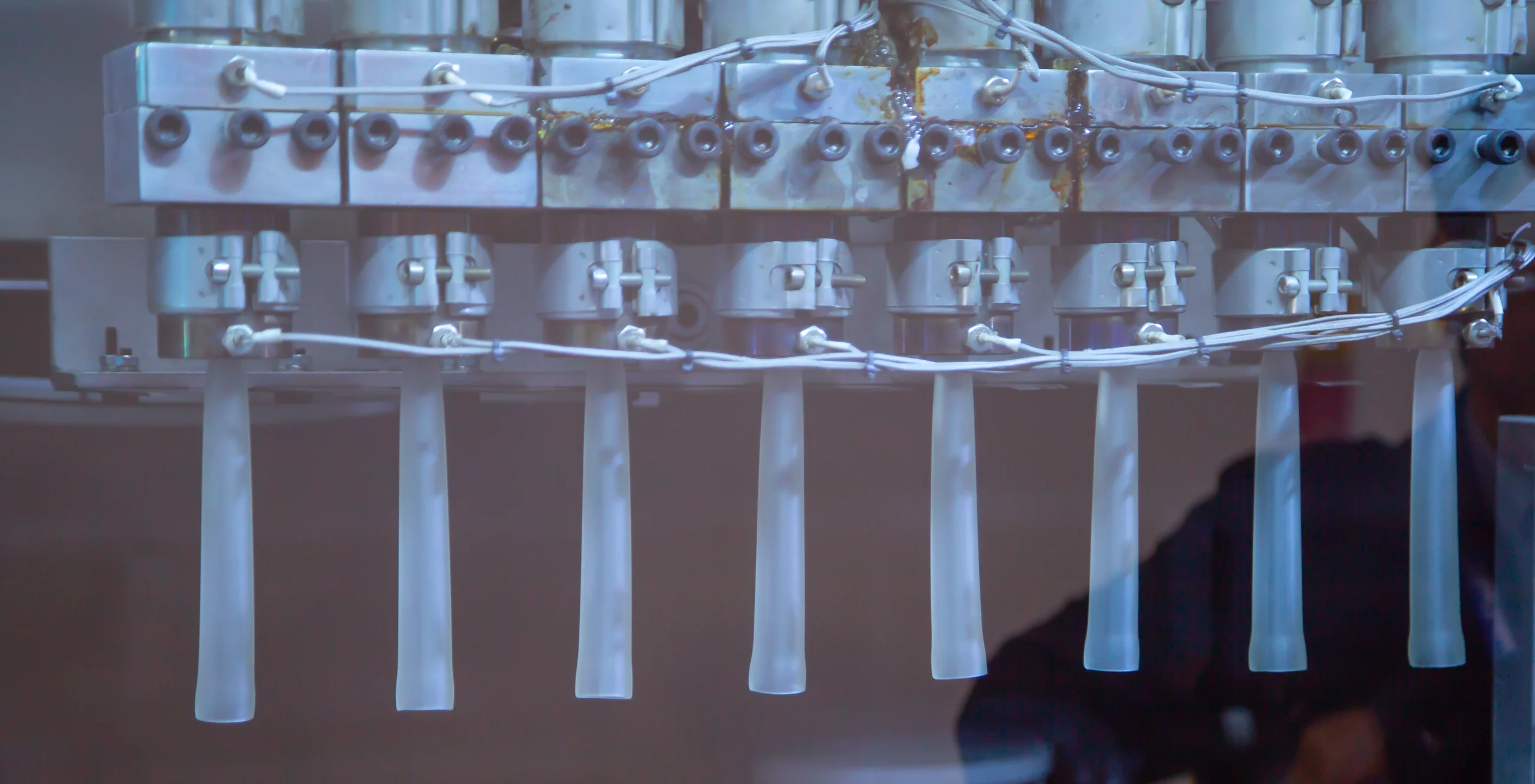
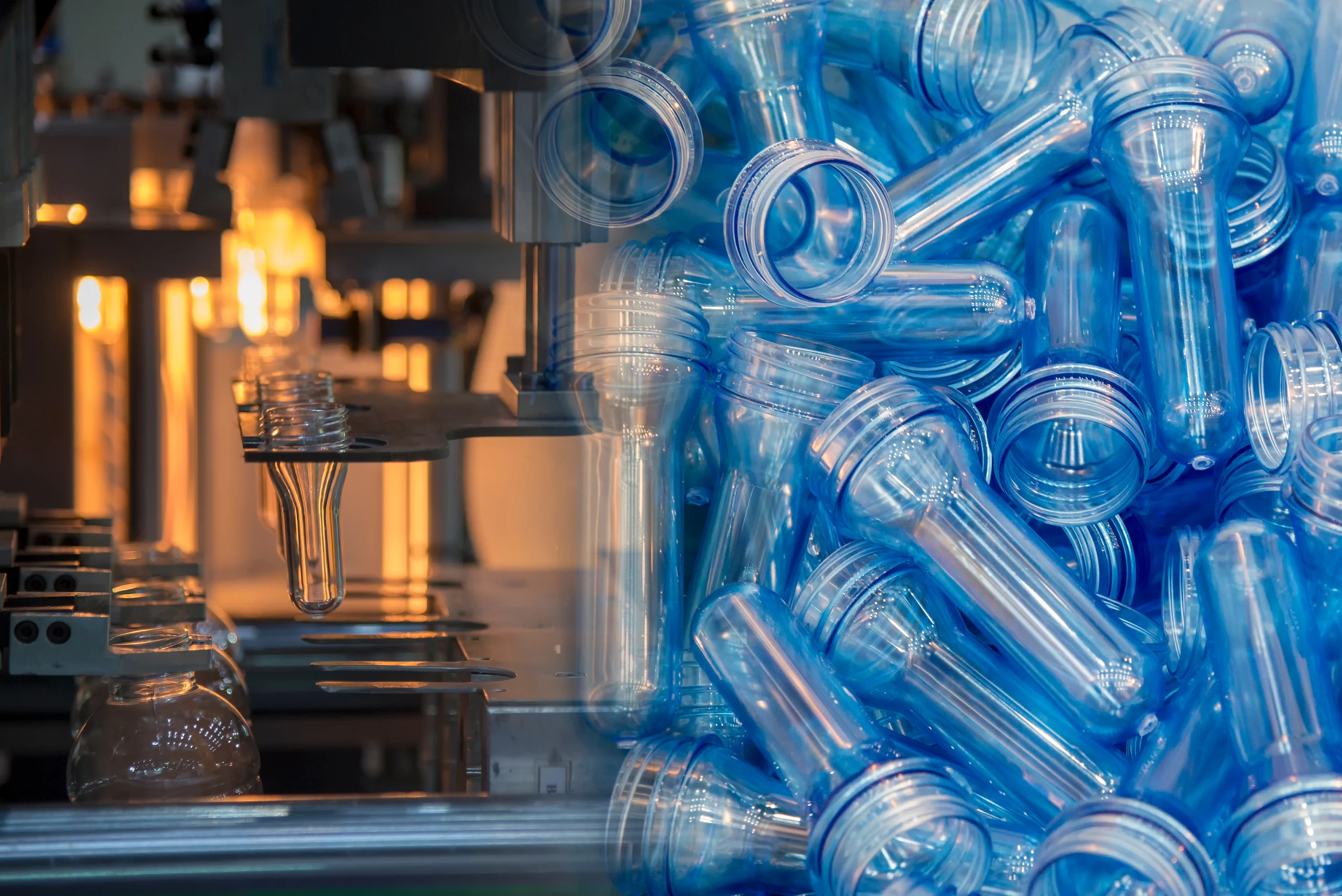
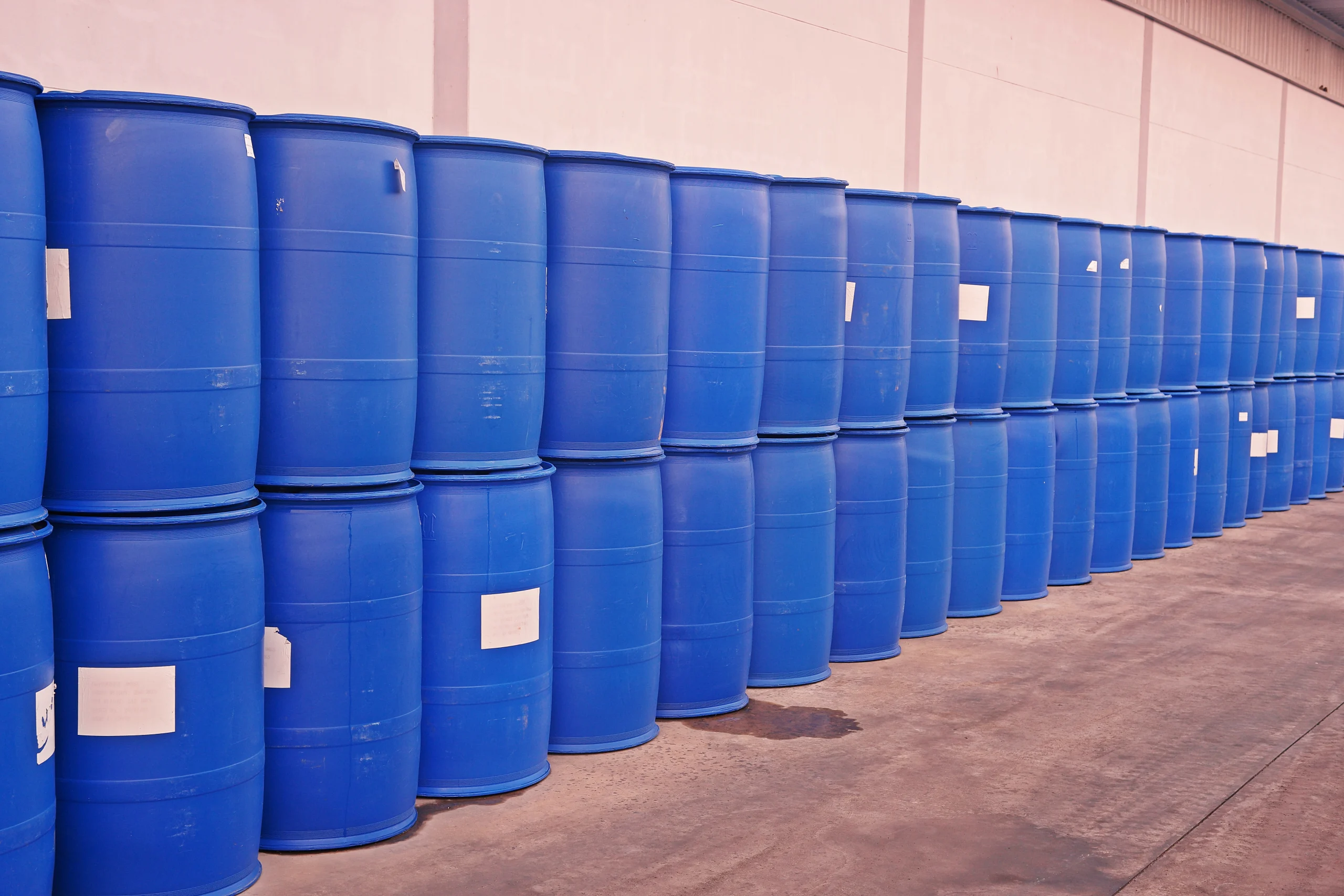
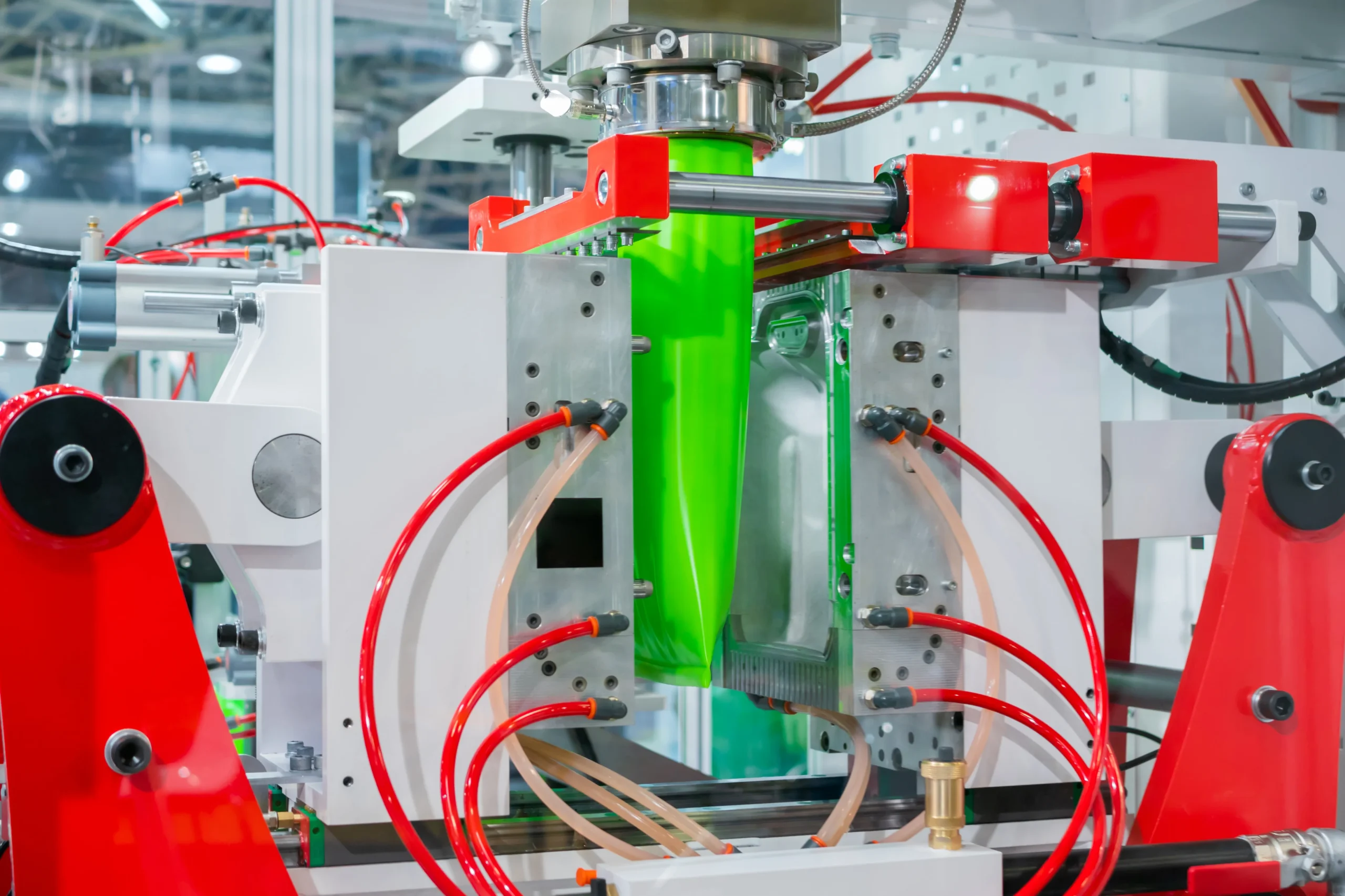
Hollow parts formed by extruding a molten parison, then blowing it against the mold. The workhorse route for tanks, jerry cans, drums, bottles, and ducts. HDPE, PP, and LDPE, wall programmed point by point.
BLOW MOLDING
MANUFACTURERS
FROM INDIA
Custom blow molding for hollow plastic parts. Extrusion blow, injection blow, and stretch blow. HDPE, PP, and PET, wall thickness held in process, leak and drop tested. One accountable owner from drawing to your US dock. India first, more regions as your volume grows.
VIA INDIGOS is a US contract manufacturing company that runs blow molding programs in India, as one accountable owner from drawing to US dock. Extrusion blow, injection blow, stretch blow, leak testing, and assembly sit under one program, with first article and PPAP on every part.
The procurement emails
you already know.
If you have ever sourced blow molded tanks, bottles, or containers from anywhere in the world, you know the routine. Email at 9 in the morning. No reply. Email again at 4. Maybe an answer Tuesday. We built VIA INDIGOS so the fifth email never lands. Because one missed handoff on a blow molding program can cost you three weeks of production line downtime.
YOUR BLOW MOLDING PROGRAM, DE-TANGLED.
If you have ever sourced blow molded tanks, bottles, or containers from anywhere in the world, you know the routine. Most buyers spend their week chasing updates instead of doing their real work. We built VIA INDIGOS to give that time back. Most blow molding programs run resin drying, parison extrusion, blowing, trimming, leak testing, and sometimes molding and tooling to get to your dock, and we run the whole chain under one owner. 25+ plastics partner facilities across our key India clusters, part of a 470+ facility audited partner network. Wall thickness held in process, parts from small bottles to 1000 liter tanks. One owner on your program from drawing intake through US dock delivery. Whether your monthly volume is 5,000 pieces or 500,000, we set up the program the same way.
I walk the molding floor before a single PO is placed. We check the blow molding machines and resin dryers against the part, the mold shop, the leak test rigs, and the lab that will run your wall thickness and dimensional checks. We pick partners who run molding, trimming, testing, and assembly under their own roof, on their own QA team, on their own clock. One roof, one floor, one accountable team for the full blow molding chain. DFM happens before a mold is cut. DFM, first article, and PPAP validation gates come with photographic evidence, wall maps and dimensional data, and a written verdict from our quality lead. Boots on the ground, every step of the way.
My team runs weekly checks on wall thickness, part weight, leak rate, and pinch-off strength. We track SPC on wall sections and key dimensions, drop and top load results on the part, and lot to lot consistency on weight and color. We send you a status report every Friday that covers WIP, test results, mold health, and shipping milestones. Carton and pallet loading photos reach your inbox before the seal goes on. Every lot carries a traceability ID from resin batch to your receiving dock. Nothing ships until the dimensional report and the leak test report both show green. We do not wait for you to ask. We report because that is how a blow molding program should run.
Where the chain breaks.
And where we hold it.
Most contract manufacturers worldwide drop the ball at the handoff between two teams. We hold every one. Ten real stages, drawing to your dock. No sub-step skipped, no handoff left to chance.
Three things we control that a basic blow molder skips.
A blow molded part is only as good as the resin, the wall, and the steps after the mold. Most shops hand you loose containers and call it done. Three controls separate a blow molding program that ships clean from one that ships you a reject report.
We do not run whatever wall the machine defaults to. The parison is programmed point by point so material lands where the part needs it, thick at the corners and the pinch-off, even up the side wall. Every setup carries a wall thickness map and a part weight window before the run. Resin melt index is matched to the part so the parison holds shape and does not sag.
Every container is leak tested, not a sample, by pressure decay or vacuum. Pressure parts get a burst check and a top load to the drawing limit. Drop impact per ASTM D2463 runs on the filled part, and stress crack resistance per ASTM D2561 on the resin where the duty calls for it. A part that leaks at the weld or cracks on the drop never reaches your dock.
DFM and wall study. First article off the mold, wall map and dimensional on the part. PPAP production sign off. Each gate carries a checklist, photos of the part, and the sample side by side with the print. A run that starts without a first article is a run that drifts on wall and weight. We catch it on the bench, not on your line. Dimensional and leak test reports run on every production lot before it ships.

What we do not doon a blow molding program.
On the molding floorbefore you ask.
Most India sourcing is run from a laptop in Cincinnati. Ours is not. Our team is physically present at partner facilities for first article reviews, wall thickness and leak test sign offs, and production launches. When something slips, we see it before you do. When quality holds, we have the photo evidence to prove it.
Key India manufacturing clusters. 25+ qualified plastics partner facilities. Real people on the floor making sure your drawing becomes a part that passes PPAP the first time.


Inside our India blow molding network.
Key clusters. 25+ audited plastics partners across extrusion blow, injection blow, stretch blow, and assembly. Hover any marker to see partner count and what runs there.
Key India clusters · 25+ blow molding partners · 2L to 1000L part range
FIVE BLOW MOLDING PROCESSES
WE RUN FROM INDIA.
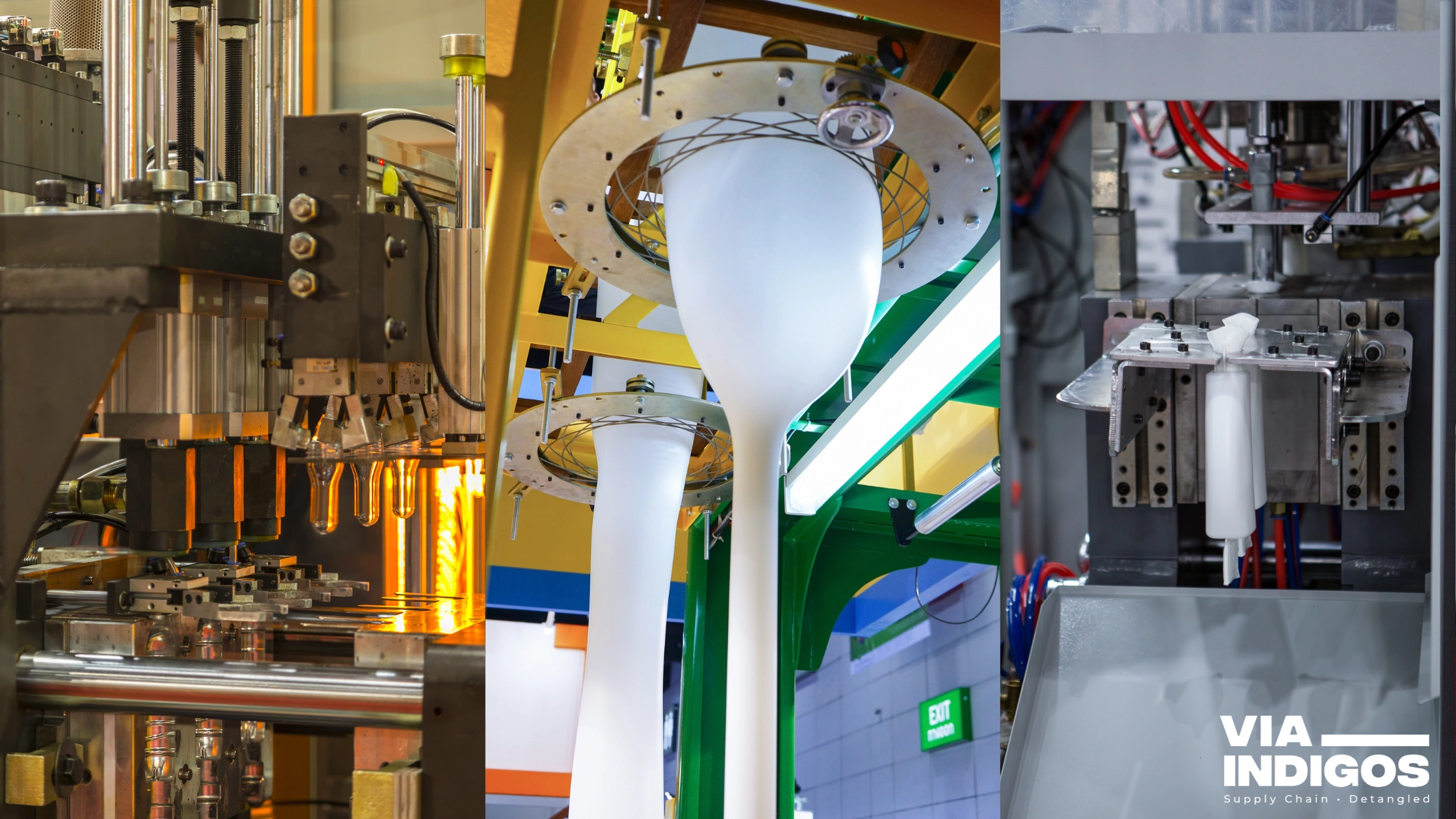
Extrusion blow forms tanks, jerry cans, and drums from a parison. Injection blow and stretch blow make bottles where the neck and the clarity have to hold. Co-extrusion adds barrier layers, and 3D suction blow follows tight bends for ducts. All of it runs through one VIA INDIGOS playbook. One owner from drawing to dock. One status update every Friday. One India network of 40 plus audited partner facilities behind every program.
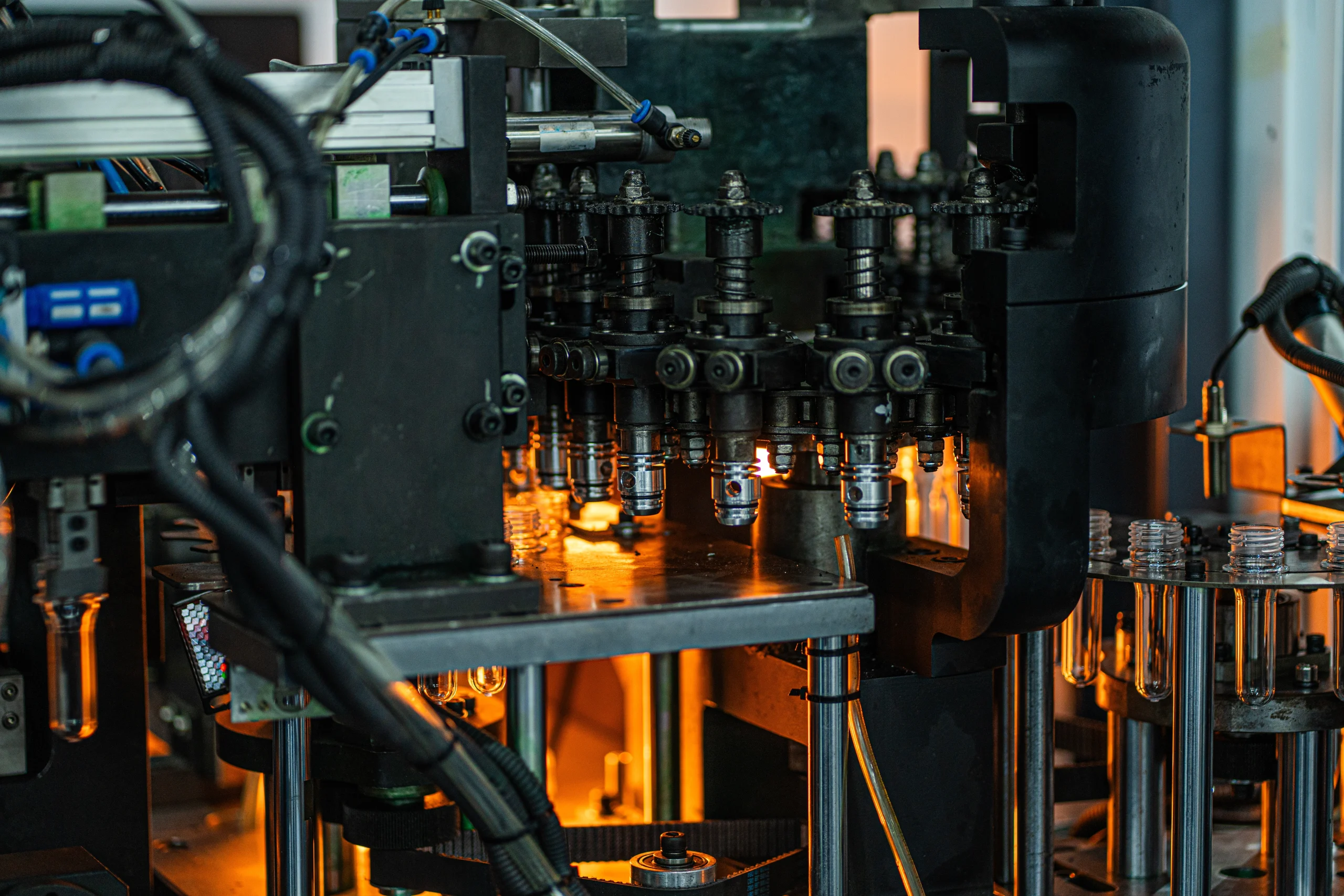
A preform is injection molded onto a core, then blown to shape in a second station. No pinch-off, no scrap, and a precise threaded neck. The route for small bottles where the neck finish has to hold.
A PET preform is reheated, stretched on a rod, and blown. Biaxial stretch gives clarity, strength, and a light wall. The standard for clear bottles that carry pressure or sit on a retail shelf.
Two to six layers blown as one wall. A barrier layer for fuel and chemicals, a regrind core to cut cost, a color skin outside. The layers fuse in the parison, not glued, so the wall holds as one part.
The parison is drawn through a 3D mold so material follows tight bends with little scrap. The route for curved air ducts and hollow parts a straight parison cannot reach. Common on automotive under hood.
Blow molding process comparison · cost, volume, lead time.
Extrusion blow vs injection blow vs stretch blow vs co-extrusion vs 3D suction. Five honest comparisons, not marketing claims. Use this to short list before you send the drawing.
EXTRUSION BLOW
Tanks, jerry cans, drums, ducts.
INJECTION BLOW
Small bottles, pharma, cosmetics.
STRETCH BLOW
Clear PET bottles, beverage, water.
MULTILAYER CO-EX
Fuel tanks, barrier and regrind core.
3D SUCTION BLOW
Auto air ducts, complex hollow parts.
Not sure which fits? Send the drawing and we recommend the right process for your part, volume, and material, and quote both options where it makes sense.
PARISON CONTROL AND WALL PROGRAMMING.
A blow molded part is set the moment the parison forms. Resin is dried and melted, pushed out as a tube, then blown against the mold while the wall is programmed point by point. We run continuous and accumulator head machines for tanks and drums, and injection and stretch blow for bottles, then check wall and part weight before the part ships.


| Machine type | Mode | Typical resins | Part range | Typical use |
|---|---|---|---|---|
| Continuous extrusion blow | Continuous | HDPE, PP, LDPE | 20mL to 30L | Bottles, jerry cans, small tanks |
| Accumulator head blow | Shot | HDPE, PP | 5L to 1000L | Drums, large tanks, ducts |
| Injection blow (IBM) | Two station | PP, PE, PET | 5mL to 500mL | Small bottles, pharma, cosmetics |
| Injection stretch blow (ISBM) | Preform and blow | PET, PP | 100mL to 5L | Clear bottles, beverage, water |
| 3D suction blow | 3D parison | HDPE, PA, TPV | complex hollow | Auto air ducts, bent hollow parts |
Every part wall is checked against the print, and part weight is verified off the machine. Containers are leak tested before they ship. Molds are cut and held at the partner facility so the part runs the same way every time.
TESTING AND ASSEMBLY UNDER ONE ROOF.
A blow molded part is not done when it leaves the mold. Flash and the pinch tail get trimmed, the part gets leak tested, the neck gets a closure, and a print or label goes on. So trimming, testing, decoration, and assembly sit next to molding under the same owner, not a shop you chase later. Every part is leak tested and checked against the print before it ships.


| Step | How it runs | Typical spec | Notes |
|---|---|---|---|
| Deflash and trim | Pinch tail and flash removed | to print | Tanks, jerry cans, handled parts |
| Leak and pressure test | Pressure decay or vacuum | 100% tested | Every container, not a sample |
| Drop and top load | Filled drop and stack load | ASTM D2463 | Validation on the lot |
| Neck and closure | Threads gauged, cap fitted | PCO 1810 / 1881 | Bottles, jerry cans, drums |
| Decoration | Print, label, or sleeve | to artwork | Screen, IML, hot stamp |
| Assembly and kitting | Sprayer, handle, insert fitted | to BOM | Spray bottles, kits, sub assembly |
Leak testing, drop testing, decoration, and assembly run through the same partner network. We confirm the resin, the wall, and any closure callout during DFM review, and the test report goes in the PPAP file.
DFM . FAI . PPAP .
NO RUN SHIPS WITHOUT A GATE.
Three gates, three sign offs, photo evidence at every step. We do not move a part forward unless the gate before it is closed. A run that starts without a first article is a run that drifts on wall and weight, and we would rather catch it on the bench than on your line.

The wall distribution is checked back to the drawing. Parison program set, mold cut and trialed. Wall thickness, pinch-off, and part weight target all signed off before the first production part.
- Wall map vs drawing and sample
- Parison program and blow ratio set
- Resin and melt index confirmed
- Photo set archived in the project file

The first part off the mold. Full dimensional report, a wall thickness map across the part, part weight, and a leak test. Drop and top load to the drawing limit. Report to you before the next run.
- Wall thickness map across the part
- Part weight and dimensional report
- Leak test and drop per ASTM D2463
- Buyer engineering call before PPAP

PPAP package complete. PSW signed by the buyer. Resin certificate and ASTM test results on file, capability on critical dimensions above Cpk 1.67. Lot traceability live to the resin lot. Production releases only after the buyer has the full PPAP package in hand.
- PPAP Level 3 package signed off
- Resin cert and ASTM D2463 results
- Leak test and top load on the lot
- Lot traceability ID assigned
One owner runs your whole blow molding program,
drawing to dock.
A blow molding program that runs across two countries, three suppliers, and a dozen handoffs is going to break unless someone owns every step. Below is what your program looks like under one VIA INDIGOS owner, end to end.
BLOW MOLDING QUALITY AND TESTING.
If a metric does not have an owner, a target, and a data source, it is not a metric. These are the targets every blow molding program is held to and the bar we set with our partner facilities, tracked weekly and surfaced in your Friday status email.
Blow moldingresins we run.
The right resin is half the part. We run the common families chosen for strength, barrier, clarity, and the duty the container sees. Below is the working range. A material certificate travels with every lot so the resin traces back to the part.
| Resin | Common grades | Density g/cc | Key properties | Typical parts |
|---|---|---|---|---|
| HDPE | Blow grade, high MW | 0.94 to 0.96 | Stiffness, stress crack and chemical resistance | Tanks, jerry cans, drums, bottles |
| Polypropylene (PP) | Homopolymer, copolymer | 0.90 to 0.91 | Heat, clarity, living hinge | Hot fill bottles, jars, ducts |
| PET | Bottle grade, IV 0.78 to 0.84 | 1.33 to 1.40 | Clarity, strength, light wall | Beverage and water bottles |
| LDPE and LLDPE | Squeeze grade | 0.92 to 0.93 | Soft, flexible, squeezable | Squeeze and dropper bottles |
| PVC | Rigid blow grade | 1.30 to 1.45 | Clarity, chemical, low cost | Clear bottles, packaging |
| Polycarbonate (PC) | Blow grade | 1.20 | Impact, clarity, heat | Reusable water bottles, housings |
| PETG copolyester | Clear blow grade | 1.27 | Clarity, toughness, chemical | Cosmetic and clear containers |
| Multilayer with EVOH | Barrier co-extrusion | varies | Oxygen and fuel barrier, regrind core | Fuel tanks, barrier containers |
Reading a resin spec. Two numbers matter most for blow molding. Density sets stiffness and barrier, so a fuel tank or drum runs a high density HDPE near 0.95 g/cc. Melt flow index sets how the parison holds before it blows, and a blow grade runs low, near 0.2 to 0.7, so the tube does not sag. An injection grade at 8 or higher is the wrong resin even when the polymer name matches the print. Send the part and the duty, and we match the resin to it.
Other resins and colors run on request. The grade depends on the part and the duty. We confirm resin, wall, and color during DFM review before quote, and the material certificate goes in the PPAP file.
Send your blow molding drawing.
Get a full landed cost.
Upload your drawings. We review, run DFM, and return a full landed cost breakdown with tooling timeline and PPAP scope. You get one contact from intake to ship.
Eleven industries we blow mold parts for.
Every industry has its own certs, its own regulatory pressure, its own drawing conventions. The handoff discipline stays the same. What changes is the technical documentation that moves with the part.
Automotive blow molded parts
Camping and outdoor blow molded parts
Construction blow molded parts
Consumer product blow molded parts
Consumer electronics blow molded parts
Electrical blow molded parts
Electronics blow molded parts
Hardware and fittings blow molded parts
Lawn and agricultural blow molded parts
Pet industry blow molded parts
Toy goods blow molded parts
Capabilities Beyond Blow Molding.
Notes from the molding floor.
Top applications of blow molding.
Where blow molding earns its place across automotive, packaging, and industrial parts. Tanks, jerry cans, drums, bottles, ducts, and the hollow parts that carry fluids and air.
Read the post →See all from the floor.
Every field note we have published on blow molding, tooling, testing, and getting parts from an India line to your dock.
Browse the blog →Blow molding questions we getevery week.
Plain English answers, written for procurement and engineering teams who want a real number, not a brochure. Last reviewed by Mandeep Singh in May 2026.
HDPE, PP, PET, LDPE, LLDPE, PVC, polycarbonate, PETG, and multilayer with an EVOH barrier. Blow grades run from squeeze soft bottles to high density tanks and drums. Tell us the part and the duty and we confirm the resin and the grade during DFM review.
Color, UV grade, and food or pharma grade are set on the same call, so the first article matches the spec, not a guess.
Blow molding holds wider than injection because the wall forms as the parison blows. Wall and linear run to plus minus 0.2 to 0.5 mm on programmed sections, tighter on injection and stretch blow. Neck finishes hold to bottle standards like PCO 1810 and 1881.
If a print calls injection tolerances on a blow molded part, we flag it at DFM and propose a class the process can actually hold.
A blow mold runs 5 to 8 weeks for extrusion blow, 8 to 12 weeks for injection or stretch blow. A first article off the mold lands a couple of weeks after the tool. Production runs follow once first article and PPAP are signed.
We give you the mold and first article dates in writing at quote, not a vague promise.
Once the mold exists, minimums are by run size, often a few thousand parts per release for extrusion blow, higher for stretch blow on multi cavity tooling. We set a minimum order value rather than a piece count so small parts still pencil out.
Tell us the part and the annual volume and we tell you the run size that makes the price work.
Wall thickness mapping and part weight on first article, a leak test on every part by pressure decay or vacuum, drop impact to ASTM D2463, top load to the drawing limit, and stress crack resistance to ASTM D2561 where the duty calls for it.
Dimensions are checked on every lot, and the test report goes in the PPAP file. If we cannot show it, we will not ship it.
Every part, not a sample, on parts where a leak is a field failure. Pressure decay or vacuum on the line catches a weak pinch-off or a thin corner before the part leaves the floor.
Pressure parts also get a burst check and a top load on the lot, so a weld that would let go under load is caught on the bench, not on your customer line.
You do. Mold ownership transfers to the buyer on full payment, in writing, with a tooling passport that records mold ID, build history, and storage location. We hold the mold at our partner facility on a bailment basis.
If you want to move programs later, the tooling is yours. We do not lock molds to facilities or hold them hostage.
Your blow molded parts are
worth a free quote.
Send us your drawings. You get a full landed cost breakdown, a tooling timeline, the recommended blow molding process, and a PPAP scope. One contact from intake to ship. No commitment required.
30 minutes · no obligation · bring your drawings
Where should we send it?
Three working templates we use on every blow molding program. PPAP checklist. Tooling Gantt template. Supplier audit checklist. Yours to keep, even if we never work together.
Sent.
Check your inbox in the next 60 seconds. If it does not show up, check spam, or write to us at work@viaindigos.com and we will resend it.