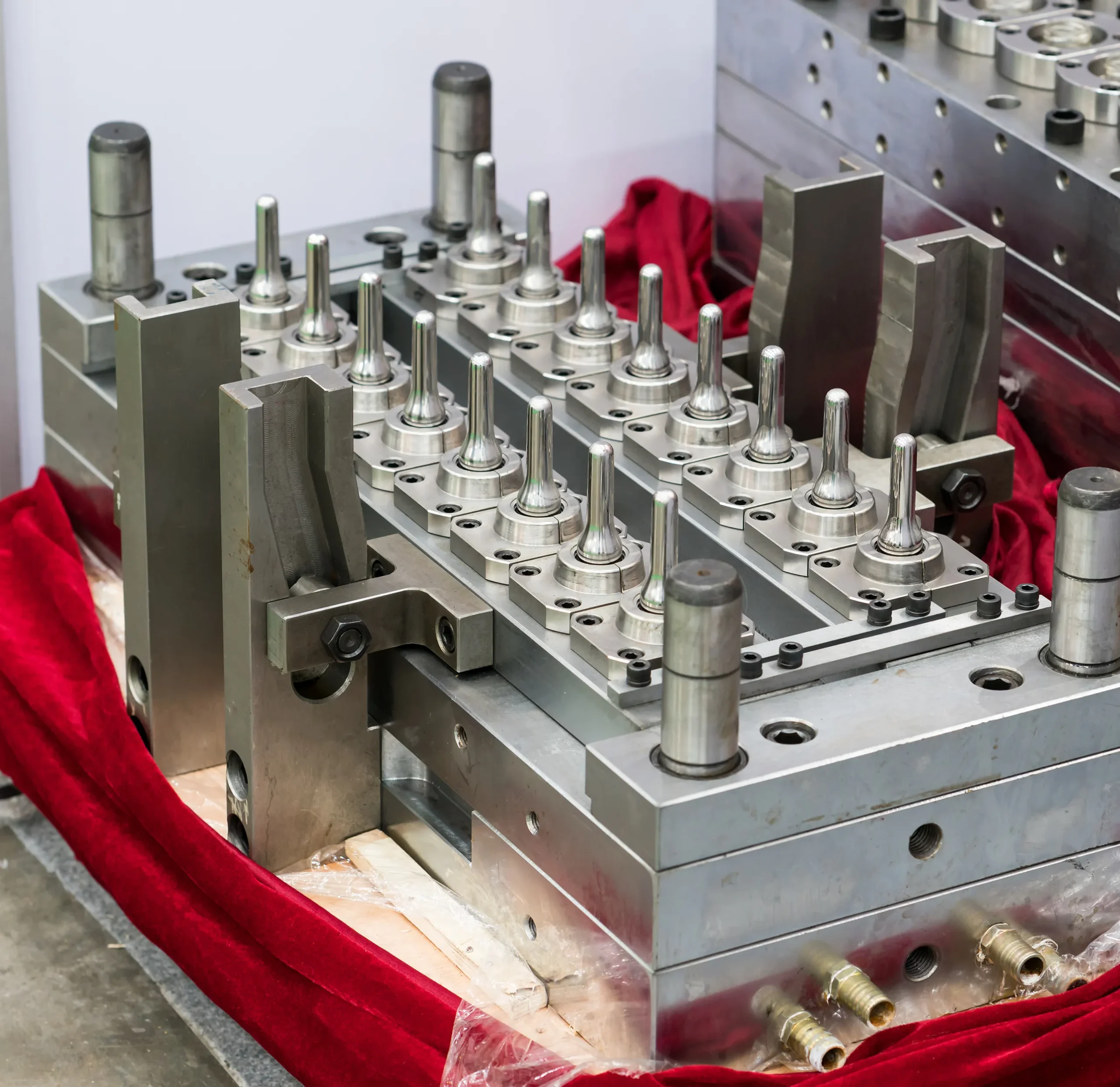
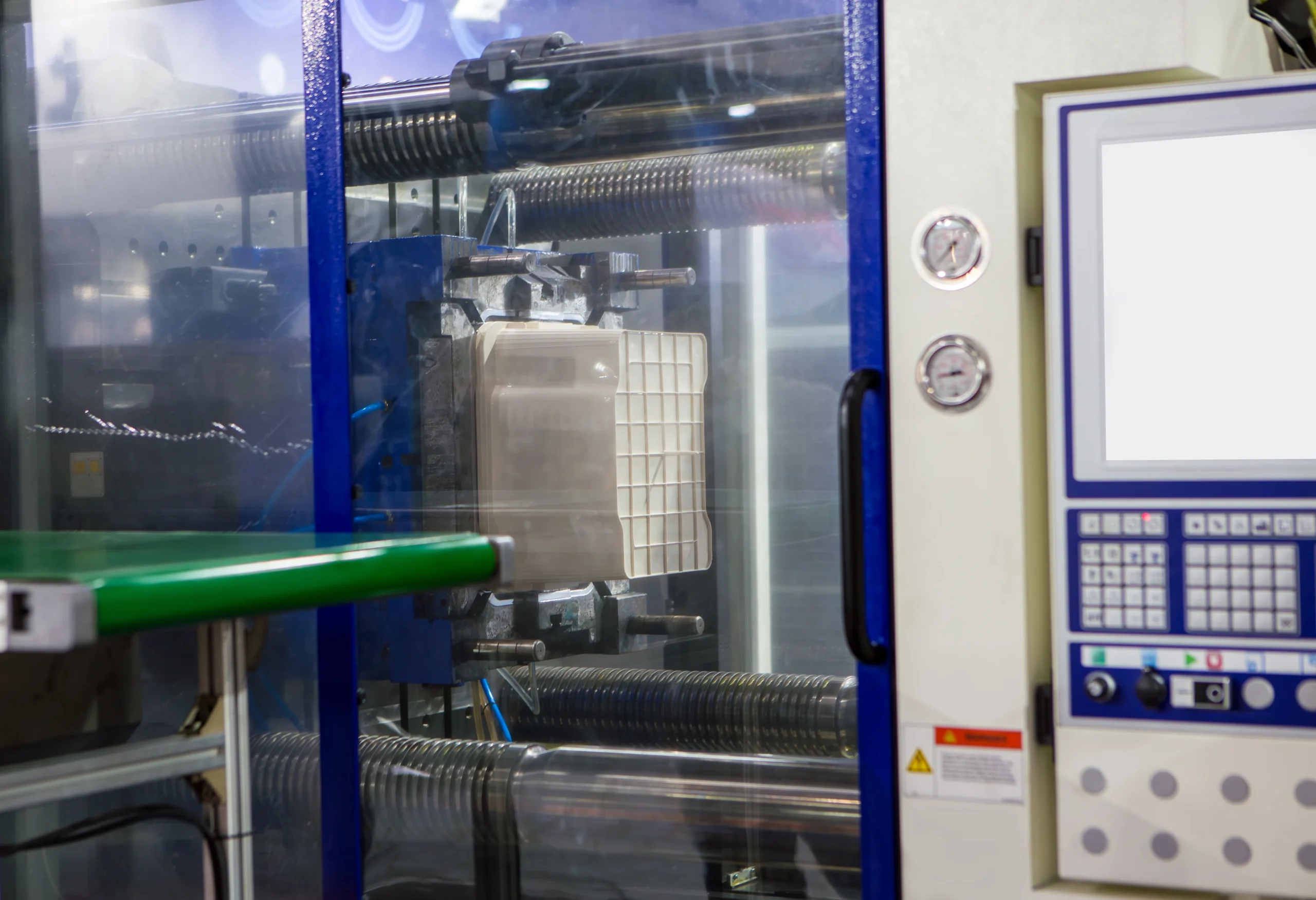
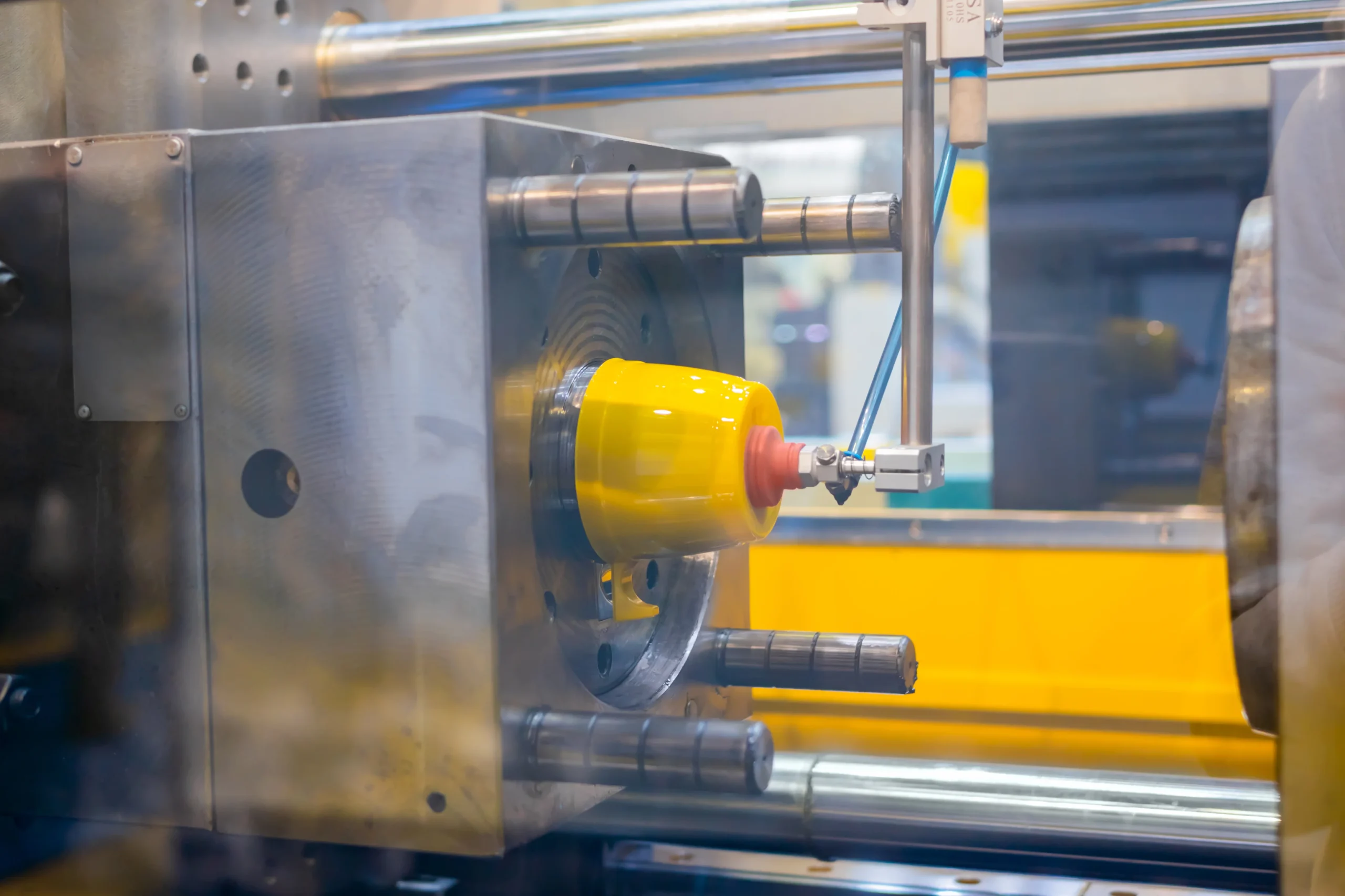
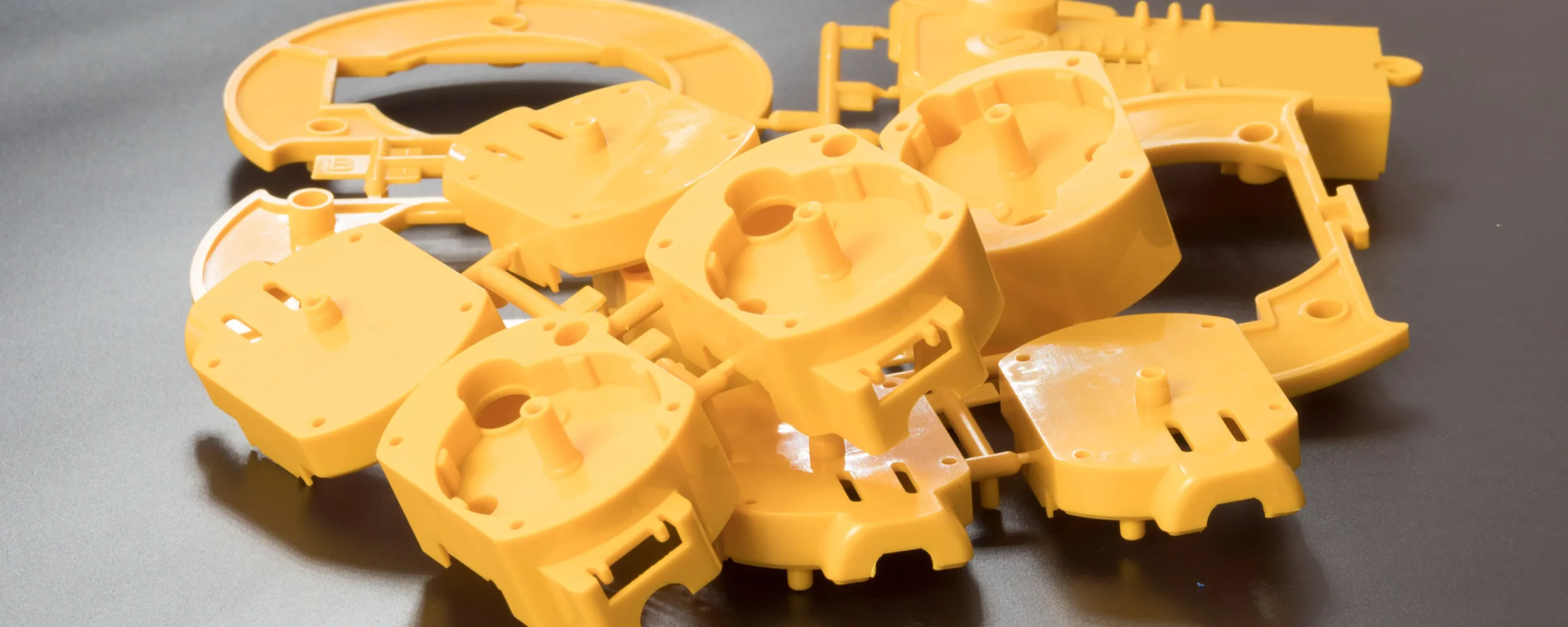
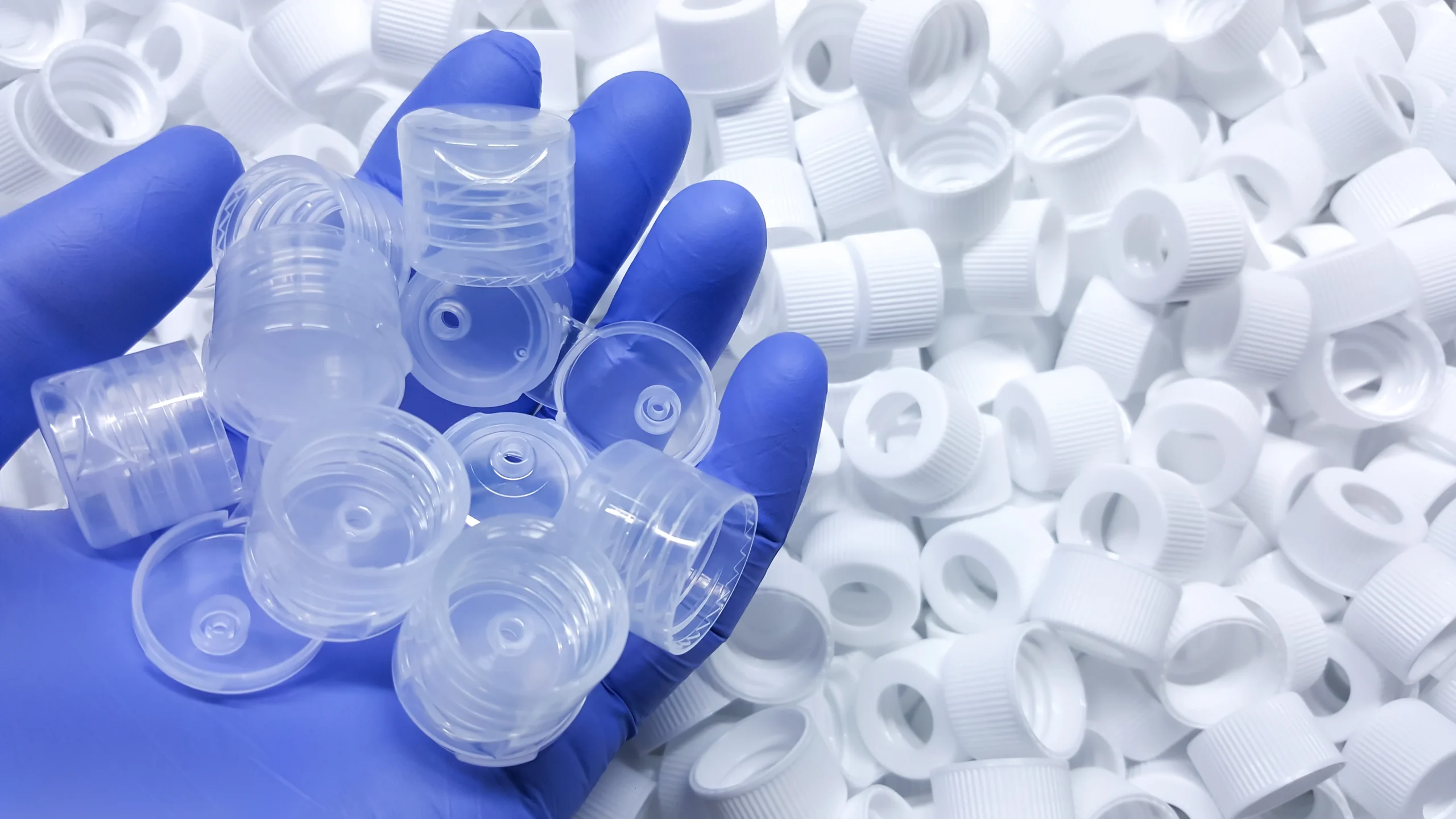
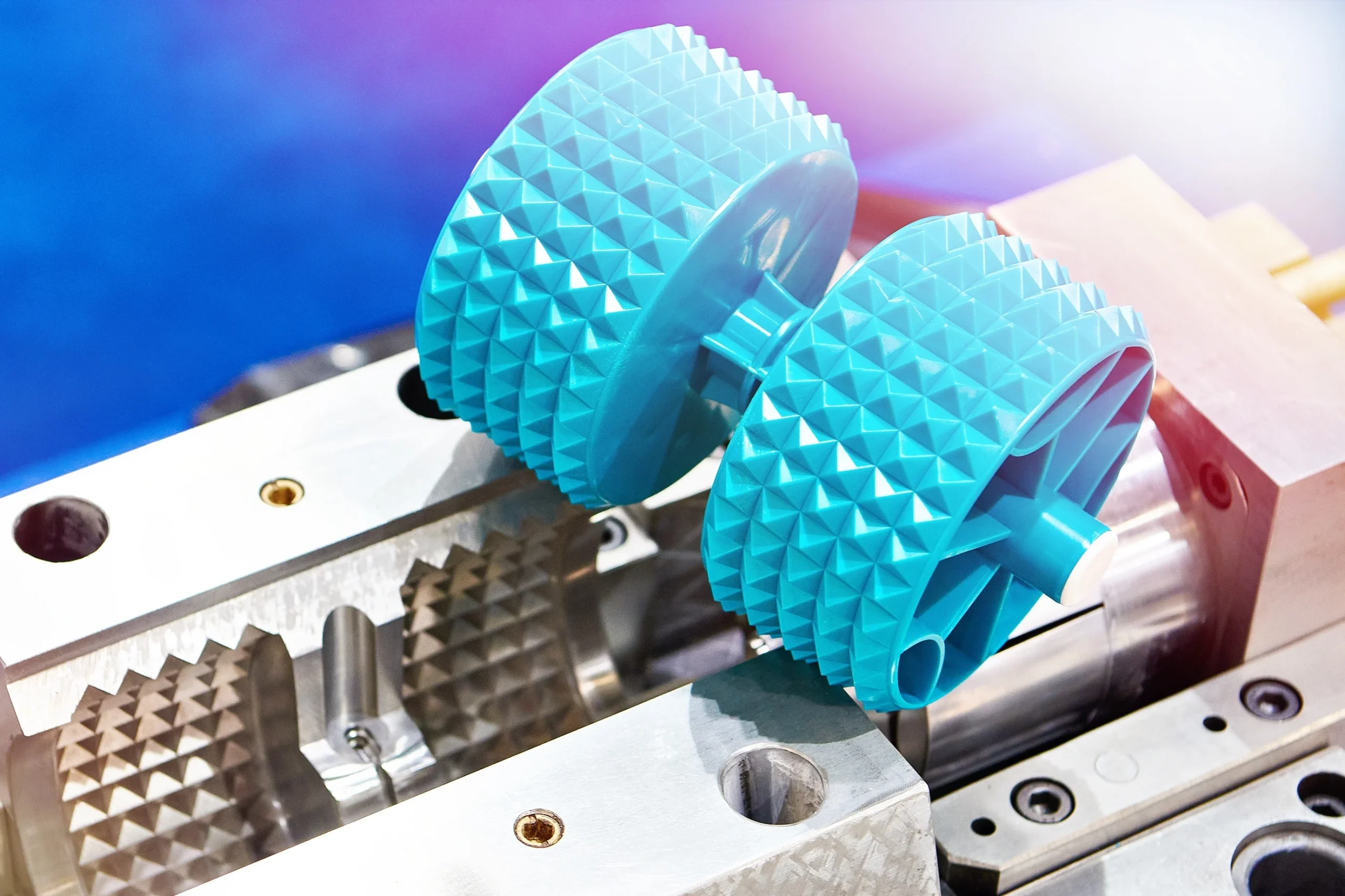
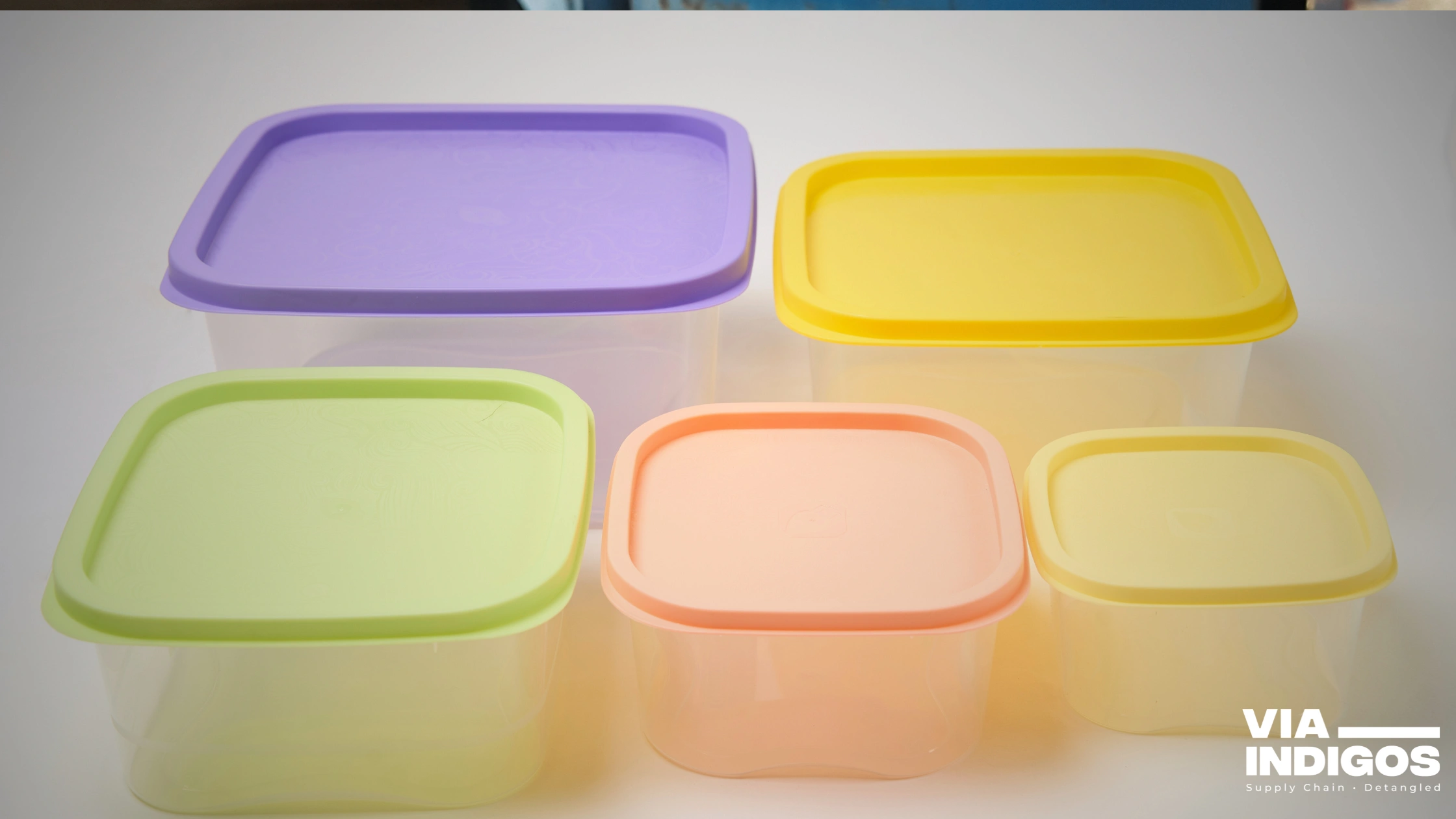
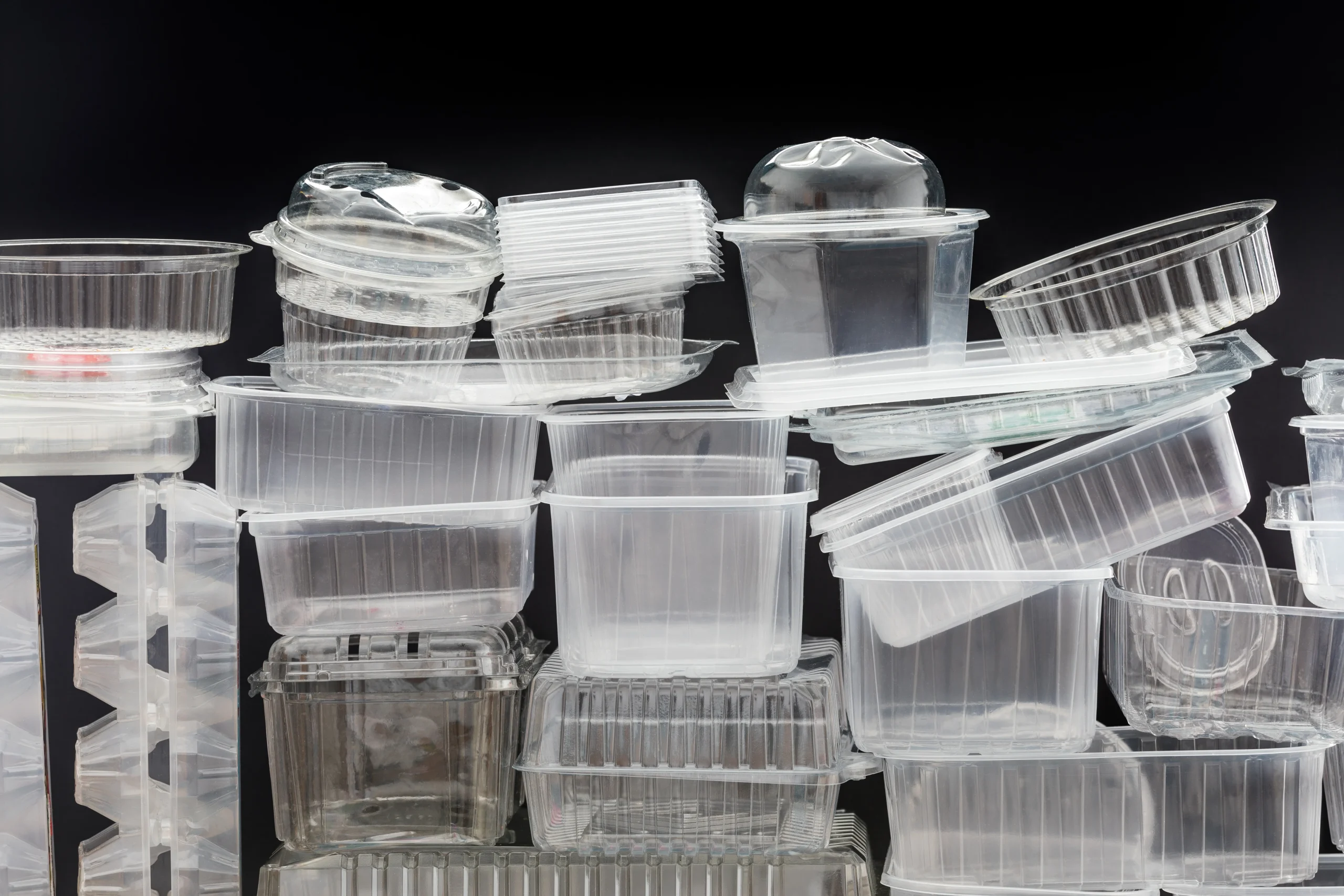
Molten resin injected into a steel mold under pressure, cooled, and ejected. The workhorse route for housings, brackets, covers, and enclosures. ABS, PC, PP, nylon, and engineering grades, single or multi cavity.
INJECTION MOLDING
MANUFACTURERS
FROM INDIA
Custom plastic injection molding for precision parts. Over-molding, insert molding, and multi-shot. ABS, PC, nylon, and PP, tolerances held in process, dimensions checked on a CMM. One accountable owner from drawing to your US dock. India first, more regions as your volume grows.
VIA INDIGOS is a US contract manufacturing company that runs injection molding programs in India, as one accountable owner from drawing to US dock. Tooling, over-molding, insert molding, multi-shot, and assembly sit under one program, with first article and PPAP on every part.
The procurement emails
you already know.
If you have ever sourced injection molded housings, brackets, or components from anywhere in the world, you know the routine. Email at 9 in the morning. No reply. Email again at 4. Maybe an answer Tuesday. We built VIA INDIGOS so the fifth email never lands. Because one missed handoff on an injection molding program can cost you three weeks of production line downtime.
YOUR INJECTION MOLDING PROGRAM, DE-TANGLED.
If you have ever sourced injection molded housings, brackets, or components from anywhere in the world, you know the routine. Most buyers spend their week chasing updates instead of doing their real work. We built VIA INDIGOS to give that time back. Most injection molding programs run material drying, molding, in-mold steps, finishing, inspection, and sometimes molding and tooling to get to your dock, and we run the whole chain under one owner. 25+ plastics partner facilities across our key India clusters, part of a wider audited partner network. Tolerances held in process, parts from micro components to large housings. One owner on your program from drawing intake through US dock delivery. Whether your monthly volume is 5,000 pieces or 500,000, we set up the program the same way.
I walk the molding floor before a single PO is placed. We check the injection molding machines and material dryers against the part, the mold shop, the inspection lab, and the CMM that will run your dimensional checks. We pick partners who run molding, finishing, testing, and assembly under their own roof, on their own QA team, on their own clock. One roof, one floor, one accountable team for the full injection molding chain. DFM and mold flow happen before a mold is cut. DFM, first article, and PPAP validation gates come with photographic evidence, dimensional data, and a written verdict from our quality lead. Boots on the ground, every step of the way.
My team runs weekly checks on dimensions, part weight, short shots, sink, and flash. We track SPC on critical features and key dimensions, cavity pressure and cycle stability, and lot to lot consistency on weight and color. We send you a status report every Friday that covers WIP, inspection results, mold health, and shipping milestones. Carton and pallet loading photos reach your inbox before the seal goes on. Every lot carries a traceability ID from resin lot to your receiving dock. Nothing ships until the dimensional report and the inspection report both show green. We do not wait for you to ask. We report because that is how an injection molding program should run.
Where the chain breaks.
And where we hold it.
Most contract manufacturers worldwide drop the ball at the handoff between two teams. We hold every one. Ten real stages, drawing to your dock. No sub-step skipped, no handoff left to chance.
Three things we control that a basic molder skips.
An injection molded part is only as good as the resin, the tooling, and the steps after the mold. Most shops hand you loose parts and call it done. Three controls separate an injection molding program that ships clean from one that ships you a reject report.
We do not run a tool that was never matched to the part. Steel, cavitation, gate location, runner balance, and cooling are set against your volume and your material before a cavity is cut. Mold flow is run at DFM to find sink, warp, and short shots on the screen, not on the floor. Every setup carries a process sheet and a part weight window before the run.
Critical features are measured on a CMM against the print, not signed off by eye. SPC runs on the dimensions that matter, with capability tracked through the run. Mechanical checks like tensile per ASTM D638 and flexural per ASTM D790 run on the resin where the duty calls for it. A part that drifts out of tolerance never reaches your dock.
DFM and mold flow. First article off the tool, full dimensional on the part. PPAP production sign off. Each gate carries a checklist, photos of the part, and the sample side by side with the print. A run that starts without a first article is a run that drifts on dimensions and cosmetics. We catch it on the bench, not on your line. Dimensional and cosmetic reports run on every production lot before it ships.

What we do not doon an injection molding program.
On the molding floorbefore you ask.
Most India sourcing is run from a laptop in Cincinnati. Ours is not. Our team is physically present at partner facilities for first article reviews, dimensional and CMM sign offs, and production launches. When something slips, we see it before you do. When quality holds, we have the photo evidence to prove it.
Key India manufacturing clusters. 25+ qualified plastics partner facilities. Real people on the floor making sure your drawing becomes a part that passes PPAP the first time.


Inside our India injection molding network.
Key clusters. 25+ audited plastics partners across injection, over-molding, insert, multi-shot, and assembly. Hover any marker to see partner count and what runs there.
Key India clusters · 25+ injection molding partners · 0.5 g to 5 kg part range
FIVE INJECTION MOLDING PROCESSES
WE RUN FROM INDIA.
Standard injection molding runs the high volume work, from housings to brackets. Over-molding bonds a soft grip or seal to a rigid part. Insert molding sets metal threads and terminals in place. Multi-shot molds two materials in one cycle, and gas-assist hollows thick sections to cut weight and sink. All of it runs through one VIA INDIGOS playbook. One owner from drawing to dock. One status update every Friday. One India network of 25 plus audited partner facilities behind every program.
A soft material is molded over a rigid substrate so the bond holds without glue. The route for soft-grip handles, seals, and grips. TPE or TPU over ABS, PC, or nylon, two materials as one part.
Metal inserts, threads, pins, or terminals are placed in the mold and the plastic is molded around them. The route for threaded bosses, electrical terminals, and metal-to-plastic parts that take load.
Two materials or two colors molded in one cycle on a rotating or transfer tool. Hard and soft, or two colors, fused as one part with no secondary assembly. Common on buttons, housings, and sealed grips.
Nitrogen is injected to hollow thick sections from the inside, cutting sink, warp, weight, and cycle time. The route for thick handles, panels, and structural parts that would otherwise sink. Common on automotive and furniture.
Injection molding process comparison · cost, volume, lead time.
Injection vs over-molding vs insert molding vs multi-shot vs gas-assist. Five honest comparisons, not marketing claims. Use this to short list before you send the drawing.
INJECTION MOLDING
Housings, brackets, covers, enclosures.
OVER-MOLDING
Soft grips, seals, handles, tools.
INSERT MOLDING
Threaded bosses, terminals, connectors.
MULTI-SHOT 2K
Two-color parts, hard-soft, sealed grips.
GAS-ASSIST
Thick handles, panels, structural parts.
Not sure which fits? Send the drawing and we recommend the right process for your part, volume, and material, and quote both options where it makes sense.
THE MOLDING CYCLE AND CAVITY CONTROL.
An injection molded part is set the moment the cavity fills. Resin is dried and melted, injected into the mold under pressure, packed, and cooled while shrink, sink, and warp are held in check. We run hydraulic, electric, and hybrid machines from micro tonnage to large clamps, with scientific molding on critical features, then check dimensions and part weight before the part ships.


| Machine type | Drive | Typical resins | Clamp range | Typical use |
|---|---|---|---|---|
| Hydraulic injection | Hydraulic | ABS, PP, PC, nylon | 50 to 2000 t | General parts, large housings |
| All-electric injection | Electric | ABS, PC, POM, nylon | 20 to 550 t | Precision, clean room, fast cycle |
| Hybrid injection | Hybrid | ABS, PC, glass-filled | 100 to 1300 t | Large precision parts |
| Multi-shot 2K | Two units | ABS, TPE, PC | 50 to 700 t | Two-color, hard-soft parts |
| Micro injection | Micro shot | POM, LCP, PEEK | under 15 t | Tiny precision parts, connectors |
Every critical dimension is checked against the print, and part weight is verified off the machine. Parts are inspected on a CMM before they ship. Molds are cut and held at the partner facility so the part runs the same way every time.
TESTING AND ASSEMBLY UNDER ONE ROOF.
An injection molded part is not done when it leaves the mold. Gates and runners get removed, the part gets inspected, inserts and assemblies get fitted, and a print or pad mark goes on. So degating, inspection, decoration, and assembly sit next to molding under the same owner, not a shop you chase later. Every part is checked against the print before it ships.


| Step | How it runs | Typical spec | Notes |
|---|---|---|---|
| Degate and trim | Gate and runner removed | to print | Manual, robot, or auto degate |
| Dimensional check | CMM and gauges | to drawing | Critical features, not a sample |
| Mechanical test | Tensile and flex | ASTM D638 / D790 | Validation on the lot |
| Inserts and threads | Metal set in place | to print | Insert molding or post-fit |
| Decoration | Pad print, label, or paint | to artwork | Pad, IML, laser mark |
| Assembly and kitting | Sub parts fitted | to BOM | Multi-part, kits, sub assembly |
Inspection, mechanical testing, decoration, and assembly run through the same partner network. We confirm the resin, the tolerances, and any insert or finish callout during DFM review, and the test report goes in the PPAP file.
DFM . FAI . PPAP .
NO RUN SHIPS WITHOUT A GATE.
Three gates, three sign offs, photo evidence at every step. We do not move a part forward unless the gate before it is closed. A run that starts without a first article is a run that drifts on dimensions and cosmetics, and we would rather catch it on the bench than on your line.

The part is checked back to the drawing for wall, draft, and gate. Mold flow run to find sink, warp, and short shots. Steel, cavitation, gate, and part weight target all signed off before the first production part.
- Mold flow vs drawing and sample
- Gate location and runner balance set
- Resin, filler, and shrink confirmed
- Photo set archived in the project file

The first part off the tool. Full dimensional report on a CMM, critical features mapped, part weight, and a cosmetic check. Mechanical test to the drawing limit. Report to you before the next run.
- Critical features mapped on a CMM
- Part weight and dimensional report
- Tensile and flex per ASTM D638 and D790
- Buyer engineering call before PPAP

PPAP package complete. PSW signed by the buyer. Resin certificate and mechanical test results on file, capability on critical dimensions above Cpk 1.67. Lot traceability live to the resin lot. Production releases only after the buyer has the full PPAP package in hand.
- PPAP Level 3 package signed off
- Resin cert and ASTM D638 results
- CMM and SPC on the lot
- Lot traceability ID assigned
One owner runs your whole injection molding program,
drawing to dock.
An injection molding program that runs across two countries, three suppliers, and a dozen handoffs is going to break unless someone owns every step. Below is what your program looks like under one VIA INDIGOS owner, end to end.
INJECTION MOLDING QUALITY AND TESTING.
If a metric does not have an owner, a target, and a data source, it is not a metric. These are the targets every injection molding program is held to and the bar we set with our partner facilities, tracked weekly and surfaced in your Friday status email.
Injection moldingresins we run.
The right resin is half the part. We run the common families chosen for strength, stiffness, heat, clarity, and the duty the part sees. Below is the working range. A material certificate travels with every lot so the resin traces back to the part.
| Resin | Common grades | Density g/cc | Key properties | Typical parts |
|---|---|---|---|---|
| ABS | General, plating, flame rated | 1.04 to 1.06 | Impact, rigidity, easy to mold | Housings, covers, trim |
| Polycarbonate (PC) | Clear, glass-filled | 1.20 to 1.32 | Impact, clarity, heat | Lenses, guards, housings |
| Polypropylene (PP) | Homopolymer, copolymer | 0.90 to 0.91 | Living hinge, chemical, light | Closures, hinges, housings |
| Nylon (PA6, PA66) | Unfilled, lubricated | 1.12 to 1.15 | Strength, heat, wear | Gears, brackets, under-hood |
| Glass-filled nylon | 15 to 50 percent GF | 1.20 to 1.55 | Stiffness, low creep, strength | Structural brackets, housings |
| PBT | Unfilled, glass-filled | 1.30 to 1.55 | Dimensional, electrical, heat | Connectors, electrical parts |
| Acetal (POM) | Homopolymer, copolymer | 1.40 to 1.42 | Low friction, stiffness, fatigue | Gears, clips, bearings |
| Acrylic (PMMA) | Clear, UV grade | 1.17 to 1.20 | Optical clarity, scratch, UV | Lenses, light pipes, covers |
| PEEK | Unfilled, glass or carbon | 1.30 to 1.45 | High heat, chemical, strength | High-heat parts, seals, bushings |
| TPU, TPE, LSR | Shore A to D | 1.05 to 1.25 | Soft, flexible, grip, seal | Grips, seals, over-mold |
Reading a resin spec. Two things matter most for injection molding. Melt flow index sets how easily the resin fills the cavity, so a thin-wall part runs a higher flow grade and a structural part runs a lower one. Filler, like glass at 15 to 50 percent, sets stiffness, strength, and shrink, so a glass-filled nylon holds a tight bracket where an unfilled grade would creep. The polymer name on the print is not enough on its own. Send the part and the duty, and we match the resin, the filler, and the grade to it.
Other resins and colors run on request. The grade depends on the part and the duty. We confirm resin, filler, and color during DFM review before quote, and the material certificate goes in the PPAP file.
EIGHT MOLDING DEFECTS
AND HOW WE CATCH THEM.
Most molded part failures trace back to eight defects. Each one has a cause and a fix, and each one is what our team looks for at first article and on every lot. This is the checklist we run, not one we keep to ourselves.
Thin extra material that escapes the cavity at the parting line.
Dimples or depressions over thick sections, bosses, and ribs.
The part bends or twists out of flat after it cools.
A visible seam where two flow fronts meet and rejoin.
Wavy lines or rings on the surface from how the resin flowed.
Fine cracks or stress lines on or under the surface.
Trapped empty pockets sealed inside the part.
Dark spots or scorch where trapped air or melt overheats.
This is the defect list our team checks at first article and on every production lot. We catch these on the bench with a documented checklist, photos, and a CMM, so they do not reach your dock.
Send your injection molding drawing.
Get a full landed cost.
Upload your drawings. We review, run DFM, and return a full landed cost breakdown with tooling timeline and PPAP scope. You get one contact from intake to ship.
Eleven industries we injection mold parts for.
Every industry has its own certs, its own regulatory pressure, its own drawing conventions. The handoff discipline stays the same. What changes is the technical documentation that moves with the part.
Automotive injection molded parts
Camping and outdoor injection molded parts
Construction injection molded parts
Consumer product injection molded parts
Consumer electronics injection molded parts
Electrical injection molded parts
Electronics injection molded parts
Hardware and fittings injection molded parts
Lawn and agricultural injection molded parts
Pet industry injection molded parts
Toy goods injection molded parts
Capabilities Beyond Injection Molding.
Notes from the molding floor.
Top applications of injection molding.
Where injection molding earns its place across automotive, electronics, and consumer parts. Housings, brackets, connectors, gears, closures, and the precision parts that snap, seal, and bolt together.
Read the post →See all from the floor.
Every field note we have published on injection molding, tooling, testing, and getting parts from an India line to your dock.
Browse the blog →Injection molding questions we getevery week.
Plain English answers, written for procurement and engineering teams who want a real number, not a brochure. Last reviewed by Mandeep Singh in June 2026.
ABS, PC, PP, PE, nylon and glass-filled nylon, PBT, HIPS, acrylic, PEEK and other high-temp resins, plus elastomers like TPU and TPE and liquid silicone rubber. Engineering, flame-rated, food, and medical grades run on the same tooling once the resin is confirmed.
Tell us the part and the duty and we set the resin, the filler, and the color during DFM review, so the first article matches the spec, not a guess.
Injection holds tighter than blow molding, but micron talk on a molded part is a red flag. General dimensions run to about plus minus 0.1 mm, with critical features held tighter on hardened tooling with SPC and a CMM check. Shrink, fiber orientation, and gate location all move the number, so we set realistic classes at DFM.
If a print calls a ground tolerance on a molded feature, we flag it and propose a class the process can actually hold.
A production mold runs 6 to 12 weeks depending on cavitation, steel, and part size, with simpler single-cavity tools at the short end. First article off the tool lands a couple of weeks after the mold. Production follows once first article and PPAP are signed.
We give you the mold and first article dates in writing at quote, not a vague promise.
Yes. Over-molding bonds a soft grip or seal onto a rigid substrate. Insert molding sets metal threads, pins, or terminals into the part. Multi-shot, also called 2K, molds two materials or colors in one cycle. Gas-assist hollows thick sections to cut weight and sink.
We confirm the right route at DFM against your volume, your bond pair, and your tolerance, before any steel is cut.
It depends on the duty, not a favorite. A living hinge wants PP. A clear housing wants PC or acrylic. A high-heat under-hood part wants nylon or PEEK. A soft grip wants TPE or LSR. Strength with stiffness wants glass-filled nylon.
Send the part, the load, the temperature, and the environment, and we match the resin and the filler to it during DFM, then lock it in the PPAP file.
We can start from a 2D drawing, a sample part, or a sketch with dimensions, and our team builds the 3D model and the DFM with you. We confirm wall, draft, gate, and parting line before any tooling quote.
You are not blocked because the CAD is not ready. Send what you have and we take it from there.
You do. Mold ownership transfers to the buyer on full payment, in writing, with a tooling passport that records mold ID, steel, cavitation, build history, and storage location. We hold the mold at our partner facility on a bailment basis.
If you want to move programs later, the tooling is yours. We do not lock molds to facilities or hold them hostage.
Your injection molded parts are
worth a free quote.
Send us your drawings. You get a full landed cost breakdown, a tooling timeline, the recommended injection molding process, and a PPAP scope. One contact from intake to ship. No commitment required.
30 minutes · no obligation · bring your drawings
Where should we send it?
Three working templates we use on every injection molding program. PPAP checklist. Tooling Gantt template. Supplier audit checklist. Yours to keep, even if we never work together.
Sent.
Check your inbox in the next 60 seconds. If it does not show up, check spam, or write to us at work@viaindigos.com and we will resend it.