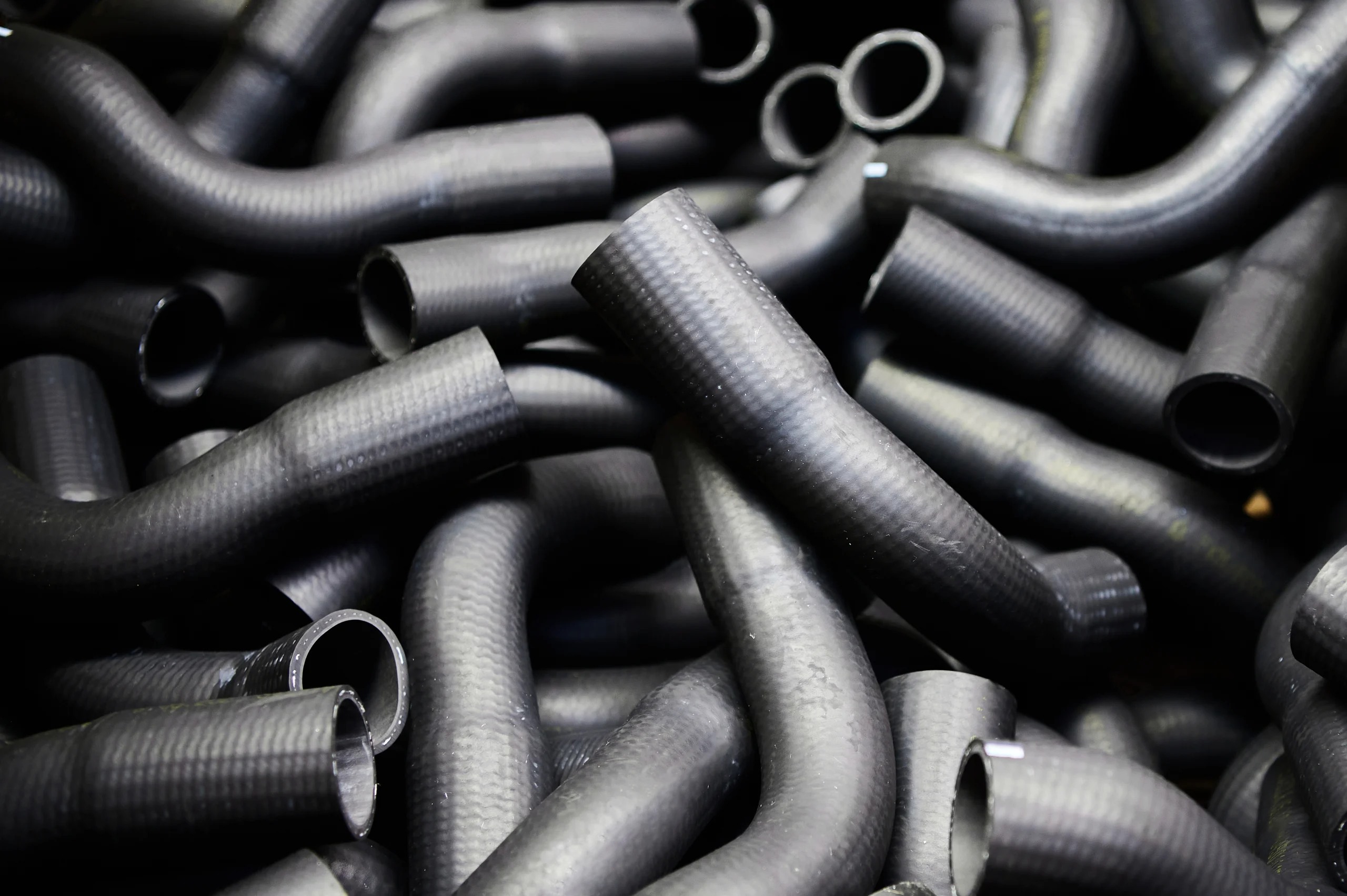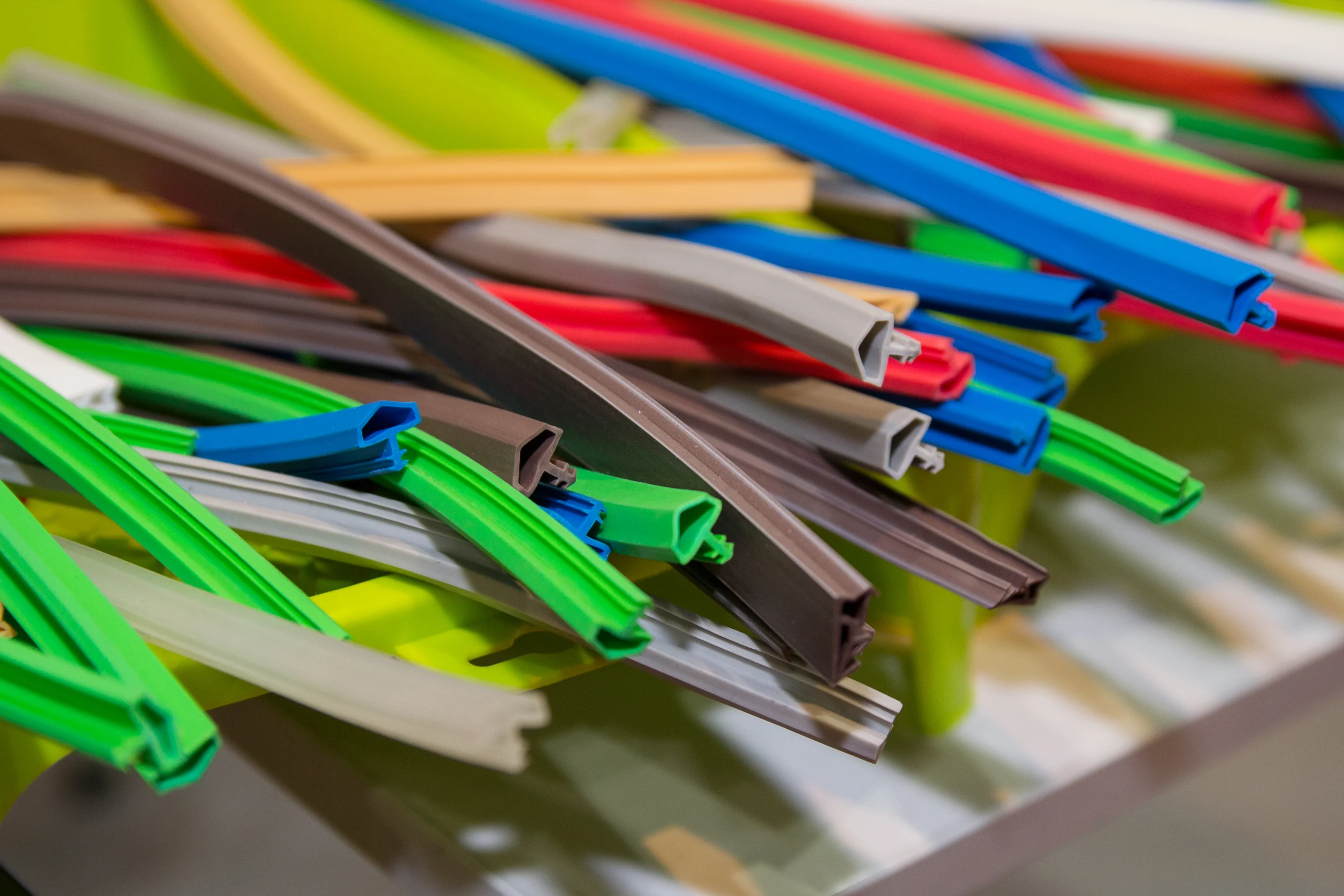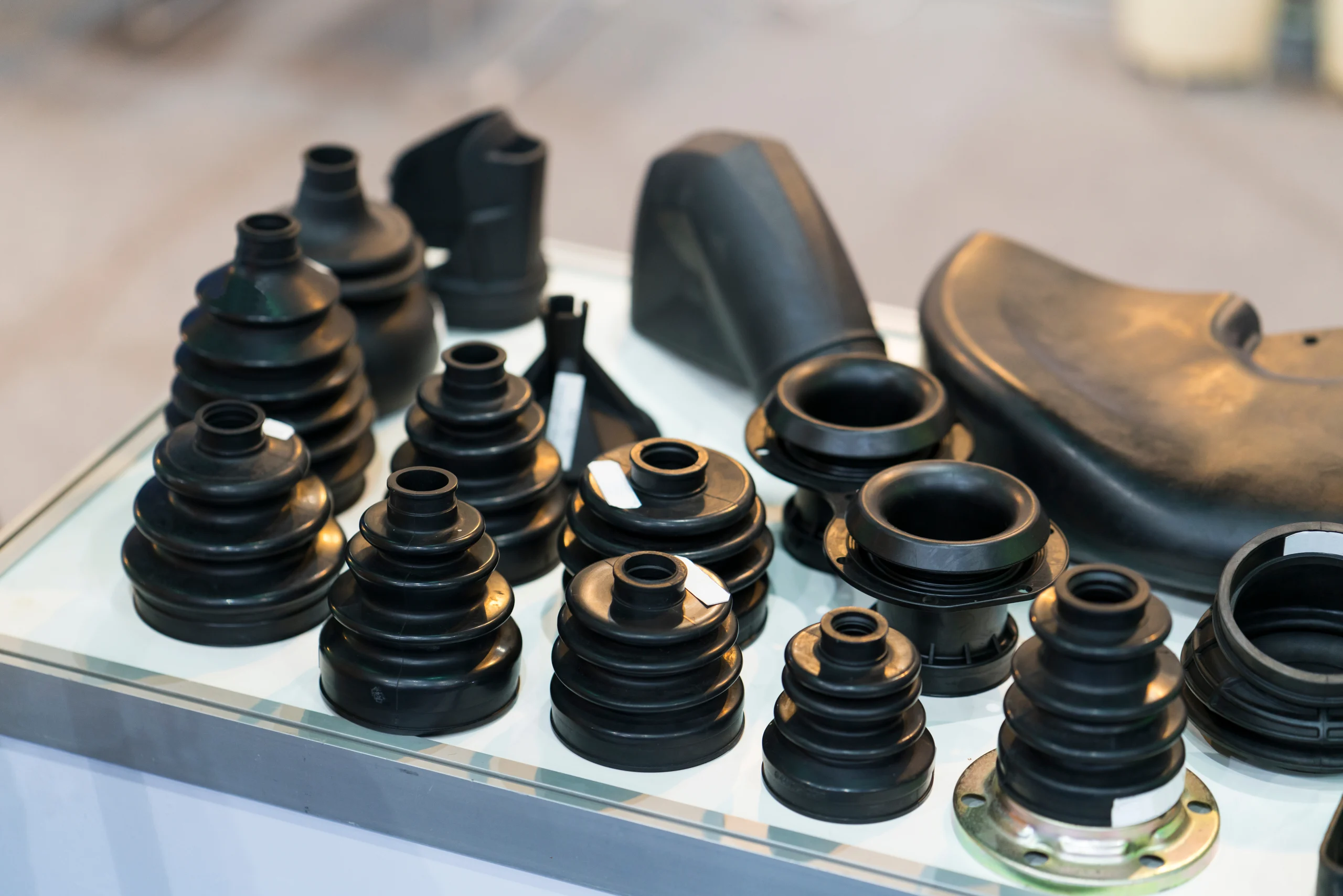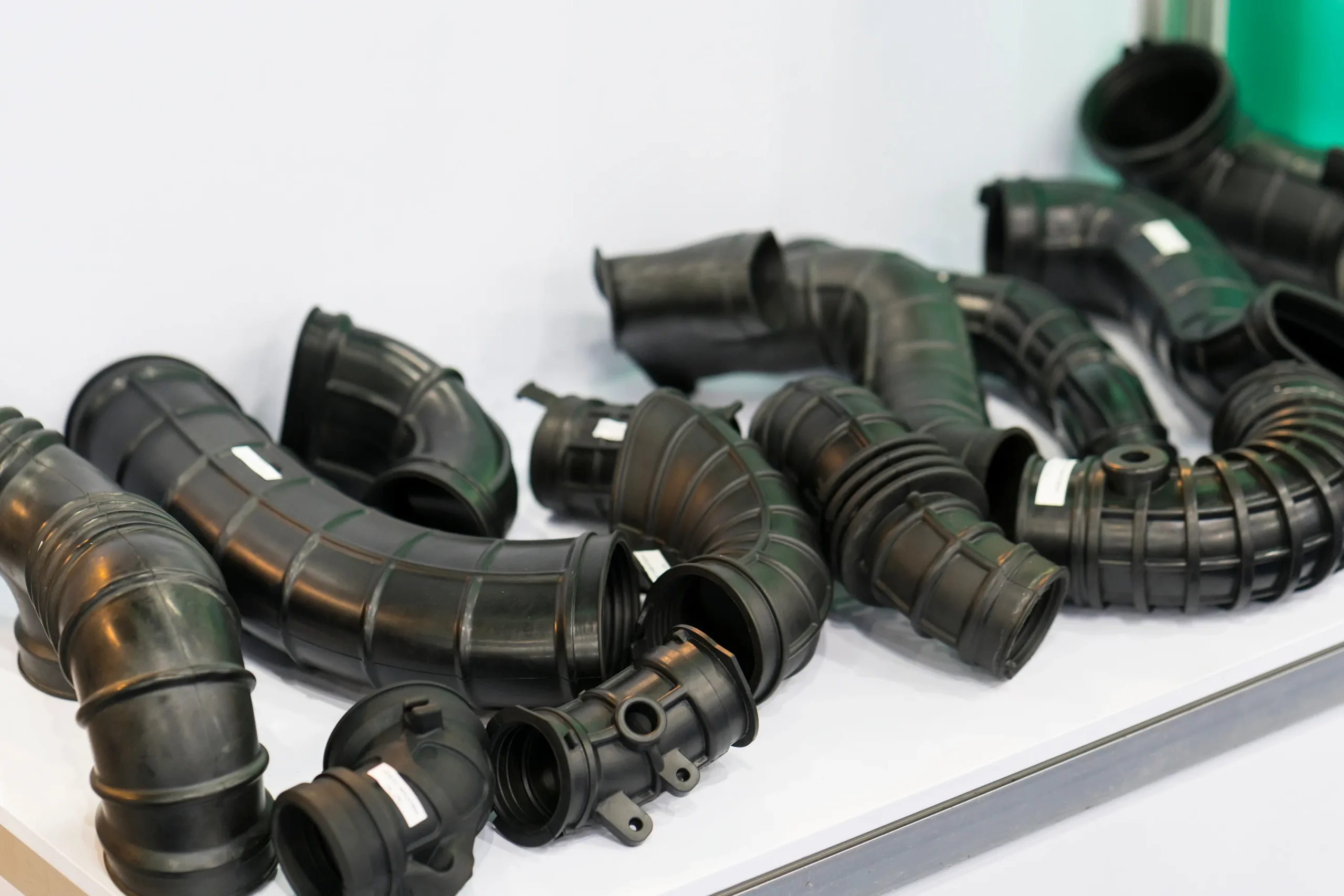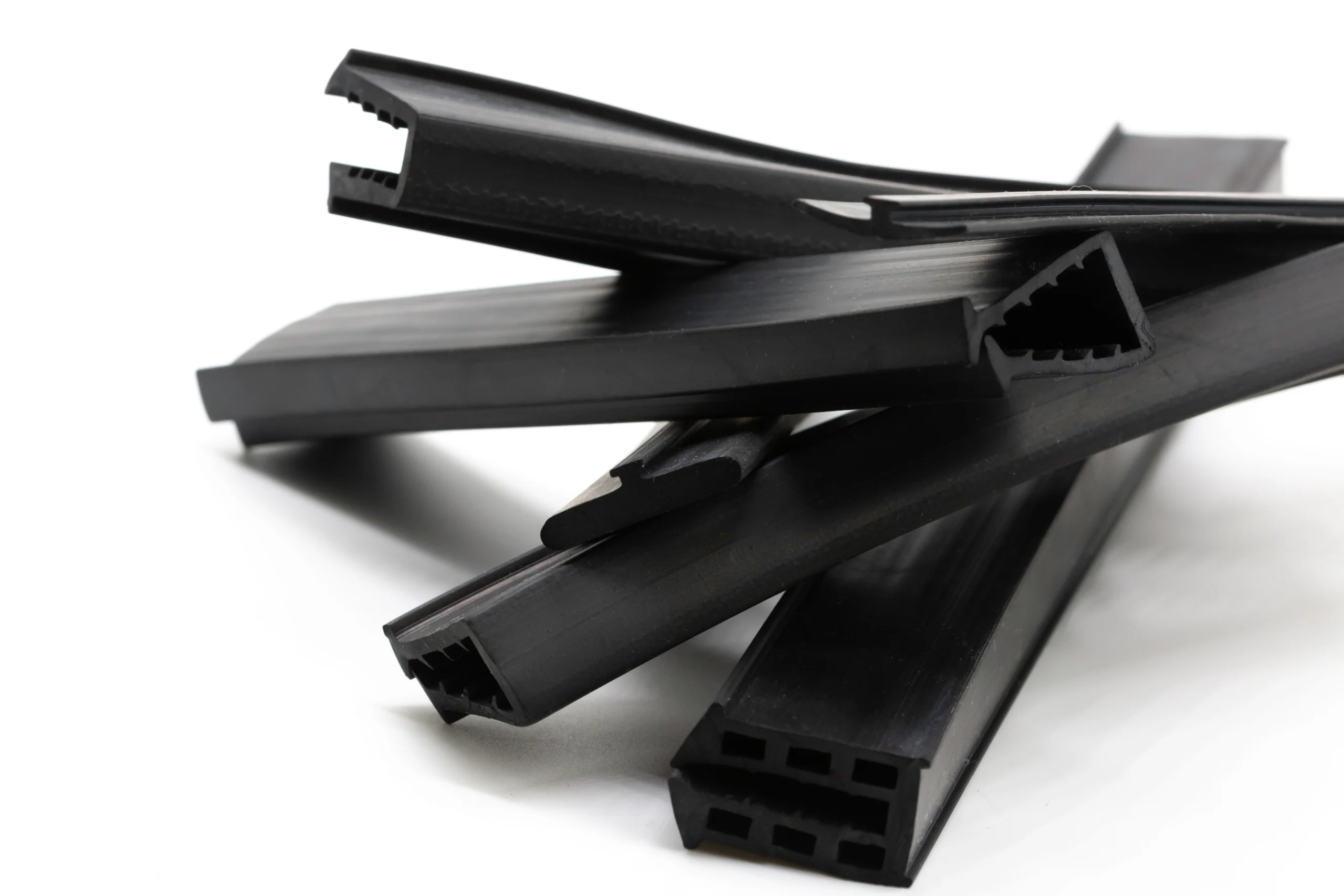
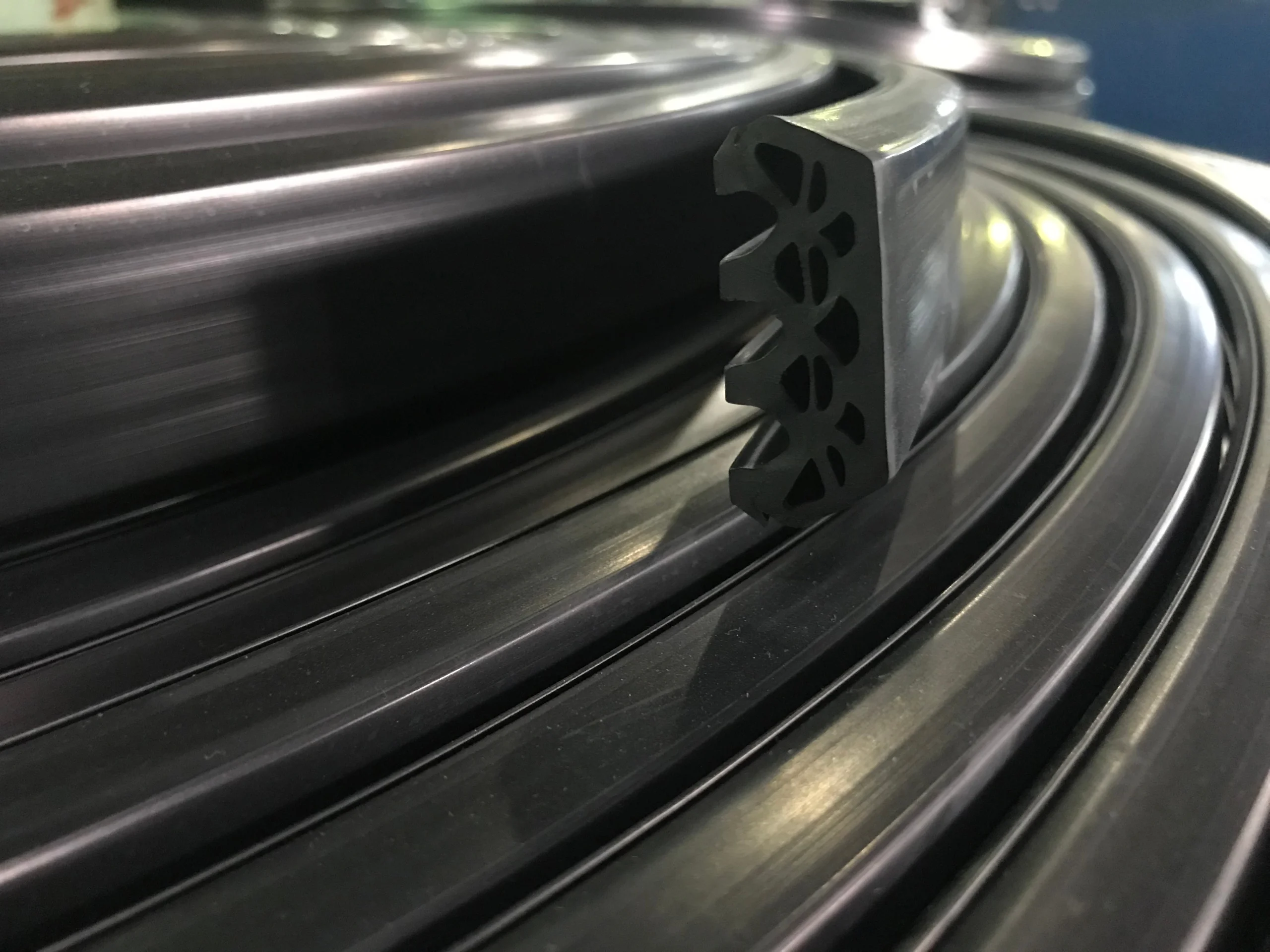
Continuous seals, gaskets, tubing, and custom profiles pushed through a steel die, then cured inline. The fast, low tooling path from a cross section drawing to a running profile. EPDM, silicone, NBR, and more.
RUBBER EXTRUSION
MANUFACTURERS
FROM INDIA
Custom rubber extrusion, co-extrusion, and molding. EPDM, silicone, NBR, and more, cross section held to ISO 3302-1 class E2, hardness to plus minus 5 Shore A. One accountable owner from drawing to your US dock. India first, more regions as your volume grows.
VIA INDIGOS is a US contract manufacturing company that runs rubber extrusion programs in India, as one accountable owner from drawing to US dock. Mixing, extrusion, curing, molding, and finishing sit under one program, with first article and PPAP on every part.
The procurement emails
you already know.
If you have ever sourced rubber profiles, seals, or gaskets from anywhere in the world, you know the routine. Email at 9 in the morning. No reply. Email again at 4. Maybe an answer Tuesday. We built VIA INDIGOS so the fifth email never lands. Because one missed handoff on a rubber program can cost you three weeks of production line downtime.
YOUR RUBBER EXTRUSION PROGRAM, DE-TANGLED.
If you have ever sourced rubber profiles, seals, or gaskets from anywhere in the world, you know the routine. Most buyers spend their week chasing updates instead of doing their real work. We built VIA INDIGOS to give that time back. Most rubber programs run mixing, extrusion, curing, splicing, and sometimes molding and tooling to get to your dock, and we run the whole chain under one owner. 40+ rubber partner facilities across 22+ Indian cities, part of a 470+ facility audited partner network. Hardness from 20 to 90 Shore A, cross section to ISO 3302-1 class E2. One owner on your program from drawing intake through US dock delivery. Whether your monthly volume is 2,000 feet or 200,000, we set up the program the same way.
I walk the extrusion floor before a single PO is placed. We check the mixing mill and extruder against the compound, the cure line, the splice and mold shop, and the lab that will run your hardness and dimensional checks. We pick partners who run mixing, extrusion, curing, and finishing under their own roof, on their own QA team, on their own clock. One roof, one floor, one accountable team for the full rubber chain. DFM happens before a die is cut. DFM, first article, and PPAP validation gates come with photographic evidence, durometer and dimensional data, and a written verdict from our quality lead. Boots on the ground, every step of the way.
My team runs weekly checks on hardness, cross section, cure state, and splice strength. We track SPC on durometer and key dimensions, compression set and ozone results on the compound, and lot to lot consistency on profile and color. We send you a status report every Friday that covers WIP, test results, die health, and shipping milestones. Carton and coil loading photos reach your inbox before the seal goes on. Every lot carries a traceability ID from compound batch to your receiving dock. Nothing ships until the dimensional report and the material test report both show green. We do not wait for you to ask. We report because that is how a rubber program should run.
Where the chain breaks.
And where we hold it.
Most contract manufacturers worldwide drop the ball at the handoff between two teams. We hold every one. Ten real stages, drawing to your dock. No sub-step skipped, no handoff left to chance.
Three things we control that a basic rubber shop skips.
A rubber profile is only as good as the compound, the cure, and the steps after the die. Most shops hand you loose extrusion and call it done. Three controls separate a rubber program that ships clean from one that ships you a reject report.
We do not run whatever black compound is on the floor. The compound is mixed and tested to your ASTM D2000 line callout, durometer set on the cured sample, and oil, heat, and ozone resistance matched to the application. Every batch carries a rheometer cure curve and a hardness check before it reaches the die. Peroxide or sulfur cure is chosen for the duty, not for the shop habit.
Continuous vulcanization by hot air, salt bath, or microwave sets the cure state the same way every run. Sealed corners and rings are hot vulcanized, not glued, then pull tested. Compression set per ASTM D395 and ozone per ASTM D1149 run on the compound, with heat aging per ASTM D573. A seal that takes a set or cracks at the splice never reaches your dock.
DFM and cross section check. First article off the die, durometer and dimensional on the cured profile. PPAP production sign off. Each gate carries a checklist, photos of the profile, and the sample side by side with the print. A run that starts without a first article is a run that drifts on hardness and section. We catch it on the bench, not on your line. Dimensional and material test reports run on every production lot before it ships.

What we do not doon a rubber extrusion program.
On the extrusion floorbefore you ask.
Most India sourcing is run from a laptop in Cincinnati. Ours is not. Our team is physically present at partner facilities for first article reviews, cure and splice sign offs, and production launches. When something slips, we see it before you do. When quality holds, we have the photo evidence to prove it.
22+ Indian manufacturing cities. 40+ qualified rubber partner facilities. Real people on the floor making sure your drawing becomes a profile that passes PPAP the first time.


Inside our India rubber network.
22+ cities. 40+ audited rubber partners across extrusion, co-extrusion, compression and injection molding, and splicing. Hover any marker to see partner count and what runs there.
22+ cities · 40+ rubber partners · 20A to 90A durometer range
FIVE RUBBER PROCESSES
WE RUN FROM INDIA.
Extrusion and co-extrusion push a profile through a die. Compression and injection molding form the parts a die cannot. Splicing and vulcanizing close a profile into a sealed ring. All of it runs through one VIA INDIGOS playbook. One owner from drawing to dock. One status update every Friday. One India network of 40 plus audited partner facilities behind every program.
Two compounds in one profile from one pass. A soft sealing lip on a rigid carrier, or a dense skin over a sponge core. The compounds cure together as one part, bonded, not glued.
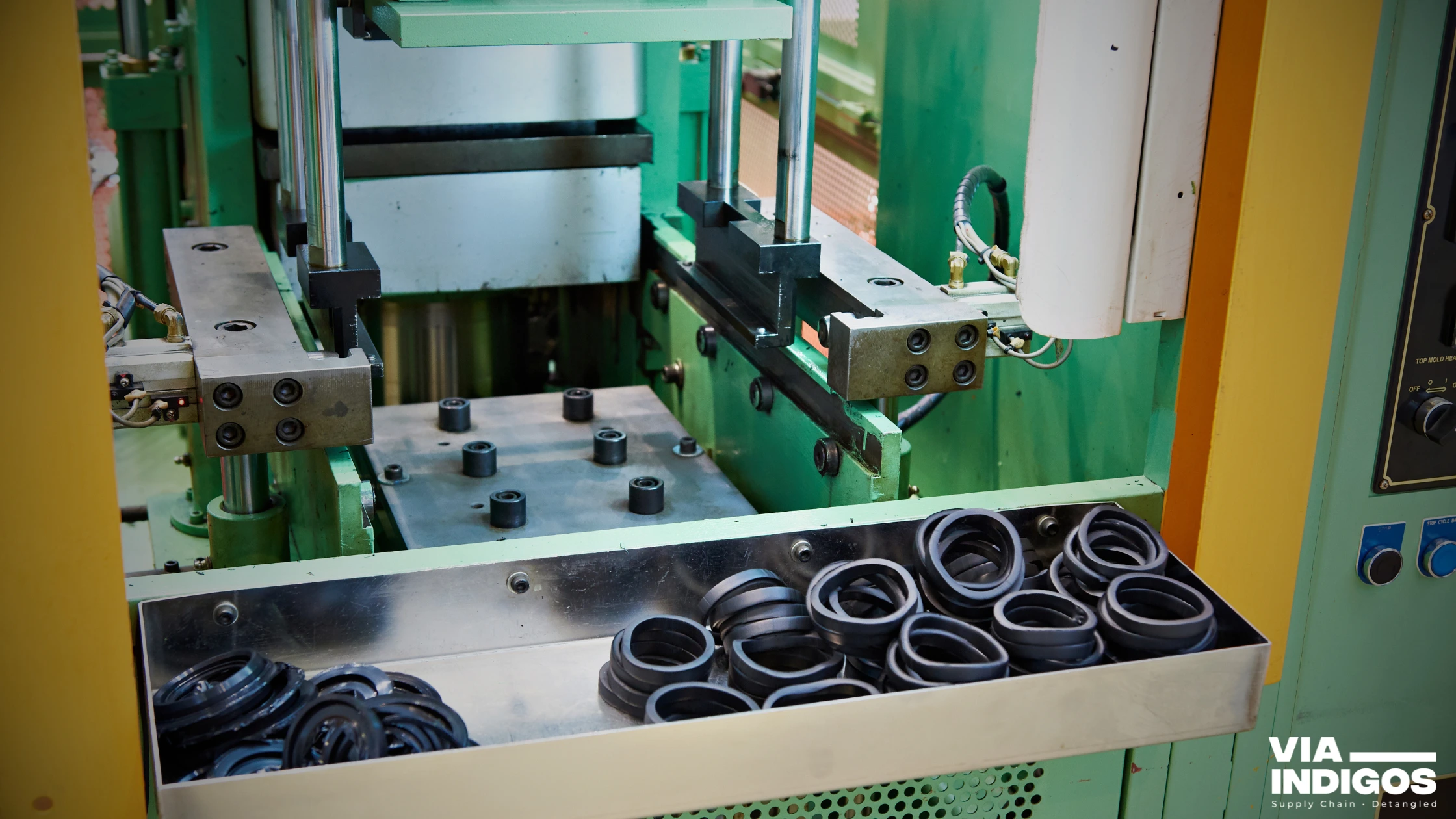
Molded seals, grommets, bumpers, end caps, and corner joints formed in a heated cavity. The right route for thick sections and lower volumes that an extrusion die cannot make.
Higher volume molded parts with fine detail and tight flash control. Compound is injected into a heated mold and cured fast, lot after lot, to an ASTM D2000 line callout.
Extruded profile cut and joined into sealed rings and frames. The joint is hot vulcanized to the same compound and pull tested, so the corner holds under pressure and weather instead of letting go in the field.
Rubber process comparison · cost, volume, lead time.
Extrusion vs co-extrusion vs compression vs injection vs splicing. Five honest comparisons, not marketing claims. Use this to short list before you send the cross section.
EXTRUSION
Continuous seals, gaskets, tubing, profiles.
CO-EXTRUSION
Dense plus sponge, hard carrier plus soft seal.
COMPRESSION MOLD
Molded seals, grommets, bumpers, corners.
INJECTION MOLD
High volume molded parts, fine detail.
SPLICE & CURE
Rings, frames, sealed corners from profile.
Not sure which fits? Send the cross section and we recommend the right process for your section, volume, and durometer, and quote both options where it makes sense.
CONTINUOUS EXTRUSION AND VULCANIZATION.
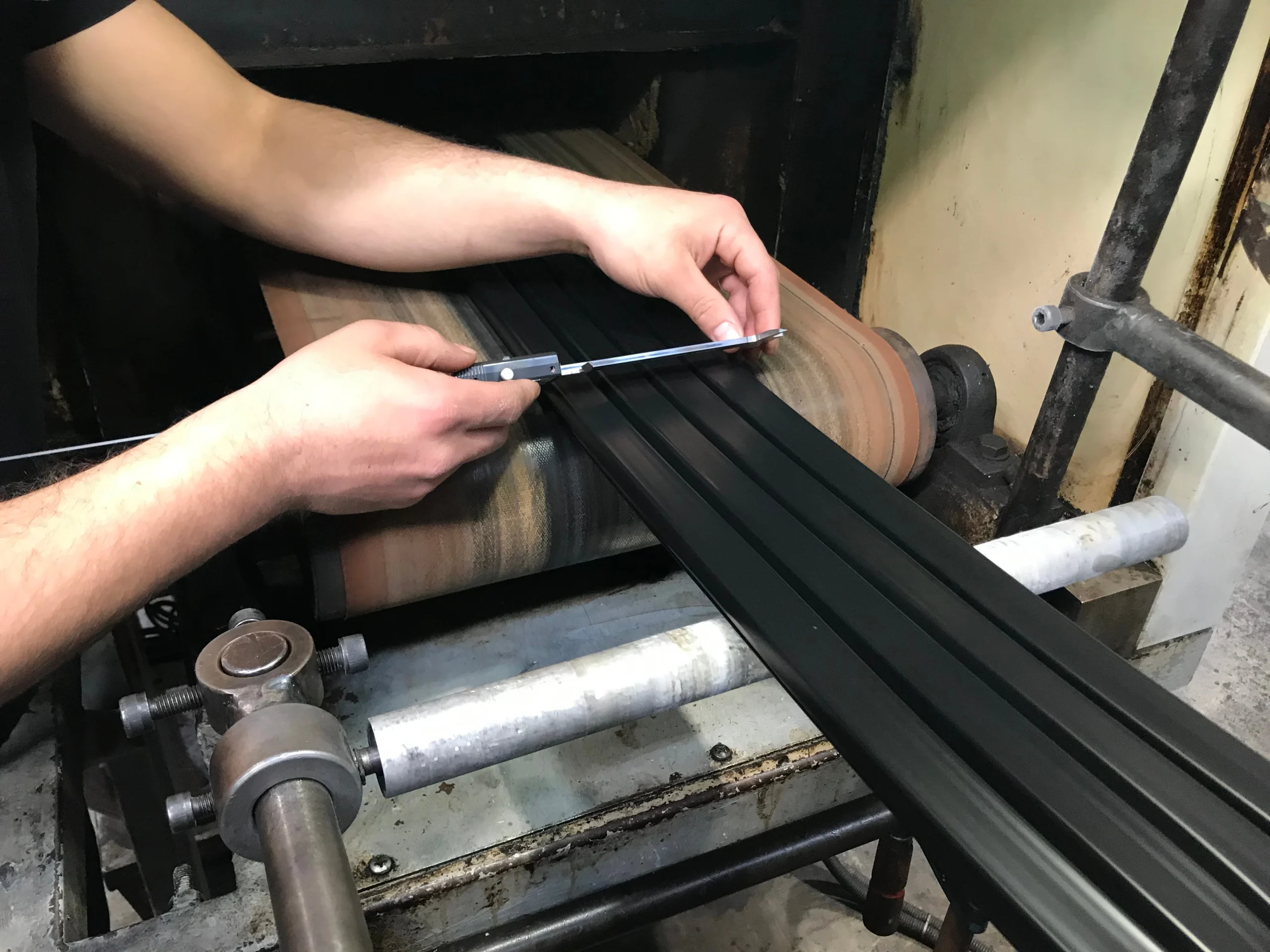
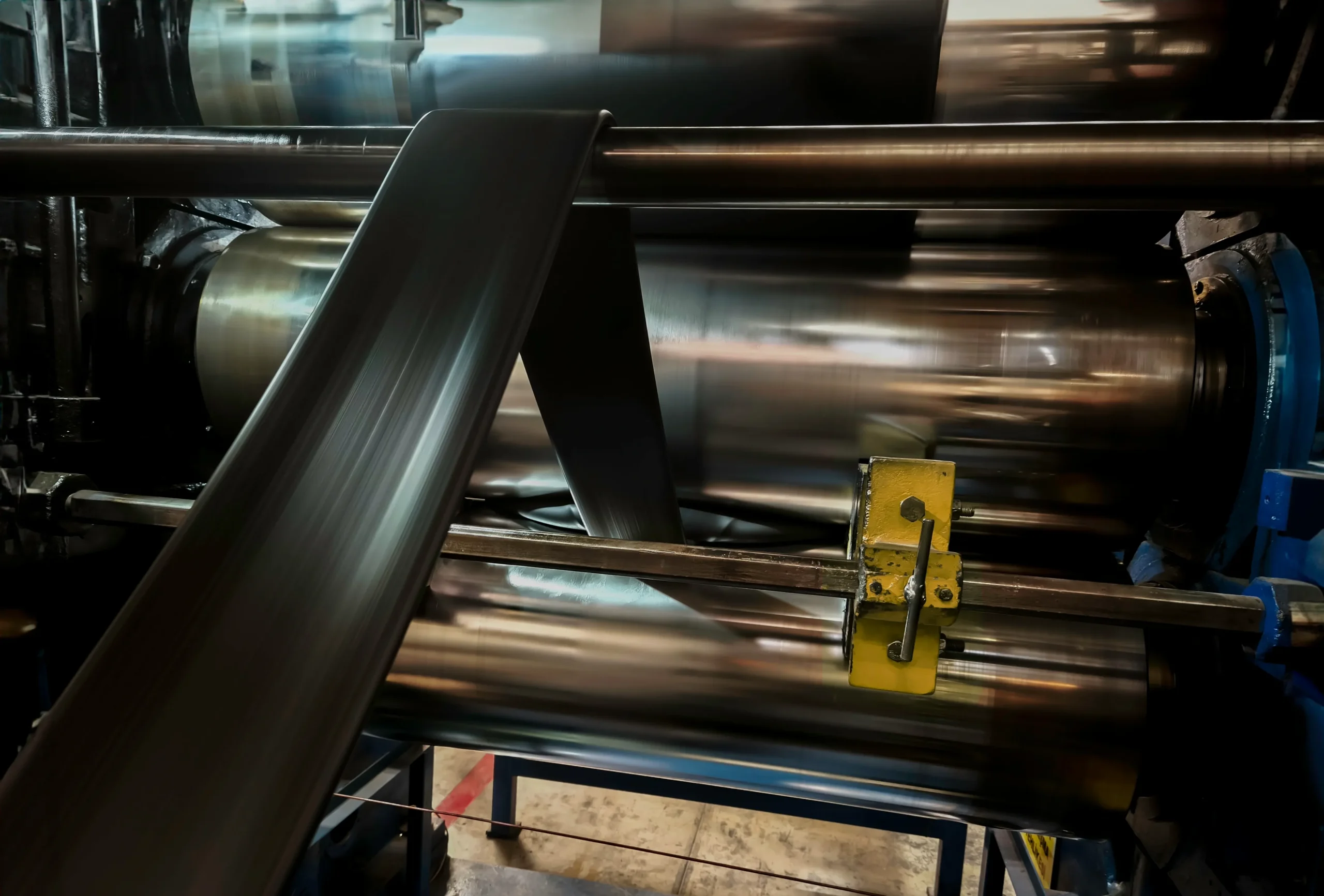
An extruded profile is only as good as its cure. Raw compound goes through the die soft, then sets its shape and hardness in the cure line in one continuous pass. We run hot air, salt bath, and microwave cure lines at partner facilities, then check section and durometer before the profile ships.


| Cure method | Mode | Typical compounds | Section range | Typical use |
|---|---|---|---|---|
| Hot air vulcanizing (HAV) | Continuous | EPDM, silicone | 1 to 30 mm | Dense profiles and lip seals |
| Salt bath (LCM) | Continuous | EPDM, NBR, CR | 2 to 40 mm | Solid and complex sections |
| Microwave (UHF) and HAV | Continuous | EPDM sponge and dense | 3 to 50 mm | Sponge and co-extruded profiles |
| Steam autoclave | Batch | Most compounds | Tube and cord | Tubing, cord, wrapped hose |
| Hot vulcanized splice | Joint | Matched compound | Ring and frame | Sealed corners, O-rings, gaskets |
Every profile cross section is checked against the print, and durometer is verified off the cure line. Splices are pull tested before a sealed ring ships. Dies are cut and held at the partner facility so the section runs the same way every time.
MOLDING UNDER ONE ROOF.
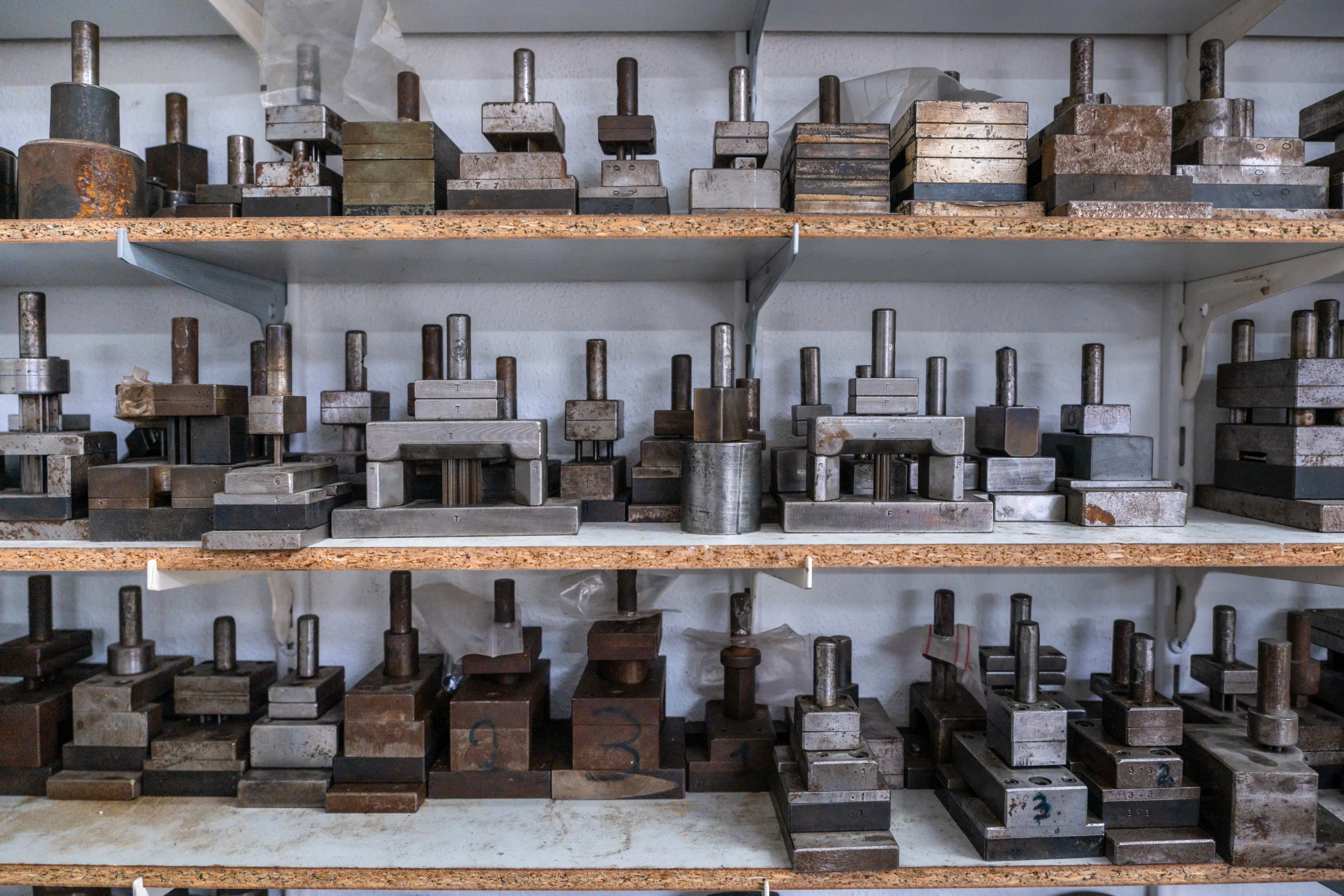
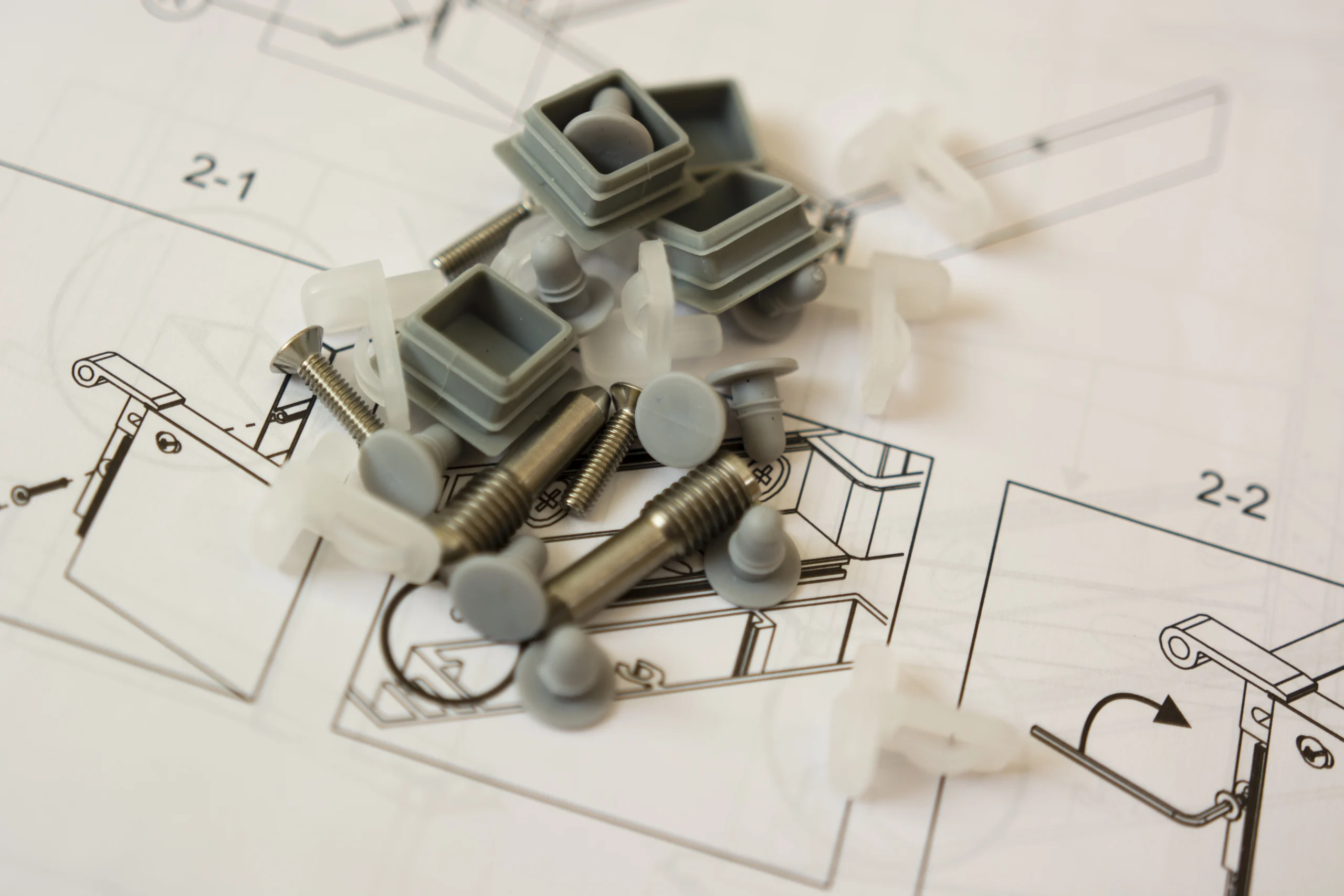
Some parts a die cannot make. Bellows, mounts, grommets, bumpers, and seals with corners need a mold. So molding sits next to extrusion under the same owner, not a shop you chase later. We run compression, transfer, and injection molding through partner plants, and every part is checked against ASTM D2000 and the print before it ships.


| Molding | How it runs | Typical spec | Notes |
|---|---|---|---|
| Compression molding | Preform cured in a heated cavity | ASTM D2000 | Low to mid volume, thick or large parts |
| Transfer molding | Compound forced from a pot | ASTM D2000 | Inserts and tighter dimensions than compression |
| Injection molding | Screw injects into a closed mold | ASTM D2000 | High volume, fine detail, low flash |
| Insert and over molding | Rubber bonded to metal or plastic | ASTM D429 bond | Mounts, bushings, bonded seals on carriers |
| LSR molding | Liquid silicone dosed and cured | ISO 3302 | Medical and food grade silicone parts |
Post cure, flash trimming, surface coating, and bonded metal inserts run through the same partner network. We confirm the compound, durometer, and any bond callout during DFM review, and the test report goes in the PPAP file.
DFM . FAI . PPAP .
NO RUN SHIPS WITHOUT A GATE.
Three gates, three sign offs, photo evidence at every step. We do not move a part forward unless the gate before it is closed. A run that starts without a first article is a run that drifts on hardness and section, and we would rather catch it on the bench than on your line.

The cured cross section is checked back to the drawing. Draw down and shrink set, die cut and trialed. Wall, corner radius, and durometer target all signed off before the first production foot.
- Cross section vs drawing and sample
- Draw down and shrink allowance set
- Compound and durometer confirmed
- Photo set archived in the project file

The first profile off the die. Full dimensional report on the cured cross section, durometer on the cured sample, tensile and elongation to ASTM D412. Splice strength checked where the part is joined. Report to you before the next run.
- Cured cross section dimensional report
- Durometer to ASTM D2240
- Tensile and elongation to ASTM D412
- Buyer engineering call before PPAP

PPAP package complete. PSW signed by the buyer. Compound certificate and ASTM test results on file, capability on critical dimensions above Cpk 1.67. Lot traceability live to the compound batch. Production releases only after the buyer has the full PPAP package in hand.
- PPAP Level 3 package signed off
- Compound cert and ASTM D2000 results
- Compression set and ozone on the lot
- Lot traceability ID assigned
One owner runs your whole rubber program,
drawing to dock.
A rubber program that runs across two countries, three suppliers, and a dozen handoffs is going to break unless someone owns every step. Below is what your program looks like under one VIA INDIGOS owner, end to end.
RUBBER QUALITY AND TESTING.
If a metric does not have an owner, a target, and a data source, it is not a metric. Below is the scoreboard we run on every rubber program, refreshed weekly, surfaced in your Friday status email.
Rubber compoundswe run.
The right compound is half the part. We run the common families across dense, sponge, and liquid silicone, chosen for heat, oil, weather, and the duty the seal sees. Below is the working range. A compound certificate travels with every batch so the mix traces back to the part.
| Compound | Common types | Shore A range | Key properties | Typical parts |
|---|---|---|---|---|
| EPDM | Dense, sponge, peroxide | 40 to 90A | Weather, ozone, steam, coolant | Door and window seals, weatherstrip |
| Silicone (VMQ) | Dense, sponge, LSR | 20 to 80A | Heat and cold, food and medical | High temp seals, gaskets, tubing |
| Nitrile (NBR) | Dense | 40 to 90A | Oil and fuel resistance | Fuel seals, oil gaskets, grommets |
| HNBR | Dense | 50 to 90A | Oil plus heat and abrasion | Engine seals, high stress gaskets |
| SBR | Dense | 40 to 80A | Abrasion, low cost general use | Pads, bumpers, general profiles |
| Neoprene (CR) | Dense, sponge | 40 to 80A | Weather, moderate oil, flame | Marine seals, gaskets, bellows |
| FKM (Viton) | Dense | 60 to 90A | High heat, fuel, chemical | Fuel system seals, O-rings |
| Natural rubber (NR) | Dense | 30 to 90A | High strength and resilience | Mounts, bushings, anti-vibration |
| Polyurethane (PU) | Dense, cast | 70A to 95A | Abrasion, load, tear strength | Wheels, rollers, heavy duty pads |
Reading an ASTM D2000 callout. A line like M2BC714 A14 B14 sets the rules. M is metric. The type letter and class letter name the polymer family by heat and oil resistance. 7 is durometer in tens, so 70 Shore A. 14 is the tensile grade. Each suffix such as A, B, or C adds a tested requirement like heat aging, compression set, or fluid swell. Send the callout and we match the compound to it.
Other compounds and colors run on request. Hardness range depends on the compound and the section. We confirm compound, durometer, and cure during DFM review before quote, and the compound certificate goes in the PPAP file.
Design for logistics.
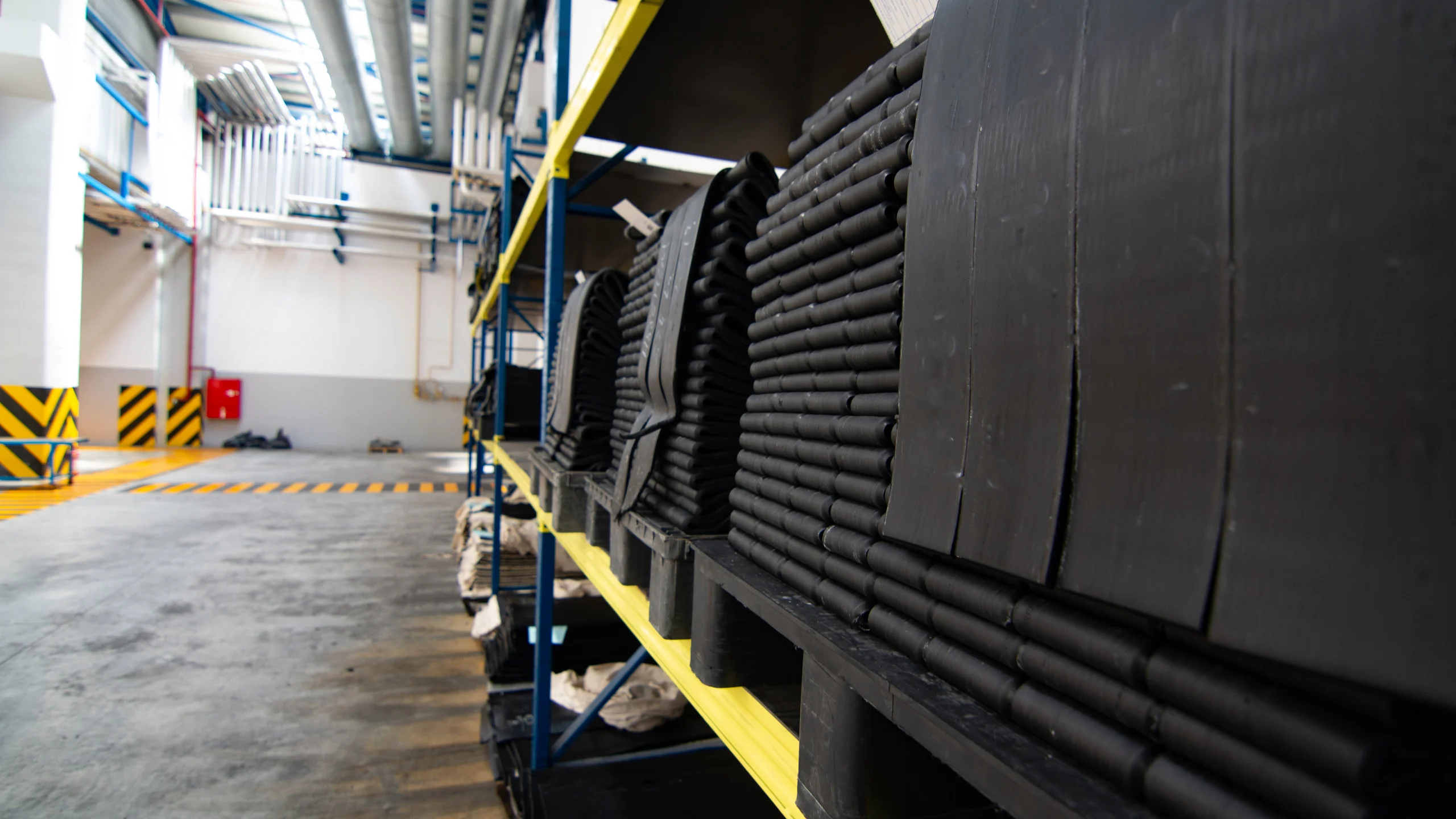
A profile can pass every check and still cost too much to ship. Rubber is light but bulky, so freight is set by volume, not weight. We look at the profile and the pack together, before the die is cut, so the same part fills more of the container and clears customs faster.
Send your rubber drawing.
Get a full landed cost.
Upload your drawings. We review, run DFM, and return a full landed cost breakdown with tooling timeline and PPAP scope. You get one contact from intake to ship.
Eleven industries we make rubber parts for.
Every industry has its own certs, its own regulatory pressure, its own drawing conventions. The handoff discipline stays the same. What changes is the technical documentation that moves with the part.
Automotive rubber extrusion
Camping and outdoor rubber parts
Construction rubber profiles
Consumer product rubber parts
Consumer electronics rubber seals
Electrical rubber parts
Electronics rubber seals
Hardware and fittings rubber parts
Lawn and agricultural rubber parts
Pet industry rubber parts
Capabilities Beyond Rubber Extrusion.
Notes from the rubber floor.
Top applications of rubber extrusion.
Where extruded rubber earns its place across automotive and industrial parts. Seals, weatherstrip, gaskets, tubing, and the profiles that keep water, dust, and noise out.
Read the post →See all from the floor.
Every field note we have published on rubber extrusion, molding, tooling, and getting parts from an India line to your dock.
Browse the blog →Rubber extrusion questions we getevery week.
Plain English answers, written for procurement and engineering teams who want a real number, not a brochure. Last reviewed by Mandeep Singh in May 2026.
EPDM, silicone, NBR, HNBR, SBR, neoprene CR, FKM Viton, natural rubber, and polyurethane, from 20 to 90 Shore A. Dense, sponge, and liquid silicone all run. Tell us the ASTM D2000 callout or the application and we confirm the compound during DFM review.
Color, cure system, and food or medical grade are set on the same call, so the first article matches the spec, not a guess.
Rubber holds wider than metal because it shrinks and relaxes as it cures. Cross section runs to ISO 3302-1 class E2, roughly plus minus 0.4 mm on small sections and wider as the section grows. Hardness holds to plus minus 5 Shore A.
Cut length follows the RMA handbook by length band. If a print calls metal tolerances on a rubber part, we flag it at DFM and propose a class the process can actually hold.
An extrusion die runs 2 to 4 weeks. A first article off the die lands in 4 to 6 weeks from PO, depending on compound, cure, and splicing. Production runs land in 5 to 8 weeks.
Molded parts add time for the mold build. We give you the die and first article dates in writing at quote, not a vague promise.
Once the die exists, minimums are by weight, often a few hundred kilograms or a few thousand feet per release. We set a minimum order value rather than a piece count so small profiles still pencil out.
Tell us the section and the annual volume and we tell you the run size that makes the price work.
Durometer to ASTM D2240, tensile and elongation to ASTM D412, compression set to ASTM D395, ozone to ASTM D1149, heat aging to ASTM D573, and fluid swell to ASTM D471.
Cross section and cut length are checked on every lot, and the test report goes in the PPAP file. If we cannot show it, we will not ship it.
Yes. We hot vulcanize splices for sealed corners and rings, not glue. The joint is cured to the same compound and pull tested, so it holds under pressure and weather instead of letting go in the field.
Molded corners and injection molded joints are options too, when the part needs a clean geometry at the seam.
You do. Die and mold ownership transfers to the buyer on full payment, in writing, with a tooling passport that records die ID, build history, and storage location. We hold the die at our partner facility on a bailment basis.
If you want to move programs later, the tooling is yours. We do not lock dies to facilities or hold them hostage.
Your rubber profiles are
worth a free quote.
Send us your drawings. You get a full landed cost breakdown, a tooling timeline, the recommended rubber process, and a PPAP scope. One contact from intake to ship. No commitment required.
30 minutes · no obligation · bring your drawings
Where should we send it?
Three working templates we use on every rubber program. PPAP checklist. Tooling Gantt template. Supplier audit checklist. Yours to keep, even if we never work together.
Sent.
Check your inbox in the next 60 seconds. If it does not show up, check spam, or write to us at work@viaindigos.com and we will resend it.