
The purchasing head of a heavy duty parts brand told me on our first call that he had already made up his mind about manufacturing in India vs China, because to him it was a tariff question, and the day the tariff went away he would be back in China. He had bought from the same 2 plants near Ningbo for 11 years, his quality team knew the plant managers by first name, and his management had asked him for a China+1 plan he did not really want. I understood him completely, because I carried the same opinions into my first India quotes when I was the one buying parts for a plant, and it took a few plant visits and one broker’s invoice to change my mind. So in this note I go through what buyers tell me on that first call, what I have actually seen on the floor now that I sit on the manufacturing side, and then price one brake caliper bracket from both countries all the way to a US dock.
What buyers tell me on the first call
Imagine you have bought from China for 8 or 10 years. The parts arrive, the price is known, your quality team knows the plant, and now your management wants a second country. You open the first quote from India already holding a set of opinions about it, and you read the quote through those opinions, which is exactly what I did on my first India quotes. These are the 6 I hear most often, and I have written them the way buyers say them.
What buyers tell me on the first call
China is always cheaper on the part price.
India only wins because of the tariff.
Parts from India take longer to arrive.
Quality from India is a gamble.
Moving a part means starting again from zero.
China does everything, so why split the business.
Some of these are half right, and a half right belief is the hard kind to let go of, because it survives one good order and one bad one. Let me take them in the order a buyer meets them, which means the part price comes first.
Let's start with the part price
On the plant price alone the india vs china manufacturing question has no single answer, because China wins on some part families and loses on others, and in my experience the part family matters far more than the country. On iron and steel castings, forgings and machined parts, the plant prices I see from VIA INDIGOS manufacturing partners sit level with China or under it, because the foundry and forge clusters in India run the same furnaces and presses, labour costs less, and the price of melt and billet, the raw metal the plant buys, is close in both countries.
On high volume plastic parts, on electronics, and on anything that needs a deep local supply of small sub components, China is still cheaper at the plant, and I tell buyers that on the first call.
The part of this belief that costs money is not the comparison itself, it is where the comparison stops. Most buyers compare the plant price from China with the plant price from India, both quoted ex works, which means the price at the plant door with nothing added, and then they stop. Both numbers leave out freight, duty, clearance and the weeks in transit, and the only number worth comparing is what the part costs sitting at your dock, which is why the caliper bracket further down is priced all the way there. Before we get to it, the tariff deserves its own honest answer, because it is the belief that buyer on the call was holding hardest.
Is it only the tariff that makes India win?
This one is partly true, and after 13 years of buying parts from both countries I think you should hear the honest version of it. At the rates in force when this was written, a part from India pays the normal MFN rate, which is the standard US import duty for that product, plus a 10 percent base tariff, while the same part from China pays the MFN rate plus a 12.5 percent base tariff plus the Section 301 tariff that has sat on most industrial parts from China for years, which is 25 percent on the lists that cover brake parts, castings and forgings.
On a part that falls under a Section 232 action, auto parts at 25 percent or steel and aluminum articles at 50 percent, the base tariff drops away and the 232 rate takes its place, but Section 301 on China still stacks on top of it, so on a brake part both countries pay the same 232 line and China pays 25 points more, and that is the whole tariff story in 3 lines.
So yes, the tariff helps India today, and I will not pretend otherwise. But if every tariff on China were removed tomorrow, India would still win where its plant price is lower and still lose where it is not, and I would never build a program on a duty gap alone, because a tariff changes with a signature. Build it on the plant price, the lead time and the visibility you get, treat the duty line as a bonus that you check every month, and the program survives whatever the next proclamation says. The next belief is about time, and it is the one where I think buyers blame the wrong thing.
Do parts from India really take longer to arrive?
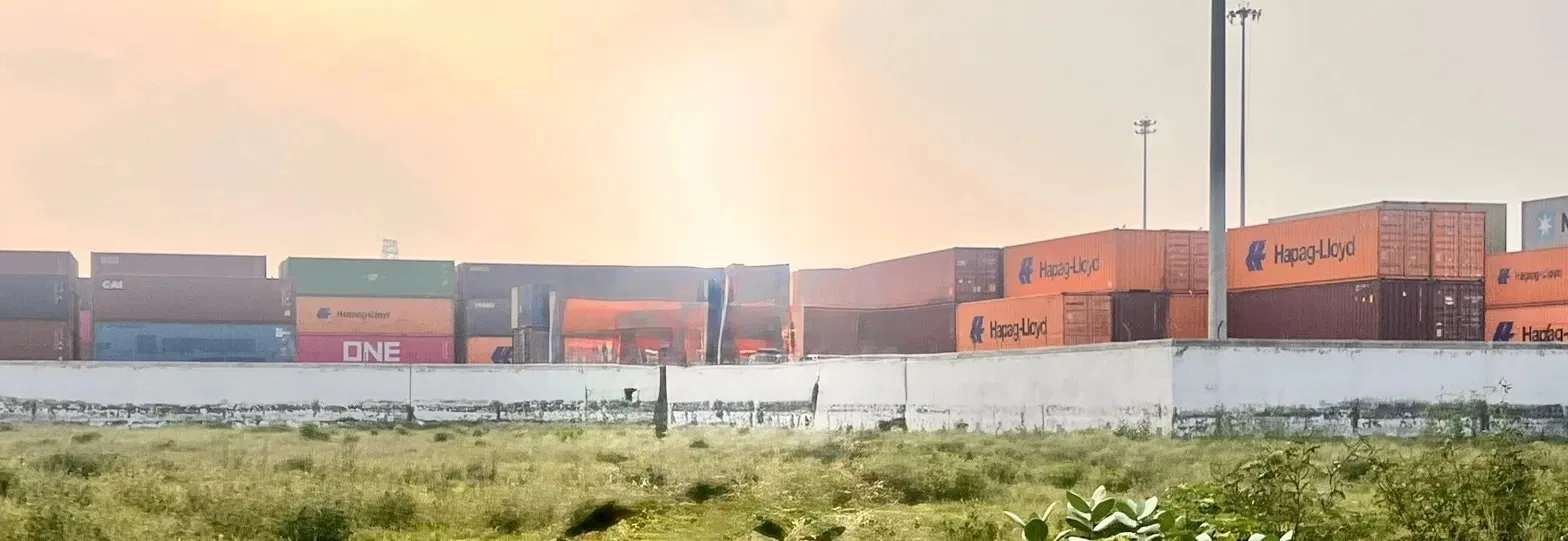
Nobody should hide the ocean from you. From Nhava Sheva or Mundra to the US East Coast a container takes about 30 to 40 days on a direct service, and from Shanghai to the West Coast about 15 to 20, so India is a week or 2 longer on the water to an East Coast plant and closer to a month longer to a West Coast one, and that part of the belief is true. What I want you to look at is where the rest of the weeks go, because in 13 years of buying parts the ocean was never where my weeks went.
They went at the plant, and always in the same order. First the production slipped by a few days and nobody told me, because the plant hoped to catch up. Then the parts were packed, and only then did someone start on the export paperwork, which took another week. Then the container was booked, and a booking took 1 to 2 weeks to come through in a tight market, and 3 to 4 weeks during the container shortage. By the time the box sailed I had lost a month that had nothing to do with India or China, and nothing to do with the ocean.
During the container shortage I changed the order of those steps on my programs. The export documents were prepared with the plant while the parts were still in production, the container was booked at the same time, and the truck was at the plant the same day or the day after packing. That one change cut the wait at the plant from about 28 days to 3, and it is how our team runs every casting program today, with our own people in the plant every day, so a slip shows on day 5 and not on day 60. Which brings us to the belief that worries buyers most of all, quality.
Is quality from India a gamble?
Quality from any country is a gamble when you buy from a quote and nothing else, and what takes the gamble out is the same in both countries. You want a first article before the run, which is a full measurement of the first parts off the tool against every line of the drawing, a PPAP package at the level your drawing calls for, lot numbers that trace back to the heat of metal or the batch of material, and a person who walks the floor between the PO and the ship date.
The certificates that matter, IATF 16949 or ISO 9001, belong to the facility that makes the part and not to the company managing the program, so ask for the certificate of the plant matched to your part, and be careful with anyone who shows you a certificate before they know which plant will make it.
I have had lots fail from both countries, and when I went back to see why, the country was never the reason. Once it was a print nobody reviewed before the die was cut, once a heat nobody sampled, once a change on the line nobody reported. On our programs the forging or casting plant is walked by our own engineers and coordinators, every tooling trial is photographed, and the buyer gets one email every Friday, which we call the weekly tollgate. It lists every open item, the date it was promised and the date it will actually land, so a problem shows up as a line on a page and not as a surprise at the dock.
Our contract with each manufacturing partner gives our team walk in access, so the follow up is a person standing at the die with the plant, and that is the honest answer to the gamble. The next worry is a practical one, what actually has to move when you move a part.
What actually moves when you move a part
When you move a part from China to India, the drawing, the material spec, the PPAP level, the packaging spec and your own inspection history all move, and that takes about a week of someone’s time. What does not move is the tooling, unless you own it and the plant releases it, and when I was buying, that was the fight that decided whether a part moved at all. A new die or pattern costs money and takes 6 to 12 weeks on most tools, so the sensible way to start is a pilot, the tooling plus a first lot, inspected and shipped, before any production commitment.
A pilot proves the plant on your part, and that is worth more than any brochure or any reference call, because it shows you the first article, the paperwork and the ship date on a part you know. It also answers the quiet question behind the China+1 plan, which is whether the second country can really do it, and it answers it with parts in your hands. Now let me put real numbers on all of this, because so far I have given you my opinion.
Let's price the caliper bracket from both countries
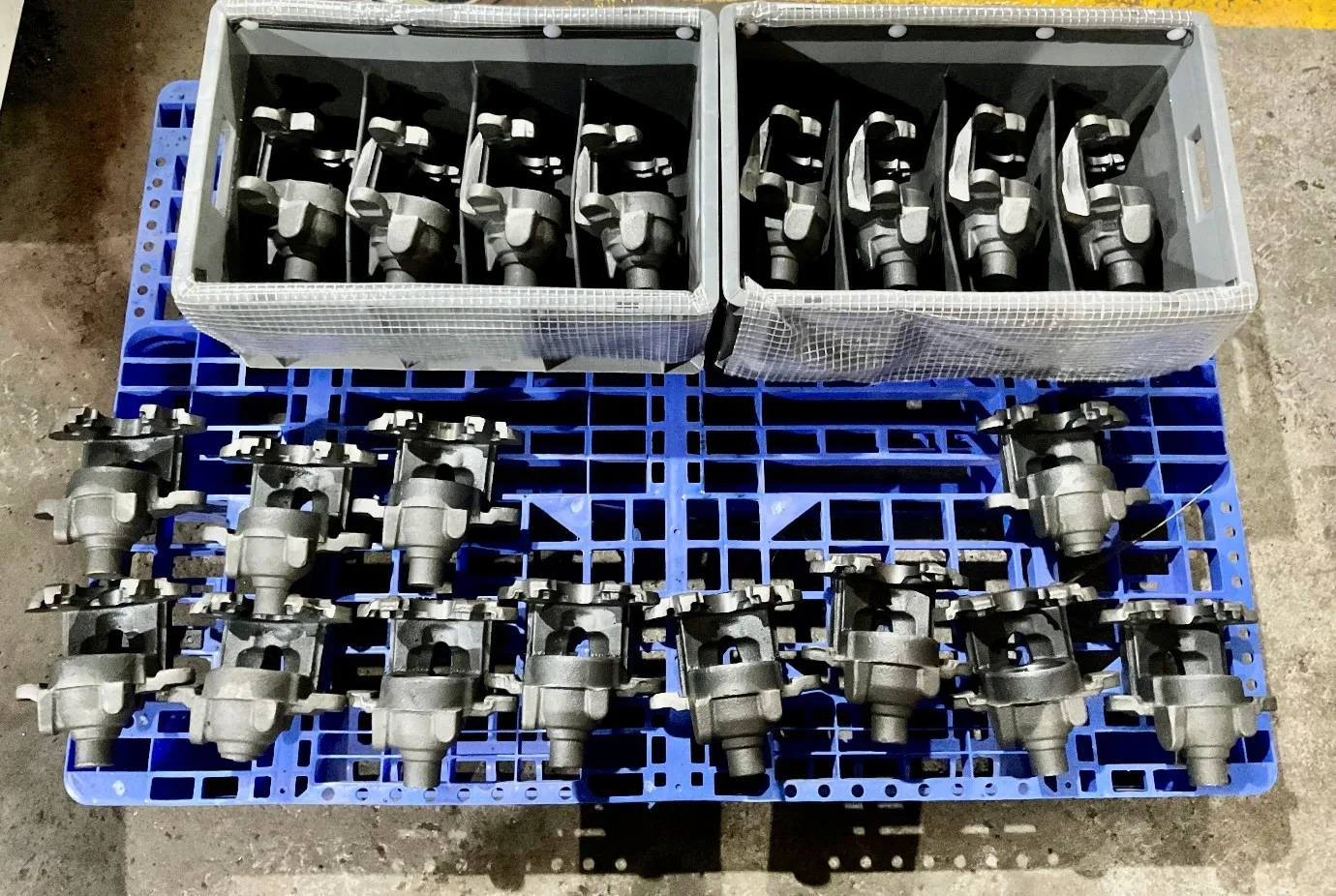
The part is a brake caliper mounting bracket in ductile iron, cast and then machined, about 2.1 kg when finished, 10,000 pieces a year, shipped by sea to a plant in the US East. I have priced this kind of part from both countries many times, and the plant prices in the table are rounded and indicative, with the duty at the rates in force when this was written. One thing to keep in mind while you read the table, US customs charges duty on what you paid the plant, not on the freight, so the duty line is the plant price times the rate.
- India duty is MFN 2.5 percent plus Section 232 auto parts at 25 percent, so 27.5 percent of $5.90, which is $1.62.
- China duty is the same 27.5 percent plus Section 301 at 25 percent, so 52.5 percent of $6.30, which is $3.31.
- Landed is plant price plus freight plus clearance plus duty, so India lands at $8.07 and China at $10.16.
| Per piece, 10,000 a year | Indiaductile iron, machined | Chinasame part, same spec | How it is figured |
|---|---|---|---|
| Plant price, ex works | $5.90 | $6.30 | Quoted price at the plant door |
| Ocean freight and port | $0.40 | $0.40 | 40 ft container, about 8,000 pieces, East Coast lane |
| Clearance and inland | $0.15 | $0.15 | Broker, port to plant |
| Duty rate, when this was written | 27.5% | 52.5% | MFN 2.5% + Section 232 auto parts 25%, China adds Section 301 at 25% |
| Duty per piece | $1.62 | $3.31 | Rate × plant price |
| Landed at your dock | $8.07 | $10.16 | Sum of the lines above |
| On 10,000 pieces a year | $80,700 | $101,600 | Landed × 10,000 |
less a year on 10,000 brackets from India, on a part where the plant price is only 40 cents apart. The duty line does most of the work, so check it with your broker on the day you quote, not on the day you read this.
Before you trust those rates, check 3 things with your broker: the 10 digit HTS code for your bracket, whether it sits on the Section 232 auto parts list, and which Section 301 list it falls on. The rates come from the USITC tariff schedule and the CBP guidance in force when this was written, and one of them will have moved by the time you read this. A note like this is only worth your time if it also says where the other side wins, so here is that part.
Where China still wins, and the split I would make
China still wins on electronics, on high volume injection moulded parts where the mould shops sit a street from the moulders, on parts that need a dense local supply of sub components, and on tooling speed for plastics. If your part is one of those, keep it there, and I will tell you that on the call even though we would like the business. Split the business by part family rather than by percentage, and put the castings, forgings, stampings, extrusions, fabrications and rubber parts in India, where the plant price, the duty line and the floor access all point the same way.
That is the split I would make if I were sitting in your chair today, and it is the split that buyer with the 2 plants near Ningbo is now running, with his electronics and his moulded housings where they always were and his iron and steel on the water from India. I promised you the invoices that changed my own mind, so let me finish with them.
The 2 invoices that changed my mind
The first was a duty invoice. I had compared 2 plant prices on a machined casting, picked the lower one with the engineering review behind me, and felt good about it, and 3 months later the broker’s bill showed me where the real difference was, because nobody on our side had added the duty line to either quote. That is the ex works mistake, and now that I see RFQs from the manufacturing side I watch buyers make it every week, which is why our quotes show part price, tooling, freight and duty as 4 separate lines.
The second was a freight invoice. I had priced a program on a West Coast lane because that was where our China parts had always landed, while the India parts came in through the East Coast, where our plant actually was, and the inland freight I had carried in my model for years simply disappeared. On a heavy iron part the inland leg from the wrong coast can cost more than the ocean leg from the right country, and nobody at the plant will point that out, because the plant quotes ex works and stops there. Ask for the landed cost on the lane to your own plant, on your own part, and let that number make the decision instead of the belief you walked in with.
What US buyers ask me before a first India order
Is India cheaper than China for manufacturing?
At the plant, India is level with or below China on castings, forgings, machined parts, stampings and rubber, and above China on electronics and high volume plastics. At your dock, at the rates in force when this was written, India also carries a lower duty line on most industrial parts because China pays Section 301 on top. Compare landed cost per piece by part family, not plant prices.
How long does shipping from India to the US take?
About 30 to 40 days port to port from Nhava Sheva or Mundra to the US East Coast on a direct service, and longer to the West Coast. Production lead time is the same as China once the tooling exists, and the delays buyers blame on the ocean usually come from paperwork and container booking that start only after packing.
Is manufacturing quality in India as good as China?
Quality comes from the plant and the program, not the country. Ask for the certificate of the facility matched to your part, a first article before the run, a PPAP package at the level your drawing calls for, lot traceability, and a named person on the floor every week.
How do I start a China+1 program in India without risking production?
Start with a pilot on 1 or 2 parts with recurring volume and clear drawings: the tooling plus a first lot, inspected and shipped before any production commitment. Keep the China plant running until the India first article and the first lot have passed at your dock, then move the schedule part by part.