
Drop Hammer Forging or Press Forging: Which Closed Die Route Fits Your Part

The short answerDrop hammer forging is closed die forging done under a hammer. Closed die tells you what the die does and drop hammer tells you how the force arrives, so the real choice is hammer or press. Pick the hammer for thin ribs, deep pockets and runs under about 5,000 pieces a year. Pick the press for heavier sections, tighter repeatability and runs above about 10,000, and let the drawing decide anything in between.
Closed die and drop hammer are not 2 rival processes
Buyers ask me this in almost the same words every time, closed die or drop hammer, and I asked it the same way for 13 years as a buyer. But the 2 words describe 2 different things. Closed die, also called impression die forging, means the die closes around the hot steel and the part comes out in the shape of the cavity, with a thin ring of flash around the parting line. Drop hammer means the force that fills that cavity comes from a heavy ram falling, or being driven down, several times in a row. Most drop hammer forgings are closed die forgings. So the real question is hammer or press for a closed die part, and it is worth 20 minutes, because it changes your tooling bill, your tolerance, your die life and your price per piece.
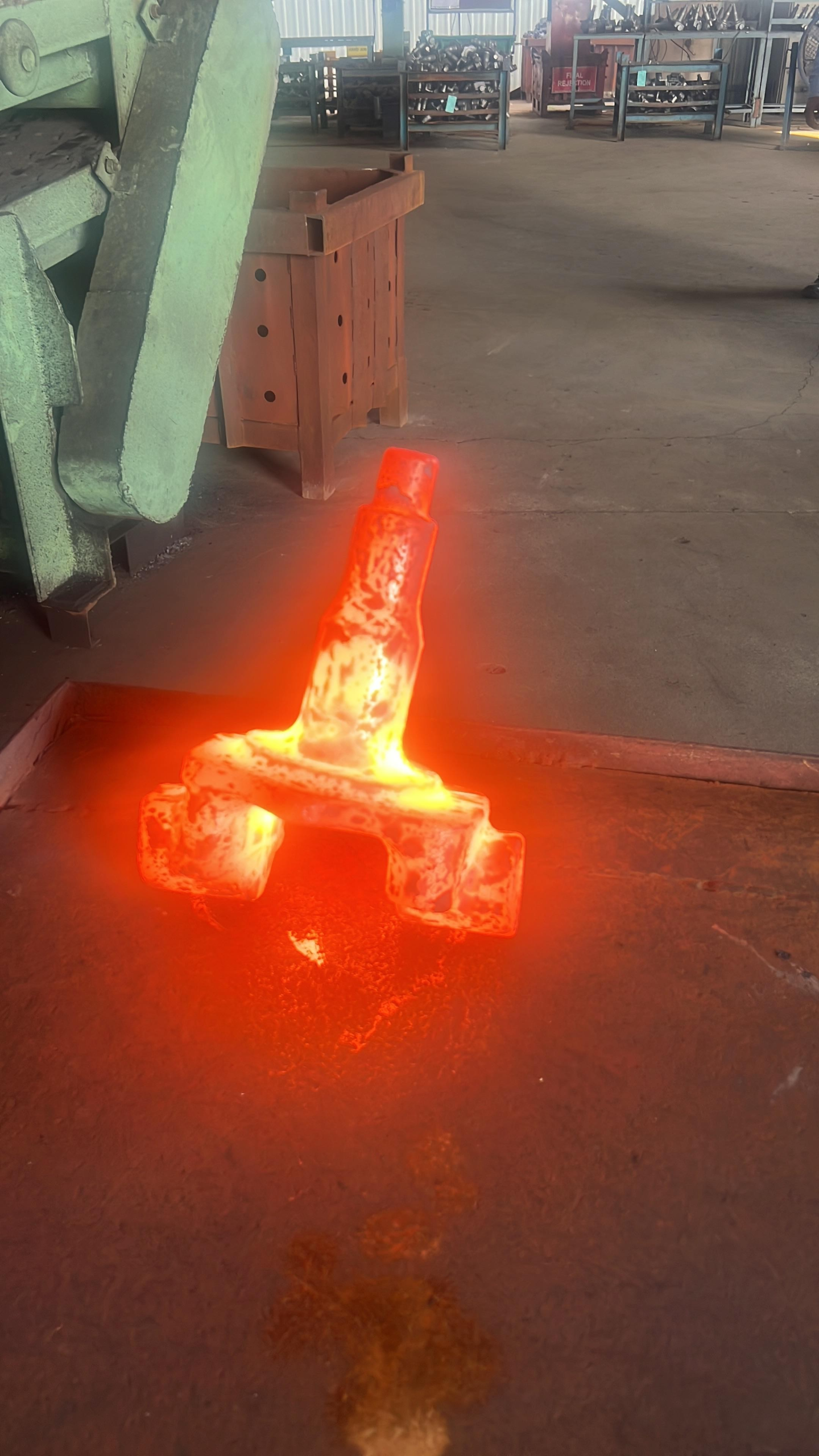
How a hammer shapes the part, and how a press does it
Picture a hot billet in the bottom half of the die. Under a drop hammer the top half comes down fast, hits and lifts. The contact lasts a few thousandths of a second, and the operator repeats the blow 3 to 10 times until the cavity is full. On the hammers our partner factories run, each blow carries 25 to 200 kJ. Because the die touches the steel for such a short time, it has almost no chance to pull heat out of the billet, so the metal stays soft and runs into thin ribs and deep pockets.
In a press the top half comes down once and squeezes. The contact lasts a second or more, the force is 800 to 4,000 metric tons on the presses our partners run, and the stroke ends at the same point every cycle. The die sits on the hot steel long enough to chill the skin, so thin sections fill harder, but the squeeze works right through a thick section, and shot 4,000 comes out the same as shot 40.
Drop hammer
Press
3 to 10 blows
25 to 200 kJ each
contact a few
thousandths of a second
rib depth
over 3 times width
short hard hit, deep fill
1 squeeze
800 to 4,000 metric tons, 1 second or more
even section, tighter repeat
long even squeeze, works the whole section
orange = the hot steel being worked
6 things that decide hammer or press
The shape of the part
This decides first, before anyone talks about price. A rib deeper than about 3 times its width, a thin web between 2 bosses, or a pocket that runs deep into the part: the hammer fills it and the press fights it. A chunky part with fairly even sections, a gear blank, a wheel hub, a steering knuckle, a connecting rod: the press fills it cleanly and holds the shape better.
Volume, and where the price per piece crosses over
A hammer costs less to buy, the die block is simpler, and changing dies is quick, so a hammer line is happy with 500 pieces this month and a different part next week. A press costs far more, cycles faster and takes to automation, so its price per piece falls as the volume climbs. On the jobs I see, drop forging beats press forging on price under about 5,000 pieces a year, the press wins above about 10,000, and the band between them is decided by shape and tolerance, not by the quote.
Tolerance and repeatability
In the part sizes our closed die forging partners run, a press forging holds about ±0.4 mm as forged and a hammer forging about ±0.6 mm, because the number and strength of the blows vary a little from part to part. EN 10243-1, the European tolerance standard for steel die forgings, uses the same two grades for hammer and press work, F for normal and E for close, and the band on any one dimension depends on the part’s mass, shape complexity and steel. So ask which grade the shop is quoting before you compare prices. After machining, both routes reach ±0.025 mm on critical machined features. What changes is how much steel you leave on the part and how much machining you pay for on every piece.
Die life, and who pays for the refurb
Hammer dies live a hard life. Each blow is a shock, so the block has to be big and tough, and when it fails it cracks rather than wears. Press dies see a steady load, wear at the surface and give a fairly predictable life, often longer on the same alloy. A hammer die promised at 12,000 shots that starts drifting at 7,000 becomes a refurb bill on someone’s purchase order, so settle whose before the die is cut.
Part weight and section thickness
Our hammer partners run parts from 0.05 kg to about 25 kg. Our press partners run 0.2 kg to about 80 kg, and sections above roughly 50 mm belong in a press, because a short blow only works the skin while a long squeeze works the whole section.
How much depends on the person at the machine
On a hammer the operator judges the blow count and the strength of each blow, so a day shift and a night shift can send you 2 slightly different sets of parts. A press runs the same stroke every time, so the spread is tighter and it is easier to show a capability figure above 1.67 on a critical dimension at production sign off. If the drawing carries several critical dimensions, that pushes the decision toward the press even when the volume says hammer.
Hammer or press, on 1 sheet
| What decides it | Hammer3 to 10 short blows | Press1 long squeeze |
|---|---|---|
| Best shape | Deep ribs, thin webs, pockets | Even sections, blocks, rounds |
| Part weight | 0.05 to 25 kg | 0.2 to 80 kg, thick sections |
| As forged tolerance | About ±0.6 mm in our partners’ sizes | About ±0.4 mm in our partners’ sizes |
| Die life | Shock loaded, cracks, resink sooner | Steady load, wears slowly |
| Tooling cost | Lower, simpler die block | Higher, often a preform and finisher |
| Price per piece | Wins under about 5,000 a year | Wins above about 10,000 a year |
| Tooling time | 6 to 10 weeks to first sample | 8 to 12 weeks to first sample |
| Spread between shifts | Operator sets the blows | Machine sets the stroke |
marks the route that wins the row. A row with 2 squares is decided by the drawing.
2 mistakes I made as a buyer
The first was letting the quote decide before the drawing had. A bracket with a deep pocket on 1 face would come across my desk, the press shop would come in 8 percent under the hammer shop at the annual volume, and I would place the tooling with the press shop. The first samples would arrive with the tip of the pocket not fully formed, because the steel had chilled against the die before it reached the corner. The fix is always a heavier billet and an extra preforming stage, and both cost money on every piece. By the time the part was right, the 8 percent was gone and 6 weeks with it.
The second was the opposite. A small hub went to a hammer shop because year 1 was 3,000 pieces and the hammer tooling was half the price. The part sold well, the volume passed 40,000, and the reports began to show a wider spread on the bore location from 1 shift to the next. The capability figure slipped under what my customer needed, and we cut a press die anyway in year 2, with the hammer die on the shelf. What I do now on every forging order is write the 3 year volume on the drawing before it goes out for quote, and ask the shop to quote the route that fits year 3, not year 1.
How the choice changes your tooling time and first samples
A press die for a part under 10 kg takes 8 to 12 weeks from purchase order to first hot sample, because the shop usually cuts a preform and a finishing impression and proves the flash gutter. A hammer die for the same part often lands in 6 to 10 weeks, because the block is simpler and the fill can be tuned on the machine with the blow count.
Read the first sample report for what each route is prone to. On a hammer part, look at the deepest feature for full fill and for laps, the folds that appear where metal met metal. On a press part, look at the mismatch across the parting line and at the flash thickness, because a press bottoming out early shows it there first. On both, ask for an etched section that shows the grain following the shape, and a hardness check where the load sits. We send that pack before the next shot fires.
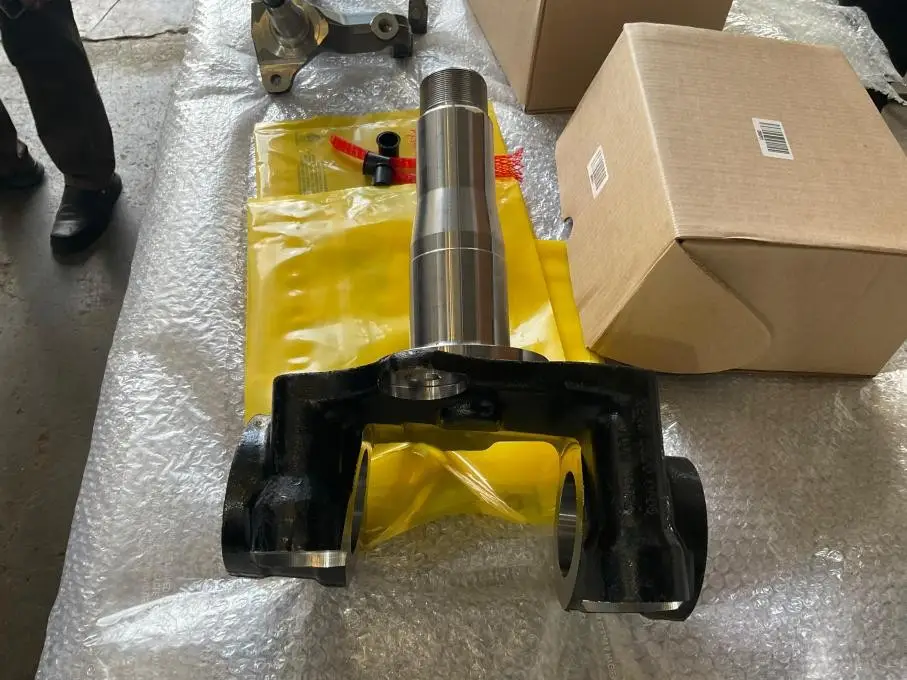
Floor check, before the die is cut
- Which machine, hammer or press, and what energy or tonnage.
- Expected shots per die, and the cost of a resink.
- Where the preform impression sits and how much extra billet it takes.
- Which dimensions get capability data, and on which shifts.
- How much machining stock is left on the critical faces.
Which parts run on which machine
On the hammer side, the parts that keep coming back are hand tool blanks and wrenches, axe heads, cutlery blanks, valve and pump bodies with pockets, and brackets or levers with thin flanges and deep ribs. On the press side sit the parts that carry a car or a truck: steering knuckles, connecting rods, crankshafts, wheel hubs, axle beams, tie rod ends and gear blanks. These are heavy in section and made in volumes where the press pays back the die inside the first year, and most automotive forging work we place in India goes this way. The Forging Industry Association explains both machines in plain terms if you want the textbook version.
Questions buyers ask me
Is drop hammer forging the same as closed die forging?
Drop hammer forging is closed die forging done under a hammer. Closed die describes the tooling, and drop hammer describes the machine that supplies the force. The same part can usually be made under a hammer or in a press, and the choice depends on shape, volume and tolerance.
Is press forging stronger than hammer forging?
Both give a forged grain that follows the shape of the part. A press works a thick section more evenly, so on heavy parts it gives a more uniform structure. On thin parts there is no difference a buyer would notice, and the heat treatment after forging matters more than the machine.
Which is cheaper, hammer or press forging?
The hammer is usually cheaper on tooling and on price per piece below about 5,000 pieces a year. The press is usually cheaper per piece above about 10,000 a year once the die is paid for. In between, it depends on machining stock and die life.
Which holds tighter tolerances, a hammer or a press?
The press holds tighter tolerances as forged, about ±0.4 mm against about ±0.6 mm for a hammer in the part sizes our partners run, because the press stroke ends at the same point every cycle. EN 10243-1 uses the same F and E grades for both machines, so ask which grade is being quoted. After machining, both routes reach ±0.025 mm on critical machined features.
At what volume is a forging press worth it?
Above about 10,000 pieces a year for a part under 10 kg, a press die usually pays for itself inside the first year through faster cycles and less machining stock. Below 5,000 a year the hammer is the safer bet.
The short version
The choice between hammer and press is decided by the drawing first and the volume second. The hammer earns its place on thin, deep shapes at low and mid volumes. The press earns its place on heavy, even shapes at high volumes and wherever a capability figure has to hold across shifts. When a drawing sits in the middle band we quote both routes, with die life and machining stock written next to each price, so the number you compare is the one you will pay over 3 years.
Send the drawing.We quote both routes.
First response within 24 hours. Full landed cost within 5 business days.
13+ years buying engineered parts experience. Last reviewed October 2026. LinkedIn