
If you have ever sent an RFQ to brake caliper manufacturers or brake caliper suppliers in India, you already know how the next 2 weeks go. The foundries that quote you a bracket or a rotor in a day go quiet, or they come back with a price for the bracket and hope you do not notice, and after the third time you start to believe that nobody in India will make a complete caliper for a mid size program. I believed that too, and I had good reason to, because I spent 13 years buying parts for US programs before I started VIA INDIGOS and I watched caliper RFQs die in exactly that way. Then we sat down with one of our manufacturing partners, a foundry with a machining line that already knew calipers from the Indian domestic market, and built the missing pieces together. Today that plant ships complete calipers, piston, seals, pressure test, coating, everything. So let me show you how brake calipers are made on that floor, step by step, and then what one caliper costs you at your dock against the same caliper from China.
Brake caliper manufacturers in India, and why most won't take your program
I want to be fair to the big players, because they are very good. Brakes India in Chennai, part of the TVS group, builds calipers for the car and truck makers and exports to Europe, Brembo’s Indian arm near Pune makes two wheeler calipers for Bajaj, Yamaha and KTM, and Endurance, Mando and Continental feed the vehicle plants directly. These companies make millions of calipers a year on long OEM contracts, and their whole setup is built for that size of customer.
If you are a US aftermarket brand or a distributor who needs 10,000 or 30,000 calipers a year across a family of part numbers, you fall straight into the gap between them. The OEM plants are not set up for you, and the export foundries that answer your RFQ in a day can cast the body but have no assembly bench, no test rig, no seal and piston supply and no traceability, so they quote you the bracket. I watched that happen on more than one program from the buying side, and it is the reason this part had to become ours. Here is how we closed that gap with the plant.
How we got a plant ready to make your calipers
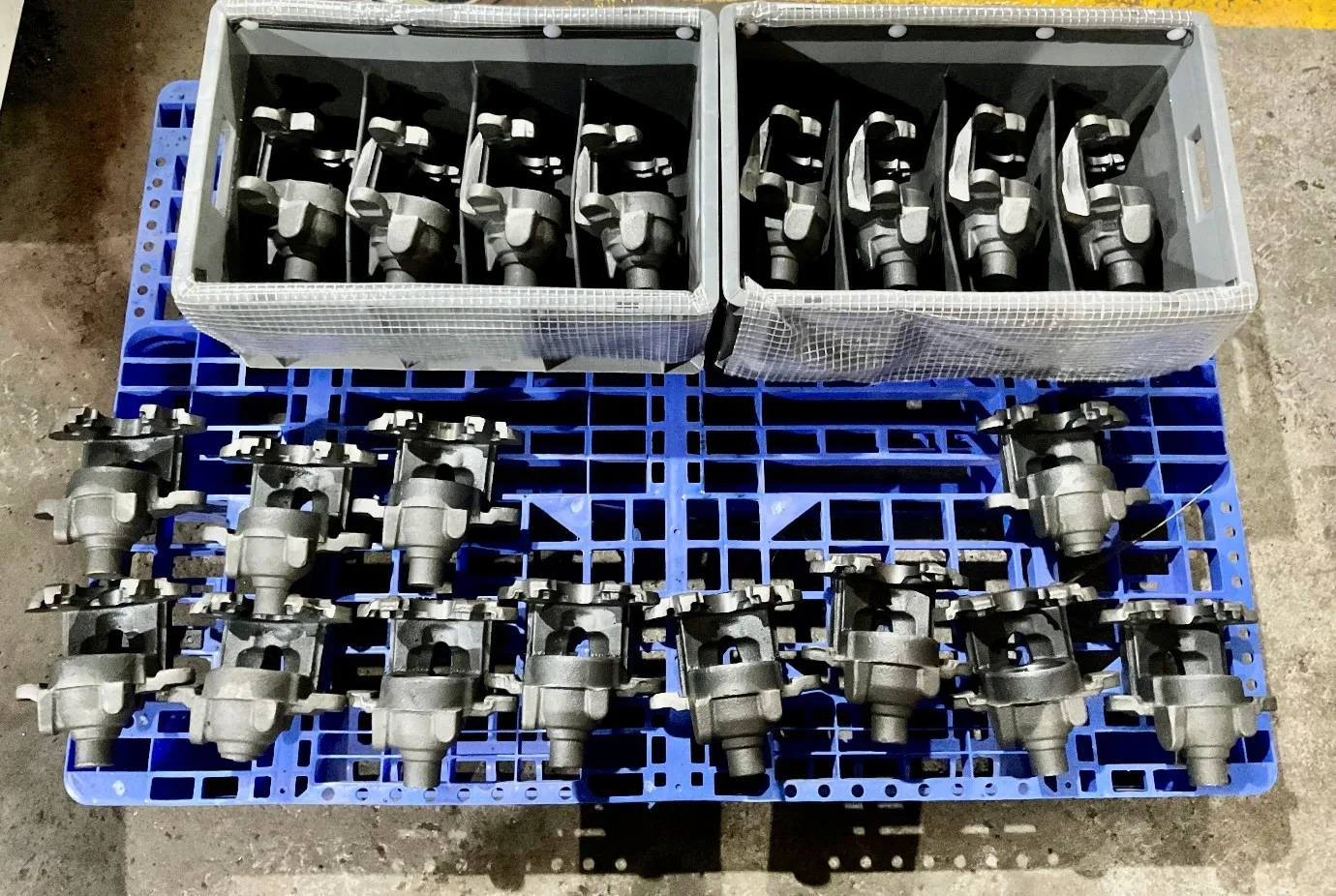
The plant already had the two hard parts, a foundry that pours sound ductile iron and a machining line that knew calipers. What it did not have was a line a US buyer could walk in and audit, which means an assembly bench to the right standard, a leak test on every caliper with a record behind it, and packing that survives 40 days at sea, and without those three things no buyer in his right mind signs a caliper PO, and I would not have either.
So we built that with them, and I mean with them, because our engineers sat with the plant’s team for the better part of a season. We changed the order of machining so the bore and the seal groove are cut in one clamping, added a second honing station where the line was starving, set up the leak test rig, the test records and the carton labelling, and wrote the control plan side by side. The plant now makes more calipers than it could before, every extra caliper it makes is one we can ship, and our team is in that plant every day, not on visits. Now let me walk you down the line, starting where the caliper starts, which is the furnace.
How brake calipers are made, step 1: casting the iron or aluminum body
A floating caliper body is ductile iron, EN-GJS-450-10 or its American name, ASTM A536 grade 65-45-12, and before every pour the foundry checks the chemistry of the metal on a spectrometer, which is the instrument that reads exactly what is in the melt. A small test sample from every heat is checked for nodularity, which has to be 85 percent or better, and you should care about that number because nodularity is what makes ductile iron tough instead of brittle, and a brake part has to be tough before it is anything else.
The one place the iron must be perfect is around the bore, so the pattern feeds the metal in over the bore boss, and the first castings off a new pattern are cut through the bore and X rayed before the pattern is approved. After that every casting is shot blasted, cleaned, checked by eye and crated by heat, so a body can always be traced back to the pour it came from, and the same rule applies twice over on the A356 aluminum bodies used for fixed calipers. From the crate the body goes to the step I would watch if I could only watch one.
Step 2: machining the piston bore and seal groove
The piston bore, 38 to 60 mm on most passenger car calipers, is bored and honed to between 0.4 and 0.8 micron Ra, because rougher wears the seal and smoother makes it stick. Then the seal groove is cut, with a small angle on its outer wall, held to about ±0.05 mm, and that angle is what lets the rubber seal twist under pressure and untwist when you lift your foot, which is the only thing that pulls the piston back. Get it wrong and you have a dragging brake or a long pedal that nobody finds until the car is on the road.
The ports, the guide pin bores and the mounting faces are machined in the same one or two clampings on a horizontal machining centre, so the bore, the groove and the mounting face keep one relationship to each other for the life of the part. Every body gets a bore gauge and a groove gauge, every tenth body goes to the CMM, and the heat number stays with the part through the whole machining line. Then the small parts arrive, and they matter more than their price suggests.
Step 3: piston, seals and hardware
The piston is either hard chrome steel or phenolic resin, which is lighter and keeps pad heat away from the fluid, and it is finished to about 0.2 micron Ra because it is the other half of the sliding pair with the seal. The seal and the dust boot are EPDM made for glycol brake fluid, bought to an ASTM D2000 line and a drawing and never to the word EPDM on its own, as I explained in the EPDM note. The guide pins, bleed screw, bolts and pad clips each carry a lot number into the assembly record, so if a caliper ever comes back the plant can tell you which batch of bleed screws was in it, and with everything on the bench the caliper goes together and straight onto the rig.
Step 4: assembly and a pressure test on every caliper
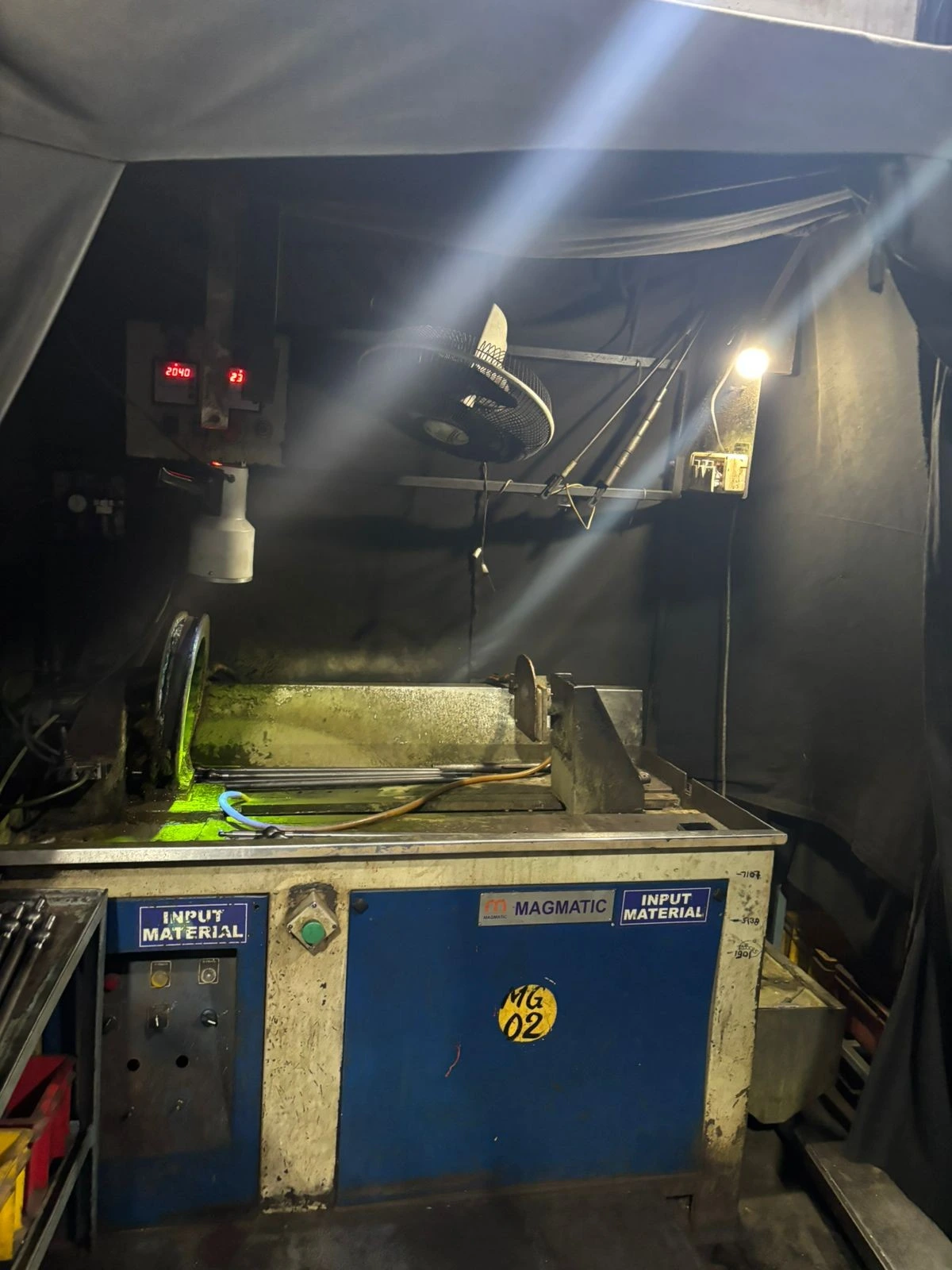
Assembly happens on a clean bench, where the seal is greased and seated, the piston pressed in square, the boot seated, the guide pins greased and booted and the bleed screw torqued and capped, and then every caliper goes on the rig. A low pressure test comes first, usually 2 to 5 bar, to prove the seal is seated and the piston moves freely, then a high pressure test, usually 100 to 150 bar, to prove the body, ports and seal hold with no leak, with the piston pull back checked after the pressure drops. Your drawing sets the levels and hold times, and the rig records the result against each caliper’s serial number.
That is the production test, and it runs on every piece. Before a new design or a new plant ships at all, sample calipers are tested to SAE J1713, the structural strength and fatigue procedure for disc brake calipers, and the coating goes through salt spray to ASTM B117 for the hours you specify. A tested caliper is coated, zinc flake or electrocoat with the bore and ports masked, marked with the part number, date code and heat, and packed in a carton with your label on a pallet built for 40 days at sea. At this point every buyer asks me the same question, so let me answer it before you do.
ADD PHOTO HERE
A caliper on the pressure test rig, or the rig itself with its gauge or screen visible. Wide shot, whole scene.
Alt text to use: Brake caliper on the 100 percent pressure leak test rig at a partner facility in India
OEM and aftermarket brake calipers: which cars we cover and how we quote
Every car has 4 calipers and the aftermarket has thousands of part numbers, so the first question I get is which cars we make, and the honest answer is that the plant makes types. A floating single piston caliper in cast iron covers most passenger car brakes with one process plan whatever the car, a twin piston for trucks is the same plan with a longer bore line, and a fixed four piston aluminum caliper is a different plan. So we quote by type and by drawing, a private label brake calipers program with 20 or 30 part numbers across one type gets a plant tooled once that runs for years, and the caliper bracket kit and the rotor can come through the same point of contact. Which brings us to the number everyone really wants.
What a brake caliper costs landed: India vs China (November 2026)
The part is a floating single piston caliper in ductile iron, about 3.2 kg assembled with piston, seals, guide pins and bleed screw, tested and coated, without pads, at 10,000 a year, shipped by sea to a plant in the US East. Plant prices are indicative and rounded, duty is charged on the plant price and never on the freight, and the duty rates are as they stood when I wrote this, under HTS 8708.30, so have your broker confirm them before this goes into a budget.
| Per caliper, 10,000 a year | VIA INDIGOS, Indiafloating single piston, cast iron | Chinasame caliper, same spec | How it is figured |
|---|---|---|---|
| Plant price, ex works, assembled and tested | $26.00 | $24.80 | Casting, machining, piston, seals, hardware, test, coating |
| Ocean freight and port | $0.64 | $0.64 | About $3,200 per 40 ft container ÷ about 5,000 calipers |
| Clearance and inland | $0.20 | $0.20 | Broker and port to plant, spread per piece |
| Duty rate | 27.5% | 52.5% | MFN 2.5% + Section 232 auto parts 25%, China adds Section 301 at 25% |
| Duty per caliper | $7.15 | $13.02 | Rate × plant price |
| Landed at your dock | $33.99 | $38.66 | Plant price + freight + clearance + duty |
| On 10,000 calipers a year | $339,900 | $386,600 | $4.67 less on every caliper |
saved every year on 10,000 calipers from India instead of China, same spec, same tests, same coating. The plant prices are close, the duty line opens the gap, and we check that line again on the day you order.
Program tooling is paid once and owned by you, about $12,000 to $25,000 all in for the pattern, machining fixtures and test fixtures, which the first release pays back, and the same comparison across other part families is in the India vs China note. There is one more thing I want you to see before you decide, and it is the thing that cost me the most sleep as a buyer.
Every time your caliper changes hands, we are standing there
Let me explain what I mean by a handoff, because it is the word behind most of the delays and defects I saw in 13 years of buying parts. A caliper changes hands about 10 times before it reaches you, and at every one of those points a part can sit for a week with nobody owning it, a heat number can get lost, and a question can go unanswered because the one person who knows has gone home. The plate below shows all 10, and the orange dots are the whole point of it.
The caliper plant is one of the audited manufacturing partners we work with across India, the bracket foundry and the rotor foundry are others, and our engineers and coordinators are in those plants every day, so every one of those handoffs has one of our people at it. The export documents are prepared while the last lots are still in assembly, and if you ask for the history of one caliper a year from now you get the heat certificate, the machining lot, the seal and piston lots, the test record and the coating batch, in a day.
I know this matters because I sat on your side of the table for 13 years, waiting on exactly those handoffs, and this is the line I wished the plants I bought from had run. Every caliper program starts with a pilot, the tooling plus a first lot, inspected, tested and shipped, so you decide on production with real calipers in your hands. If you have a caliper family that nobody in India will quote properly, send me the drawings and you will know within 5 business days what it costs landed.
Questions buyers ask us about brake calipers
Who are the brake caliper manufacturers in India?
The large brake caliper manufacturers in India are Brakes India in Chennai, Brembo near Pune, and Endurance, Mando and Continental, which build millions of calipers a year for vehicle makers on long OEM contracts. They are not set up for a US aftermarket brand that needs 10,000 to 30,000 calipers a year, and most export foundries can cast the body but cannot assemble or pressure test it. VIA INDIGOS fills that gap with a manufacturing partner that ships complete, tested calipers.
How are brake calipers made?
The body is cast in ductile iron or A356 aluminum, machined with the bore honed to 0.4 to 0.8 micron Ra and the seal groove cut to about ±0.05 mm, then assembled with a steel or phenolic piston, an EPDM seal and boot, guide pins and a bleed screw, and every caliper is leak tested at low and high pressure, coated, serialised and packed.
What are brake calipers made of?
Floating calipers on most passenger cars are ductile iron, EN-GJS-450-10 or ASTM A536 65-45-12. Fixed and performance calipers are usually A356 T6 aluminum. Pistons are chrome plated steel or phenolic resin, and the seals are EPDM made for glycol brake fluid.
What tests does a brake caliper go through?
Every production caliper takes a low pressure test, usually 2 to 5 bar, and a high pressure test, usually 100 to 150 bar, with piston pull back checked, to the levels on your drawing. New designs and new plants are validated on samples to SAE J1713 for structural strength and fatigue, and the coating is checked by salt spray to ASTM B117.
Can I get private label brake calipers made in India?
Yes, and the program is built around a caliper type and a family of part numbers rather than one car, with the pattern, fixtures and test fixtures owned by you. A floating single piston cast iron caliper lands at about $34 at a US East Coast dock at 10,000 a year, indicative, with program tooling of about $12,000 to $25,000.